
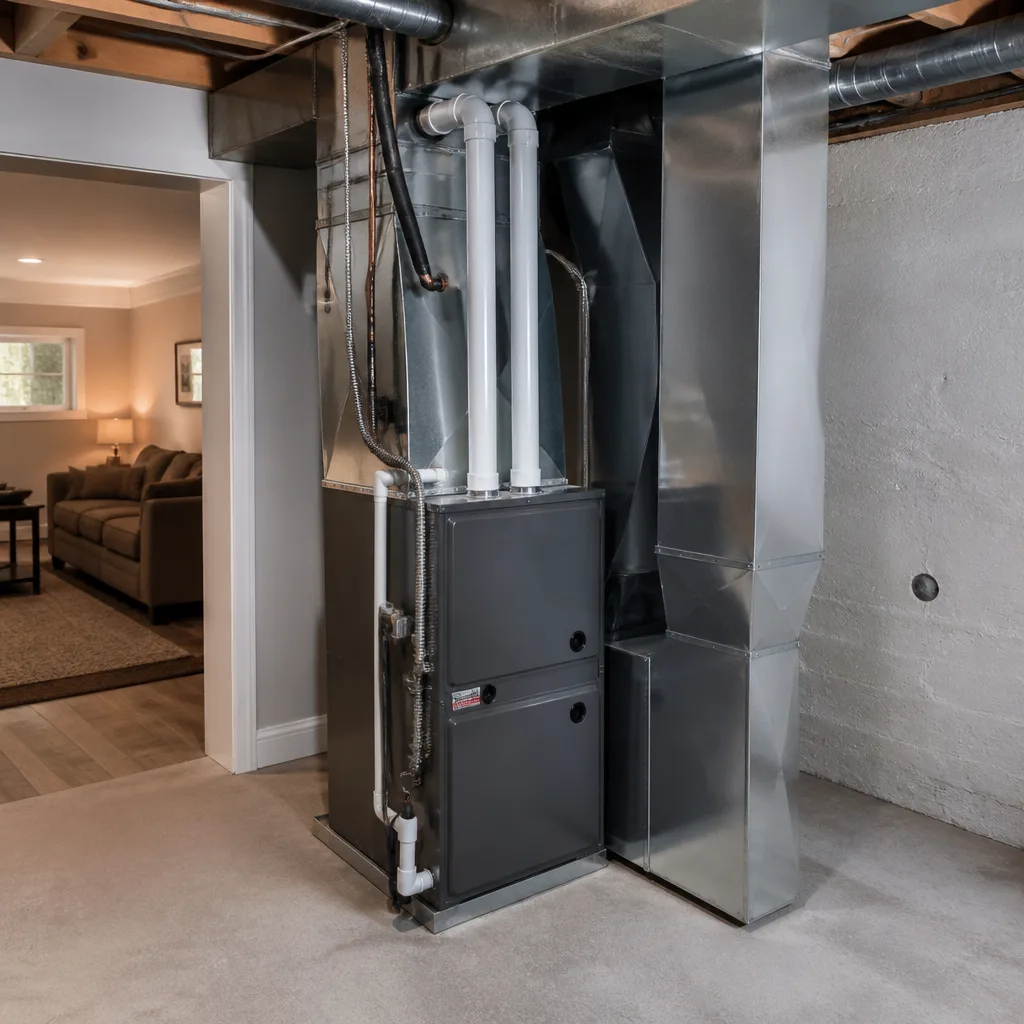
 Furnace & heating
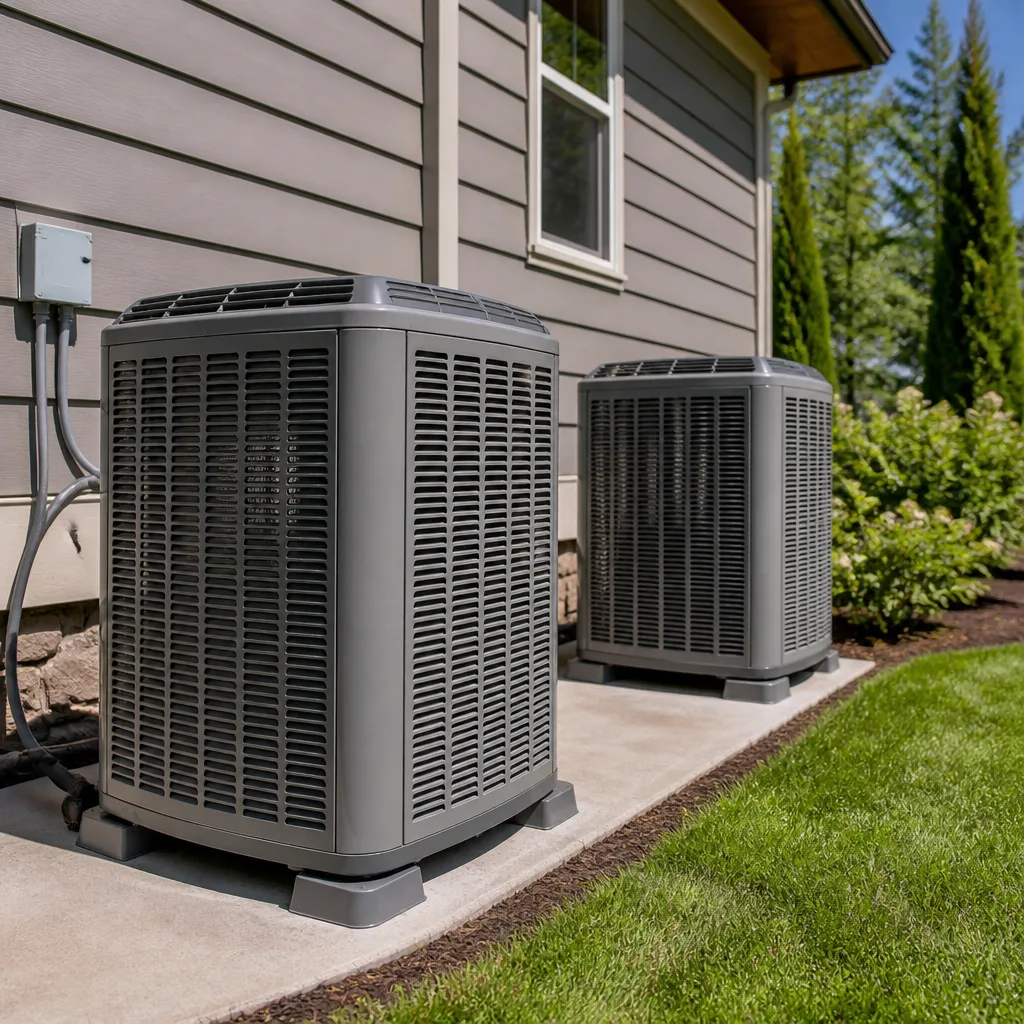 Heat pumps
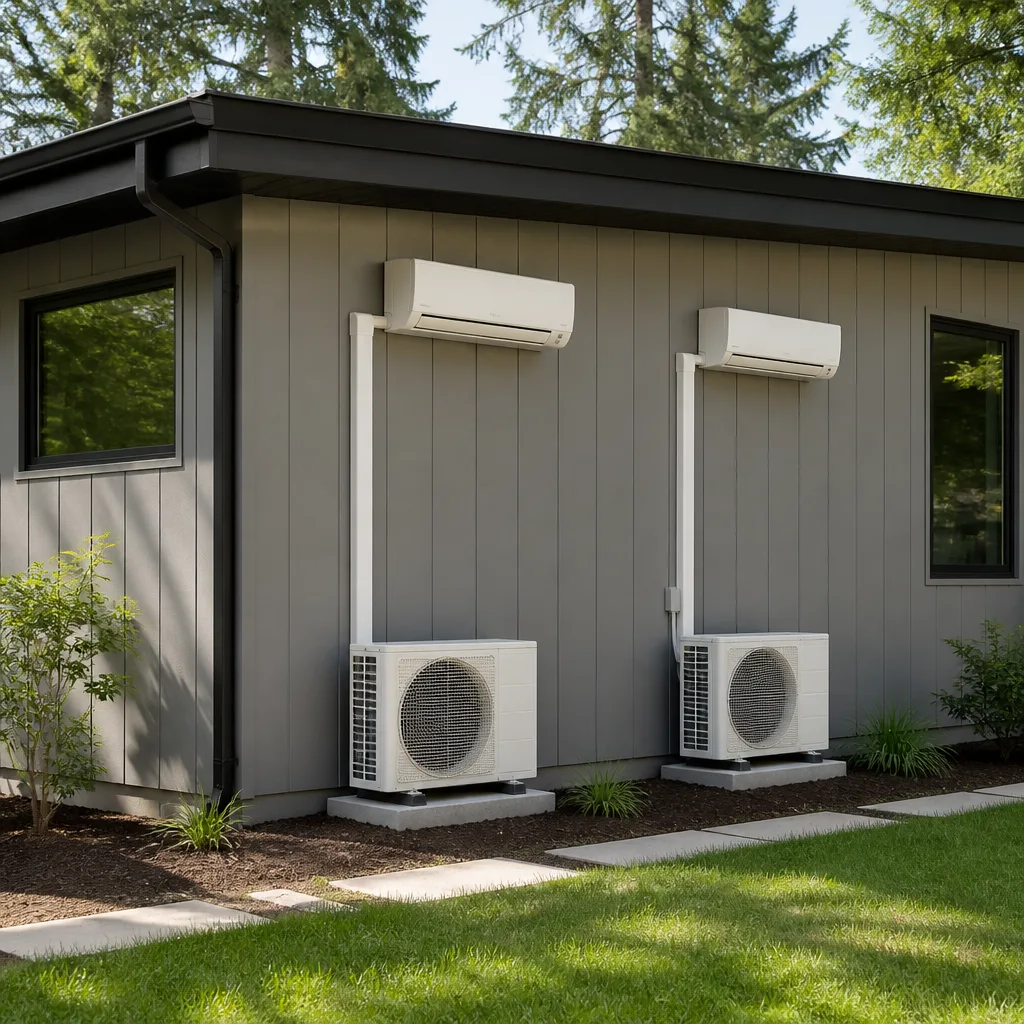 Ductless mini splits
 Carrier
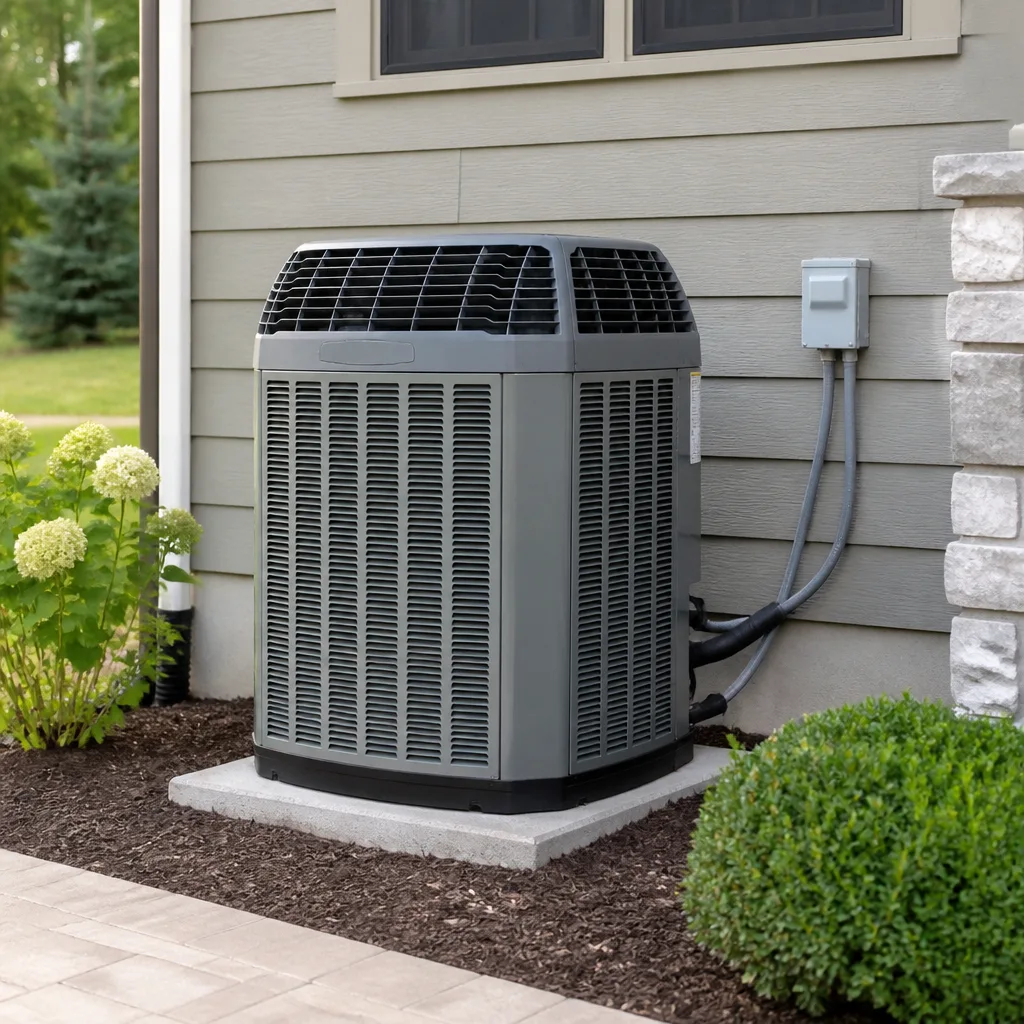 Trane
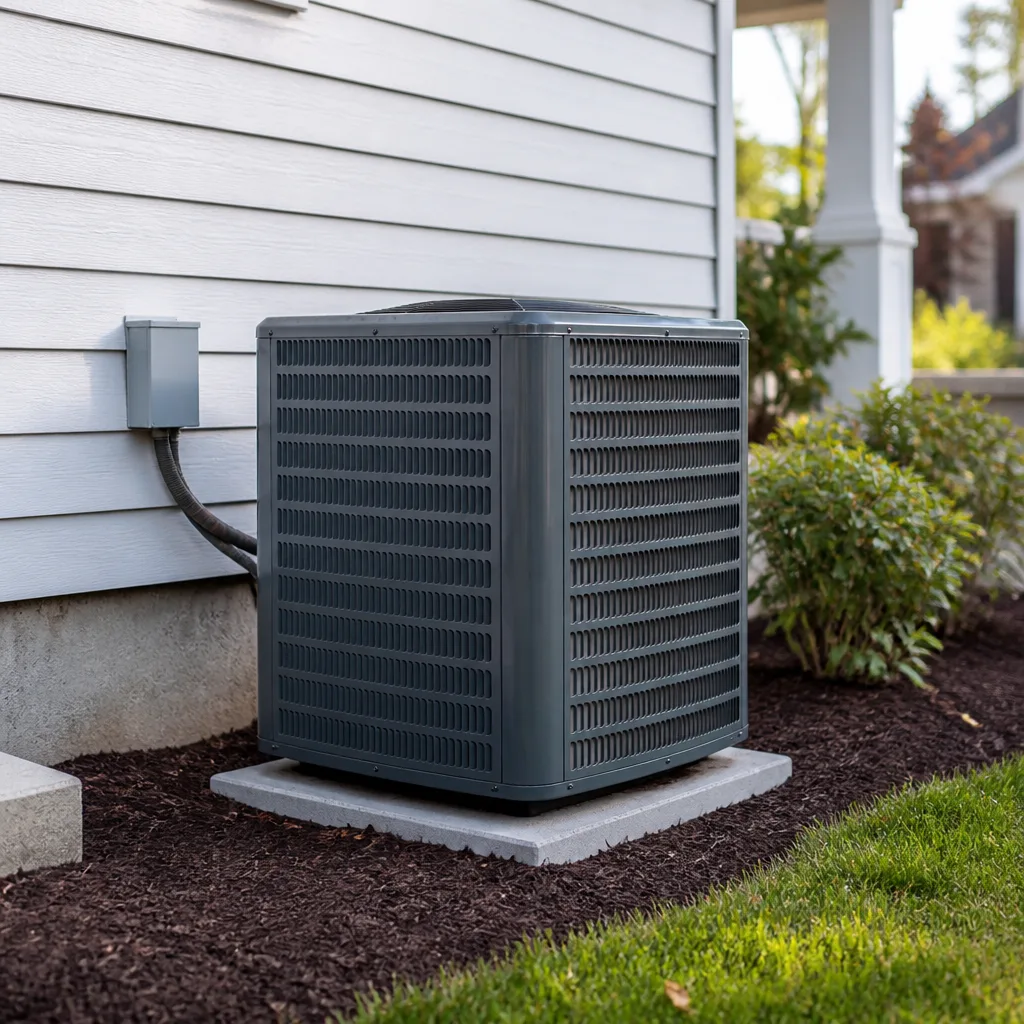 Goodman
Seasonal tune-up and full diagnostic on your Carrier, Trane, or Goodman system - readings shown to you before any repair is proposed
Diagnosis first, numbers second - you approve the repair price before a single part goes in.
Get your free estimateStyles & brands we work with
- AC installation
- Furnace & heating
- Heat pumps
- Ductless mini splits
- Carrier
- Trane
- Goodman
See the difference
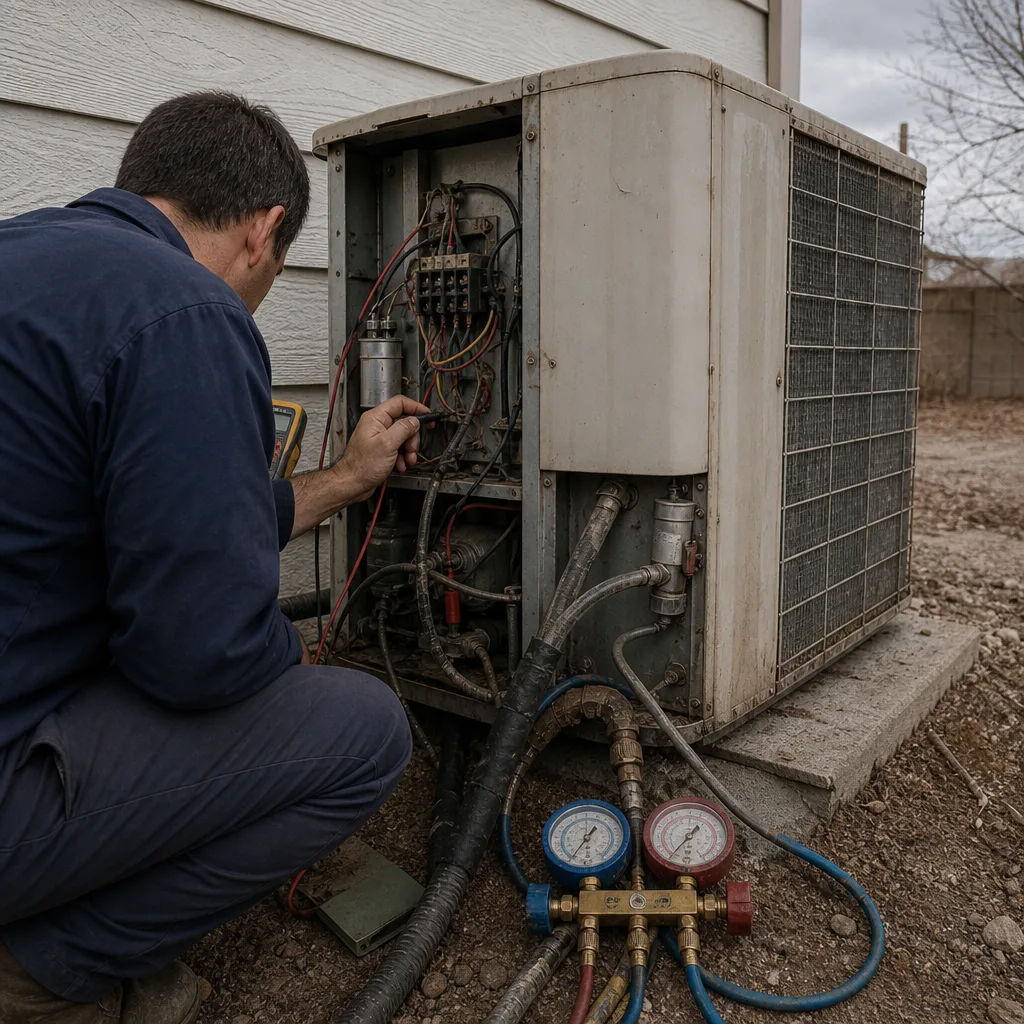 Before
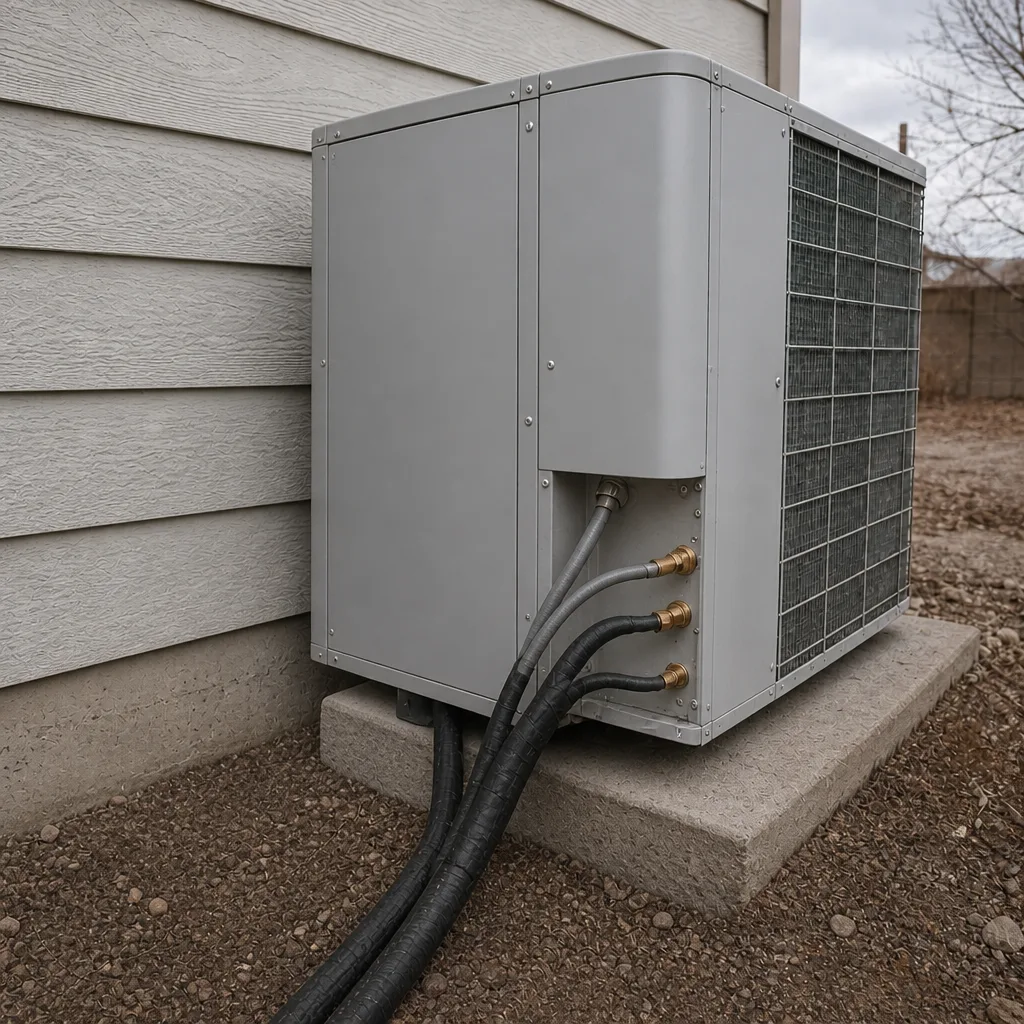 After
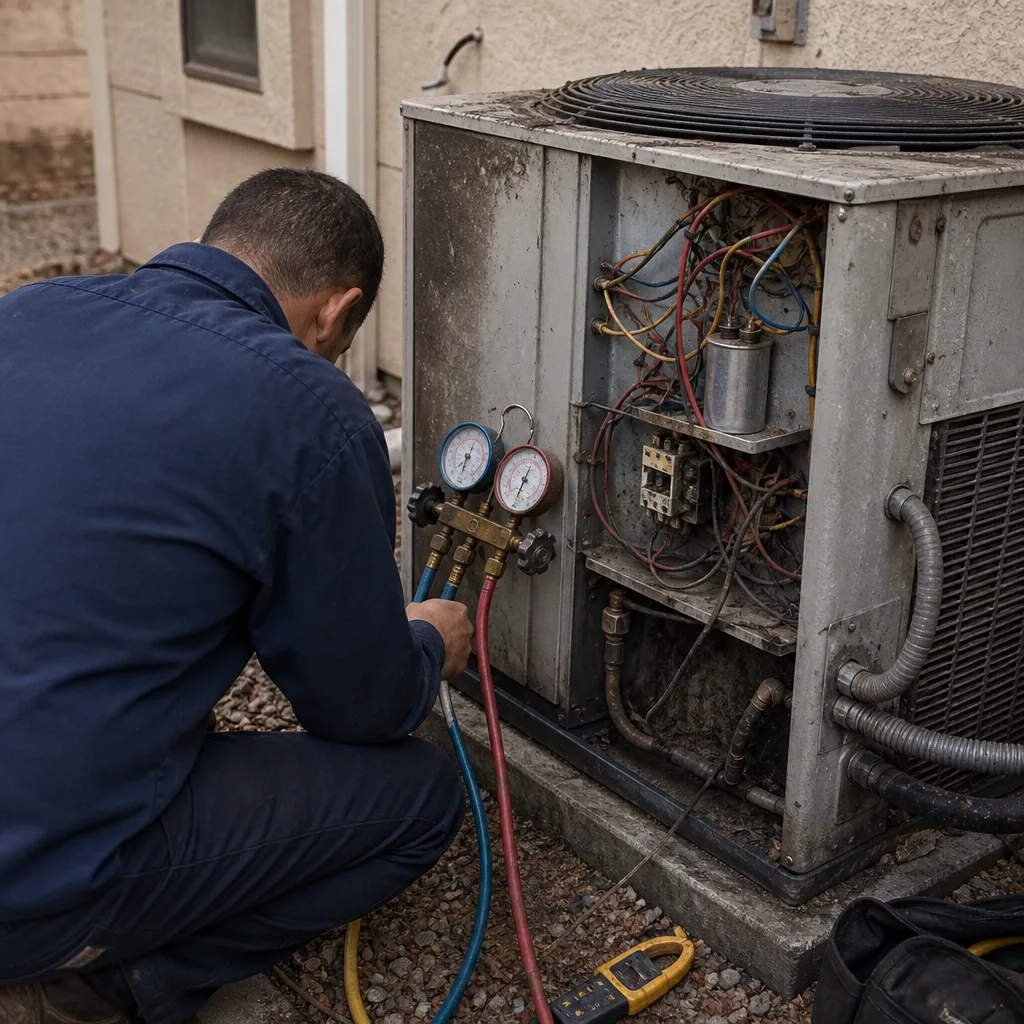 Before
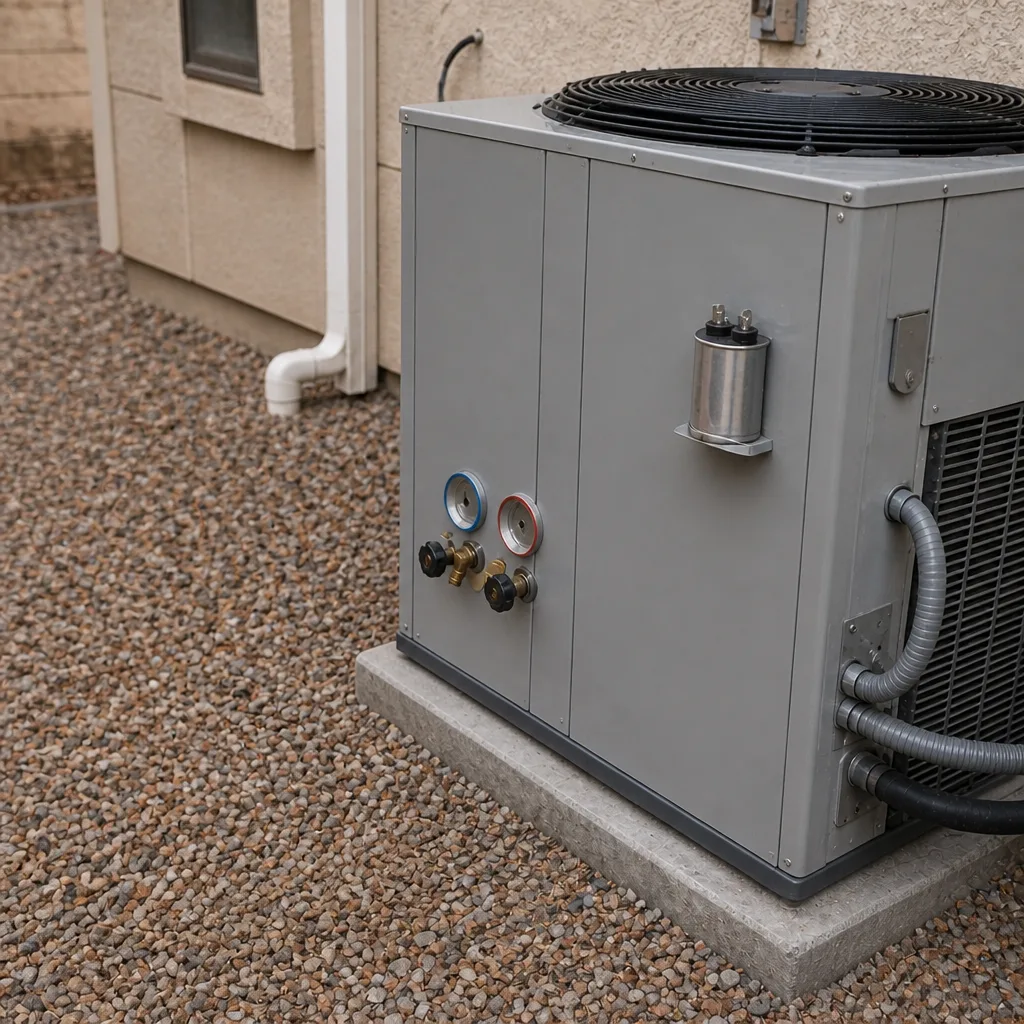 After
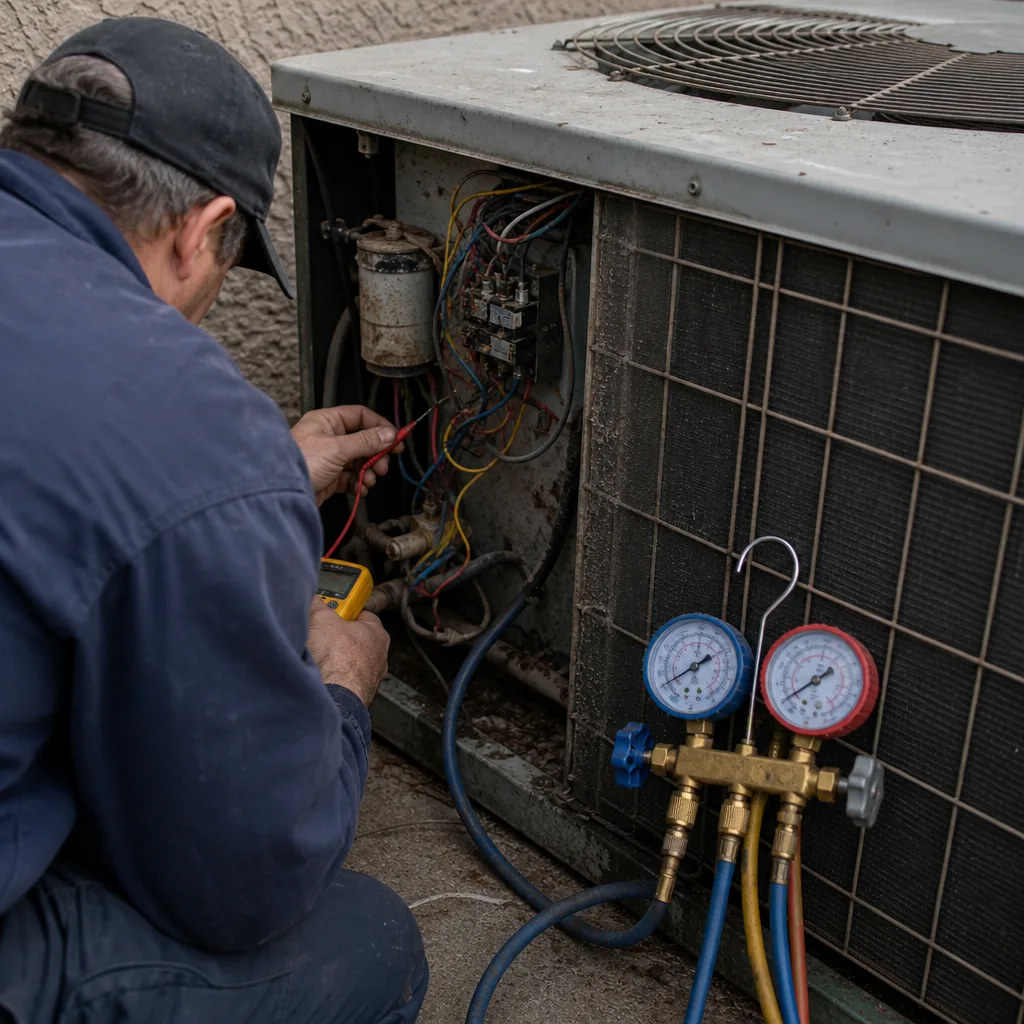 Before
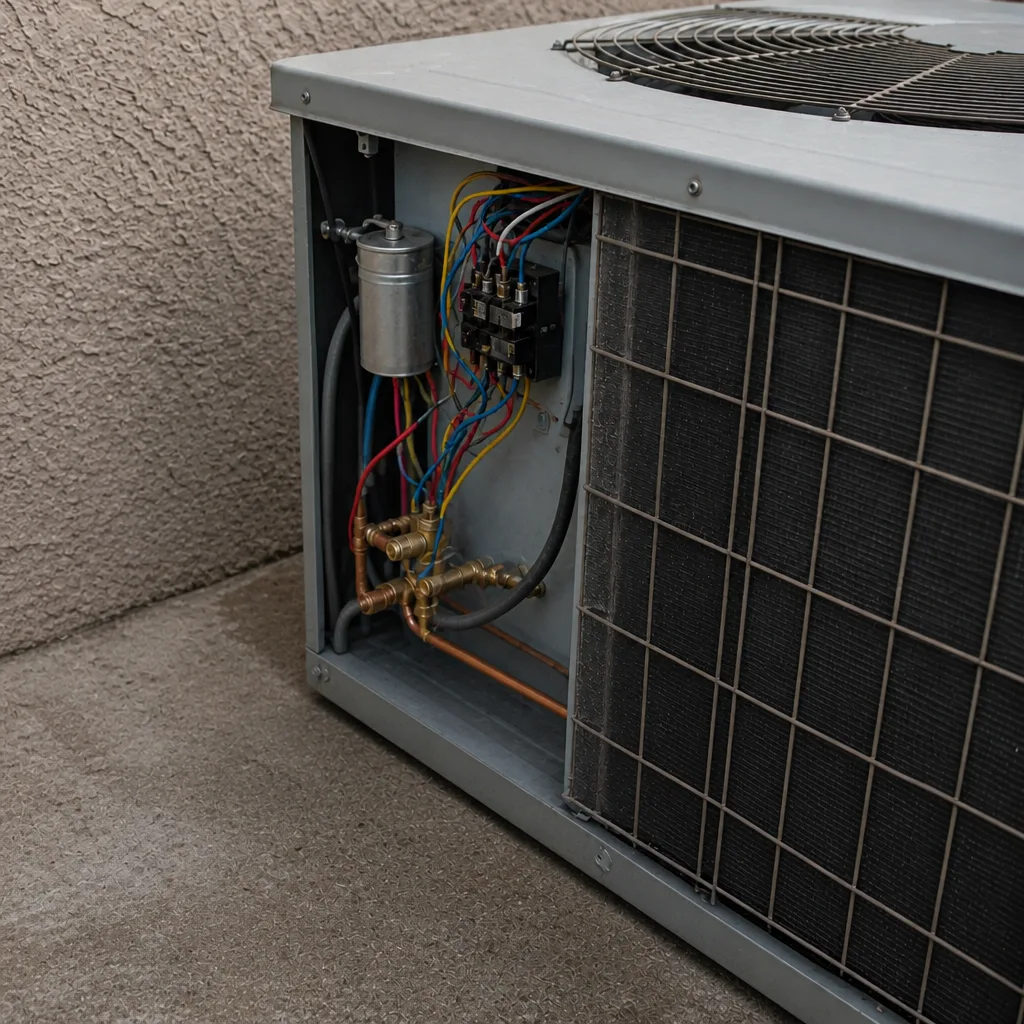 After
How Much Does AC Installation Cost in Boulder City?
AC installation in Boulder City typically costs between $3,500 and $7,500 for a full system replacement, including equipment, labor, and the removal of your old unit. A straightforward swap in a smaller home on an existing pad and line set lands near the lower end of that range, while a larger home that needs a new pad, upgraded electrical work, or new duct connections usually pushes toward the top. The written estimate we provide after looking at your home sets the final price, and that estimate is free.
Boulder City sits in the Mojave Desert at roughly 2,500 feet, where summer highs climb past 105°F while the nights can still cool off more than a coastal city would expect. That swing matters for sizing, and it’s one of the reasons a system that was “close enough” a decade ago may no longer keep up. Getting the tonnage and airflow right at installation is the difference between 15 years of steady cooling and a compressor that fights the desert every July.
Key Takeaways
- Typical installed cost in Boulder City: $3,500 to $7,500 for a full system.
- Size, efficiency rating, and whether ductwork or electrical work is needed drive most of the spread.
- Installation from a dedicated AC specialist means the focus stays on your air conditioner, not on upselling heating or plumbing work.
- We install and service nine major brands, including Carrier, Trane, Lennox, Goodman, Rheem, York, Daikin, Bryant, and American Standard.
- Free estimates, upfront pricing, and a written quote before any work begins. Call (888) 906-2267 to get started.
AC Installation Cost Breakdown (2026)
The table below shows typical estimated ranges for an AC replacement in the Boulder City market. These are ranges, not quotes. Every home is different, and your written estimate is the number that counts.
| Line Item | Typical Estimated Range |
|---|---|
| Standard split-system AC (2 to 3 ton), equipment only | $2,200 – $4,200 |
| High-efficiency or larger system (3.5 to 5 ton), equipment only | $3,500 – $5,800 |
| Labor and installation | $900 – $1,800 |
| Removal and haul-away of old equipment | $150 – $350 |
| New concrete pad or pad repair | $200 – $450 |
| Line set replacement (if needed) | $250 – $600 |
| Ductwork repair or modification | $400 – $1,200 |
| Electrical upgrade for the condenser circuit | $300 – $900 |
| Thermostat upgrade (if not included) | $150 – $400 |
| All-in installed range | $3,500 – $7,500 |
Most homeowners in Boulder City fall somewhere in the middle of these rows. A house with an aging unit that sits on a failing pad, with original ductwork in the attic, will need several of the add-ons above. A newer home with a healthy line set and up-to-code electrical will need less. The point of the line-item breakdown is so you can see exactly why your estimate landed where it did instead of guessing at a single lump number.
Because we focus only on air conditioning, we’re not going to hand you a quote that pads the bill with heating or plumbing work you didn’t ask for. What you need is a properly sized AC system with the right airflow, installed to last. That’s the scope.
What Affects AC Installation Pricing in Boulder City
The spread between a $3,500 install and a $7,500 install mostly comes down to a handful of factors. Here’s what moves the number up or down.
- System size and tonnage. A 2-ton unit costs less than a 5-ton unit, both in equipment and in the labor to set it. Proper sizing requires a load calculation that accounts for your home’s square footage, insulation, window exposure, and how much of the desert sun hits the west and south walls. Guessing at size is how homeowners end up with a system that cools unevenly.
- Efficiency rating. Higher-efficiency condensing units and air handlers cost more up front. In a climate where the AC runs hard from May into October, the equipment specs matter, and we’ll talk through what’s actually worth paying for in your situation rather than pushing the most expensive option.
- Age and condition of the existing system. If the old unit comes out clean, the install is simpler. If the pad is cracked, the disconnect is undersized, or the line set is capped in a wall, there’s more labor involved. We check all of this during the estimate so there are no surprises on install day.
- Ductwork condition. Boulder City homes range from newer construction with tight ducts to older homes where the attic ductwork has spent decades baking in summer heat. Leaky or damaged ducts mean you’re paying for cool air that never reaches the room, and repairing or resealing them adds to the project total.
- Electrical capacity. The condenser’s circuit and disconnect have to be sized correctly for the new equipment. If the panel needs work to support the new load, that’s a line item added to the estimate. We flag it up front, not after the unit is on the pad.
- Site access and location. A ground-level pad in a side yard is fast to work on. A rooftop unit or a condenser tucked into a tight HOA-designed nook on a hillside lot above the historic district adds time and care, which is reflected in the labor.
Boulder City’s housing stock spans everything from 1930s bungalows near the historic downtown to newer builds on the edges of town. Older homes often have smaller electrical service, original ductwork, and equipment closets that weren’t designed for modern condenser dimensions. None of that is a problem we haven’t handled, but it does affect the estimate, and it’s why we look at the whole picture rather than quoting a one-size number over the phone.
The dry desert air is another factor. Low humidity means the AC’s cooling load depends heavily on sensible heat (temperature) rather than on removing moisture. That’s a good thing for efficiency in most cases, but it also means a marginally sized unit has no slack. Getting the load calculation right matters here more than it would in a humid city.
What’s Included in a Full AC Installation?
An AC installation isn’t just bolting a new box on the pad. A proper install covers the full system from the thermostat to the condenser. Here’s what a standard installation includes when we do it:
- A load calculation to size the system correctly for your home
- Removal and haul-away of the old condenser and air handler
- New condenser set on a level pad or bracket and anchored
- Air handler installed and connected to the existing or new plenum
- Line set connections, evacuation, and refrigerant charge
- Thermostat wiring and checkout
- Electrical connection to the disconnect
- Duct connections sealed at the equipment
- A full functional test: airflow, temperature drop, and starting and running amp checks
The load calculation is the step a lot of quotes skip. When a contractor sizes a unit “by rule of thumb” (a certain tonnage per square foot), the result is frequently a unit that’s too large. An oversized AC in a high-desert climate short-cycles, never runs long enough to pull humidity or stabilize temperature, and wears itself out early. Under-sizing it does the opposite: it runs nonstop through July and never quite gets there. The right size is the one the math says, not the one on a chart.
If you want to understand what a repair would cost versus going new, our page on AC Repair Boulder City covers repair ranges and how to know when a fix makes sense versus when a replacement is the better spend.
How to Save on AC Installation
There’s no magic bullet that makes a $6,000 job into a $2,000 job, but a few decisions do lower the final bill without cutting corners on the work itself.
- Get several written estimates. Free estimates are free for a reason. Comparing three line-item quotes tells you where the numbers diverge and whether anyone is padding the labor. Call (888) 906-2267 for one of them, and we’ll give you a quote you can hold against any other.
- Upgrade ductwork while the system is out. Sealing leaks and fixing disconnected runs at install time costs less than coming back later. You’re already paying for equipment access, so the incremental cost of duct repair is smaller than a standalone duct project.
- Right-size, don’t over-size. A smaller, correctly sized unit costs less to buy and less to run. An oversized system costs more upfront and more every month.
- Choose a sensible efficiency tier. The highest-efficiency equipment is priced higher, and the payback depends on your usage. We’ll show you where the sweet spot is for a desert-running system rather than defaulting to the most expensive unit on the spec sheet.
- Keep the thermostat and pad if they’re healthy. Not every install needs a new pad or thermostat. If they’re in good shape, we’ll tell you, and that keeps the estimate lower.
When you’re comparing options, a reasonable question to ask yourself is whether the lower quote is actually lower because it skips the load calculation or cuts a corner on evacuation and charge. A cheaper install that needs a repair in two years isn’t cheaper. We’ll walk you through exactly what the number covers, in writing, before you decide.
If you’re still in the “is it worth repairing” stage, it helps to know what tune-ups and repairs typically run. An annual AC installation and maintenance plan makes more sense than spending on a system that’s at the end of its life, but if the equipment has years left, a tune-up and a targeted repair is the right call. Our team handles the full lifecycle, so one call covers the repair today, the install when it’s time, and the maintenance in between.
Repair Now or Replace? How to Decide
The general rule of thumb in the trade: if the repair cost approaches a third of replacement cost, the unit is old, and efficiency is poor, replacement deserves a serious look. For an AC-only decision in Boulder City, the answer usually comes down to age, history of breakdowns, and whether you want to spend this summer waiting for the next failure.
A few signals that replacement is the better spend:
- The unit is past the typical service life for central AC equipment
- You’ve paid for the same repair more than once in a season
- Refrigerant is no longer available for the older system
- Repair estimates climb each visit
- You’re running a system that couldn’t cool the house even when it was new
A few signals that repair is the better spend:
- The unit is relatively young and the failure is isolated
- Cooling performance and efficiency have been steady
- The fix is a straightforward part or electrical issue
- You have a maintenance record that shows the equipment is well cared for
There’s no penalty for asking. We’ll diagnose your equipment, give you a repair estimate, and if replacement is the smarter financial path, we’ll tell you that plainly. Our job is the right fix, not the easiest upsell. And because the recommendations are based on the system’s condition, not on which brand we happen to stock, you’re not going to get pushed toward equipment that doesn’t fit your home.
Why Choose a Specialist for Your Boulder City AC Install?
AC installation is its own skill set. Load calculations, refrigerant handling, airflow balancing, electrical setup, and equipment commissioning are all AC-specific. A generalist contractor who splits time across heating, plumbing, and electrical has to shift gears. A specialist doesn’t. Every technician on our team focuses on air conditioning. That’s the distinction we work hard to make worth your call.
We’re certified to service nine leading brands: Carrier, Trane, Lennox, Goodman, Rheem, York, Daikin, Bryant, and American Standard. When we recommend a unit, it’s because it fits your home and budget, not because it’s the one brand we know best. We work on the brand you already have, and when it’s time to replace, we help you choose the next one on the merits.
Our technicians have up to 12 years of experience with this equipment. That experience is worth something when the install involves a tight attic, an older home near the historic district, or an electrical setup that needs attention. It’s worth more when it comes to the questions you’ll want answered before you commit: how long the install will take, what happens to the old unit, and what the fresh system will do differently in August than the one you have now.
We handle AC from start to finish: the repair when your current system acts up, the install when replacement makes sense, and the maintenance to make the new unit last. Same company, same standard, every stage.
If you’re weighing a new install but haven’t committed, it may help to start with a repair assessment. If your existing equipment has life left, a fix or a tune-up can buy you time and let you plan the replacement budget instead of doing it under duress on a 108°F afternoon in Boulder City. Either way, the phone call gets you a professional on your equipment, and the phone is answered 24/7. call (888) 906-2267 for a free estimate.
FAQs – AC Installation Cost
How much does AC installation cost in Boulder City in 2026?
Typical estimated AC installation in Boulder City ranges from $3,500 to $7,500 for a full system, including equipment, labor, and old-unit removal. A basic like-for-like swap lands near the low end; a larger home needing duct or electrical work climbs toward the top. Your written estimate sets the final price, and the estimate is free.
Why is AC installation in Boulder City so expensive?
The cost reflects more than equipment. An AC install in Boulder City includes a proper load calculation, refrigerant handling, electrical work, duct connections, and a full commissioning test. The desert climate makes sizing and airflow especially important, and that expert-labor piece is a big part of the $3,500 to $7,500 range. Cheaper quotes that skip the load calculation and system checkout cost less now and more later.
Is it cheaper to repair or replace my AC?
Repair is cheaper when the failure is isolated and the unit is relatively young, typically landing in the $150 to $650 repair range for a single issue. Replacement is the better spend when the unit is old, repairs are recurring, or repairs approach a third of replacement cost. Call (888) 906-2267 and we’ll give you a straight answer on your specific system.
Can you install a new AC the same day?
Same-day service is possible for some installs, but most full replacements are scheduled once the estimate is approved and equipment is selected. Call (888) 906-2267. We answer 24/7, and we can give you a realistic timeline for your home, with fast dispatch from 7am to 7pm, Sunday through Friday.
Do you install all brands, or just one?
We install and service nine major brands: Carrier, Trane, Lennox, Goodman, Rheem, York, Daikin, Bryant, and American Standard. Recommendations are made on your system’s needs and your budget, not on brand preference. That gives you cross-brand fluency without the pressure to switch to whatever the contractor happens to stock.
How much does a tune-up cost if I decide to keep my current system?
Typical tune-up pricing in Boulder City ranges from $80 to $200. If your equipment has life left, a tune-up and a targeted repair is cheaper than replacement, and it keeps the system running through the summer. Call (888) 906-2267 and we’ll assess the unit and give you a written recommendation.
Pricing reflects the Boulder City market as of 2026. AC Repair Boulder City offers free estimates – call (888) 906-2267.
Written by the team at AC Repair Boulder City.
What Our Customers Say
"Two other companies told me I needed a whole new system. He put gauges on it, found a leak at a fitting on the line set, repaired it and recharged. That was 14 months ago and it's still holding."
- Leela Reddy"AC died in August, which in this city is an emergency. He found a blown capacitor, replaced it, and had cold air blowing in under 40 minutes. Charged me about what I'd expect to pay for the part plus a service call."
- Vivian Wong"Thermostat had been miswired by whoever installed it, which is why the heat strips were running with the AC. He found it in a few minutes and probably saved me a fortune on the next few electric bills."
- Henry Park