
Last updated November 18, 2026
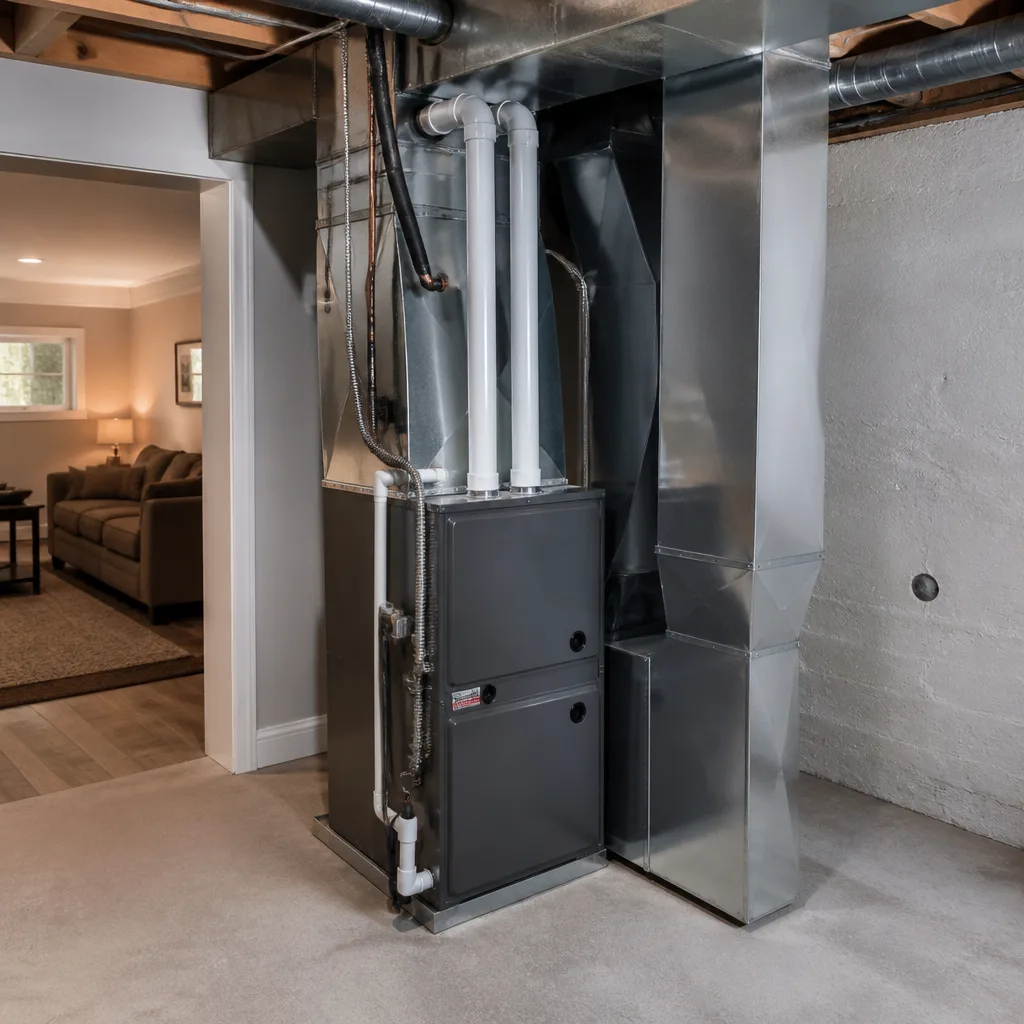 Furnace & heating
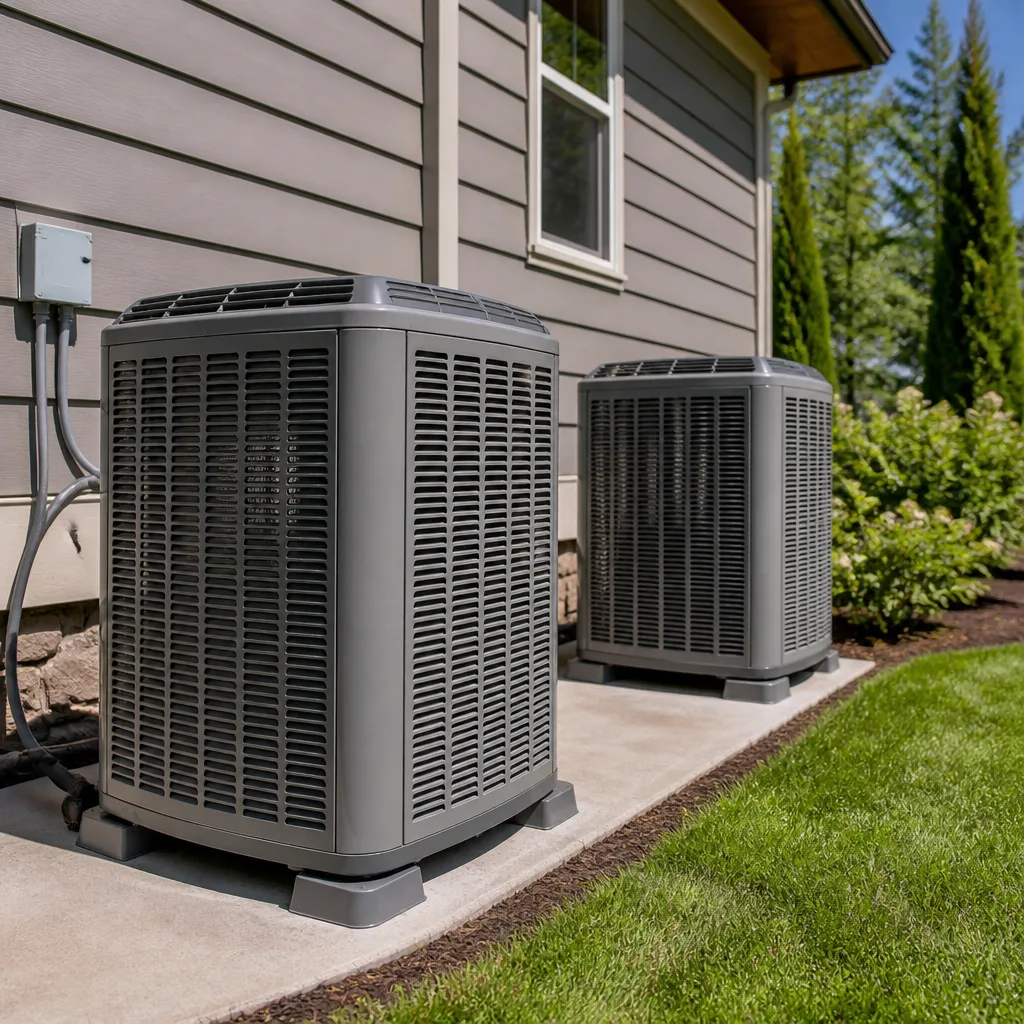 Heat pumps
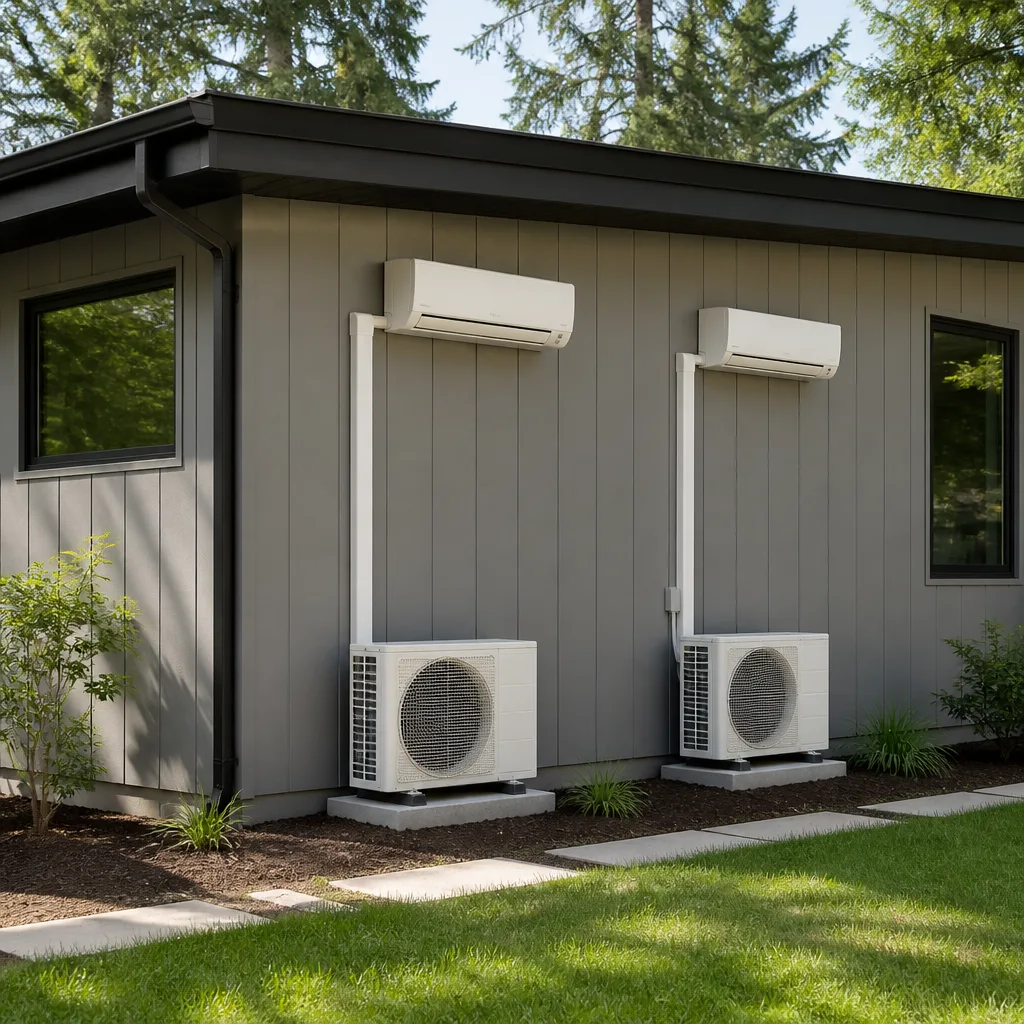 Ductless mini splits
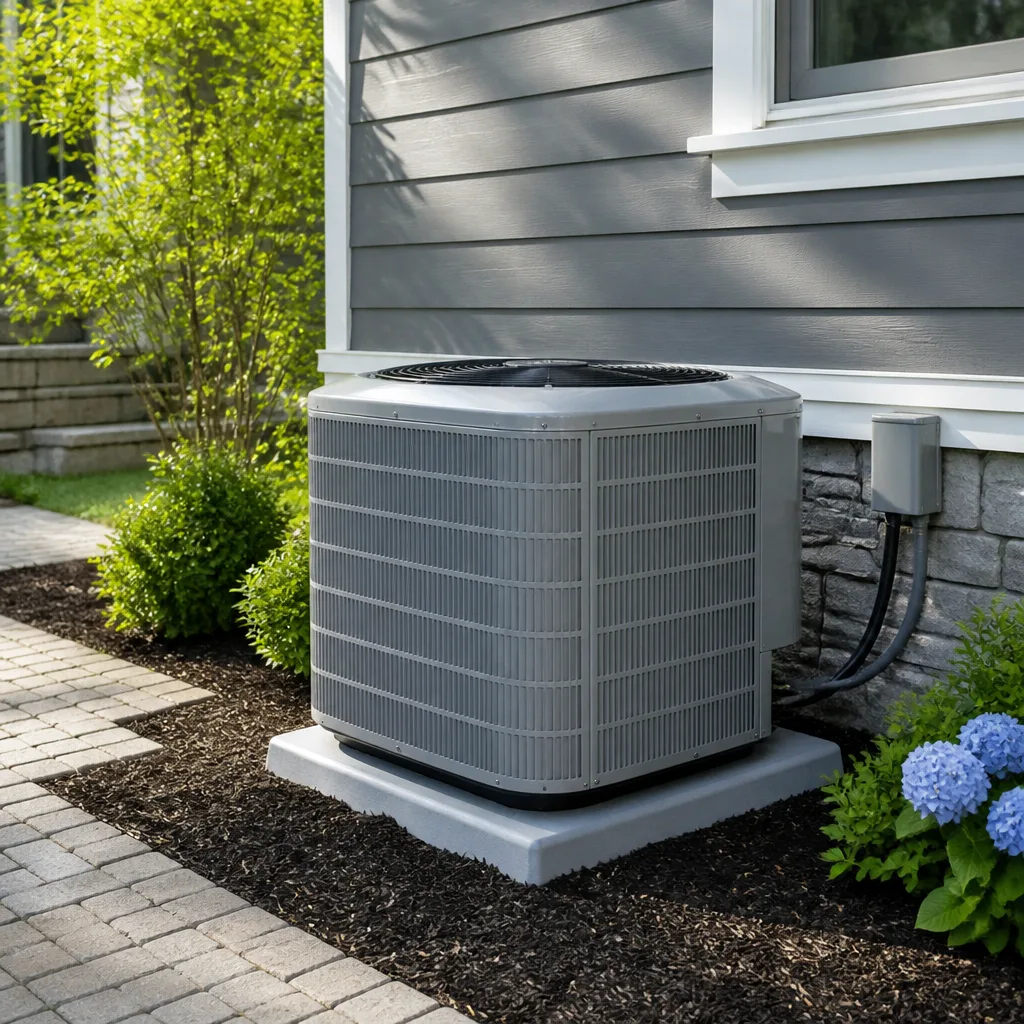 Carrier
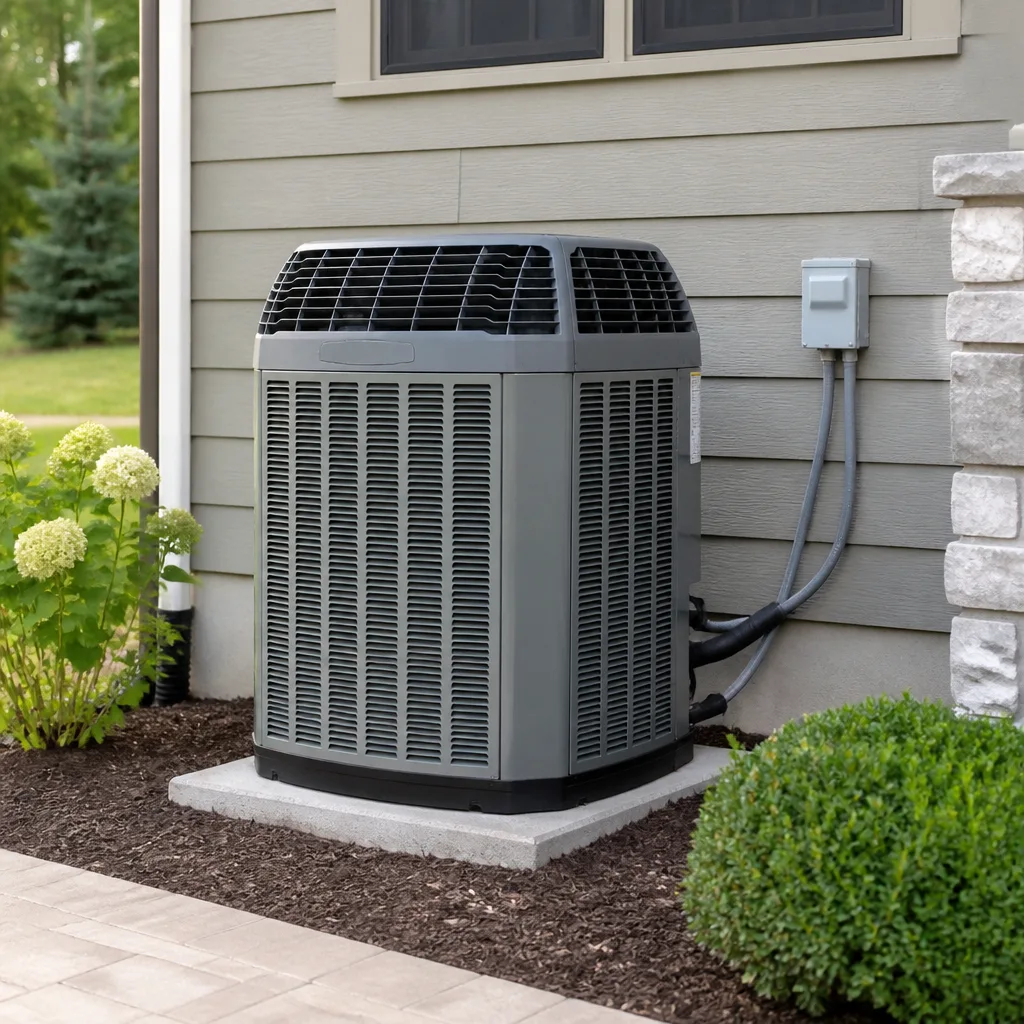 Trane
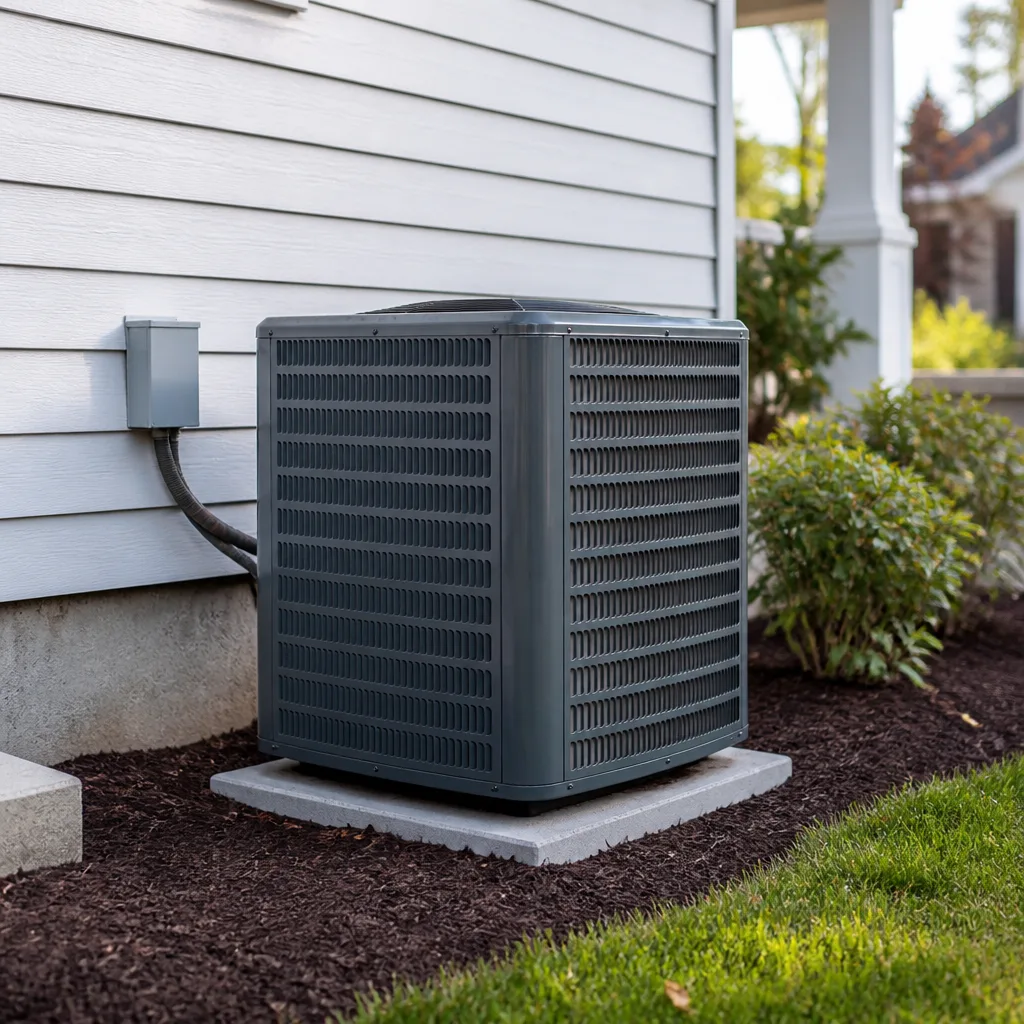 Goodman
Seasonal tune-up and full diagnostic on your Carrier, Trane, or Goodman system - readings shown to you before any repair is proposed
Diagnosis first, numbers second - you approve the repair price before a single part goes in.
Get your free estimateDIY vs Professional HVAC: The Boulder City Homeowner’s Decision Guide
Most homeowners assume the DIY-versus-pro question is about skill. It isn’t. It’s about a federal law most people have never heard of, and a decision point that arrives in Boulder City at roughly 112 degrees. Handling refrigerant without an EPA Section 608 certification is a federal violation – not a city code issue, not a gray area – and the YouTube tutorials that show homeowners “topping off” a system are describing an illegal act with a camera on it. This guide draws the line where it actually sits, tells you what you can safely do yourself, and explains what a failed DIY repair really costs once the desert summer is underway.
Quick Answer
You can legally and safely change your own air filter, swap a thermostat, and clear a condensate drain line. You cannot legally buy, handle, or recharge refrigerant without EPA Section 608 certification, which makes any repair involving the sealed refrigerant circuit a job for a licensed professional. Everything else – capacitors, contactors, fan motors, compressor work, diagnosis – falls on a scale from “technically possible” to “a fast way to void your warranty and damage the most expensive part of the system.”
Styles & brands we work with
- AC installation
- Furnace & heating
- Heat pumps
- Ductless mini splits
- Carrier
- Trane
- Goodman
Table of Contents
- Why the Refrigerant Circuit Is Off Limits
- What You Can Legally and Safely Do Yourself
- Warranty Voiding and the Home Sale Problem
- What a Failed DIY Repair Actually Costs
- How to Prepare Before Calling a Technician
- How Professional Diagnosis Actually Works
- Why Boulder City Heat Raises the Stakes
- Repair or Replace: The Calculation That Matters
Why the Refrigerant Circuit Is Off Limits
The refrigerant circuit is the part of your AC system where federal law replaces the usual homeowner judgment call. Under EPA Section 608, the person who purchases, handles, or charges refrigerant must hold certification. That applies to buying a jug of R-410A or R-32 at a supply house in Nevada just as much as it applies to the actual charging. A homeowner without certification cannot legally do either. This is not a rule that varies by county or by how small the leak is.
The reason the law exists is simple enough: refrigerant handling requires a recovery machine, a vacuum pump, a set of gauges, and enough training to know what the pressure readings mean. Venting refrigerant to the atmosphere is illegal. Overcharging a system because the low-side pressure “looked low” is the single most common DIY outcome we hear about, and it’s the one that does the most damage.
What does an overcharge do? Excessive refrigerant floods the compressor with liquid, which is not designed to compress a liquid. The compressor is the single most expensive component in a split system, and a liquid flood can destroy it in a season. A system that is slightly undercharged, by contrast, runs hot and works harder, which shortens the same compressor’s life.
An honest diagnosis is the whole point of the certification. If a system is low on refrigerant, it has a leak somewhere, and simply adding refrigerant without finding and fixing that leak kicks the problem down the road. In our experience, the repair most homeowners actually need is a leak repair, and that can’t happen until the circuit is opened by someone who’s allowed to open it.
What “Topping Off” Really Means
When someone tells you their system just needed a top-off, what they’re usually describing is a leak that was masked, not fixed. For a Boulder City home running the AC through the hottest weeks of the year, that leak keeps losing refrigerant every time the system cycles. Each top-off is another visit, another charge, and another compressor hour of stress. The system doesn’t heal itself. It just waits for the next visit.
What You Can Legally and Safely Do Yourself
Plenty of routine AC care is entirely in the homeowner’s hands. This is the part where you genuinely save money without touching anything that could get you into trouble or hurt you. A filter change is the single most valuable thing a homeowner can do for an AC system, and it takes five minutes.
Here’s what stays inside the homeowner lane:
- Change the air filter. Check it monthly through the cooling season. A clogged filter chokes airflow, ices the coil, and forces the blower motor to work harder than it was built to. In dusty Boulder City conditions, a filter that would last a month elsewhere may load up in three weeks.
- Swap a thermostat. Replacing a failed thermostat with a comparable model is a low-voltage job, done with the breaker off and the wire labels photographed before anything is disconnected. If the old thermostat is a smart model with a communicating system behind it, call a technician – those wires are not universal.
- Clear the condensate drain line. A wet/dry shop vac on the outdoor drain stub or a flush with water from the access port will usually clear a slow drain. Algae growth is the usual culprit, and it comes back, so this is worth doing as preventive maintenance each season.
- Hose down the outdoor condenser coil. With the power off at the disconnect, a gentle spray from the inside out clears dust and cottonwood fluff that collects on the fins. Avoid a pressure washer – it bends the fins flat and ruins the coil’s ability to shed heat.
- Keep the outdoor unit’s clearance. Two feet of clear space around the condenser is the manufacturer’s minimum for a reason. A unit boxed in by shrubs and stored yard gear will run hotter and less efficiently.
- Check the breaker and the float switch. A tripped breaker or a float switch that has lifted in the drain pan will shut the system down on purpose. Resetting either is fine. If the breaker trips twice, stop and call.
Everything on that list can be done with basic household tools, and none of it opens the refrigerant circuit.
Warranty Voiding and the Home Sale Problem
Manufacturer warranties are not written to survive a homeowner repair. The typical warranty from Carrier, Trane, or Lennox covers defects in materials and workmanship under normal use, but the coverage almost always requires that installation and service be performed by licensed professionals. Once a homeowner opens the system – or has a friend who “knows AC” do it – the manufacturer has a straightforward reason to deny a claim on the failed part.
Consider the timing. If a compressor fails two years after a DIY repair, the homeowner is holding a part replacement that might have been covered and isn’t. The part is often the most expensive single component in the system. That gap only appears at the moment the warranty is actually needed, which is the worst possible time to discover it.
Now add the real estate layer. When a Boulder City home goes on the market, the seller’s disclosure statement includes material facts about the property’s systems and any work done to them. A DIY repair that voided an equipment warranty is a material fact. An unpermitted or unlicensed repair that a buyer’s inspector then flags – a mismatched refrigerant line, an electrical splice, a system that isn’t cooling to spec – becomes a negotiating lever for the buyer, or a repair the seller pays for out of closing costs. What most homeowners assume is a small personal fix can become a paperwork problem at the worst possible moment.
In our experience, the cheaper path is almost never the cheaper path. A licensed repair with documentation protects both the equipment and the sale.
What a Failed DIY Repair Actually Costs
The cost of a failed DIY repair isn’t one line item. It’s three: the part you may have broken, the emergency call to fix the first problem, and any damage done on the way to the second problem. Those three rarely arrive separately.
Take a mid-July failure in Boulder City, when temperatures routinely push past 110 and the house has been pulling down heat all afternoon. In that window, a system with a bad capacitor is a $60 part. A system with a bad capacitor that a homeowner replaced without discharging it first – the stored charge is enough to stop your heart – is a medical emergency. A system with a compressor that flooded due to an overcharge is a $2,000-plus repair that often pushes a homeowner into replacement on a timeline that has nothing to do with choice.
The timeline matters as much as the number. A replacement on a Tuesday in the third week of July is a load calculation, a brand order, a scheduled install, and paperwork. A repair on the same day the system is diagnosed is often done inside a couple of hours. The gap between those two timelines is the gap between a comfortable home and one the homeowner cannot stay in.
The good news is that same-day repair is genuinely available. Call AC Repair Boulder City when the system is down and you’ll speak to someone who can get a technician out fast. We answer 24/7.
How to Prepare Before Calling a Technician
The fastest way to reduce diagnostic time is to arrive at the call already knowing what you’ve checked. That reduces the parts-swapping guesswork, saves operational time, and often shaves money off the bill without touching anything on the refrigerant side.
- Write down the system’s behavior. Does it run but blow warm air? Does it short-cycle on and off? Does it ice up? Does the thermostat hold its setpoint? Specific symptoms point a technician straight at the likely cause.
- Check the air filter. If it’s visibly loaded with dust, replace it before the technician arrives. If the filter is the reason and the technician’s diagnosis confirms it, you’ve saved a visit.
- Confirm the thermostat is calling. Set it several degrees below room temperature and listen for the outdoor unit to engage. If the thermostat isn’t calling, the problem is upstream of the equipment.
- Check the breaker panel. A tripped breaker is a no-cost diagnosis. Reset it once. If it trips again, don’t reset it a third time.
- Look at the outdoor unit’s surroundings. Is there two feet of clear space? Are the fins packed with fluff? Is there water pooling near the unit or the drain line?
- Gather the equipment information. The model and serial number are usually on a plate on the outdoor unit. That plate tells the technician the system’s age, its refrigerant type, and whether parts are still available – all before a wrench is picked up.
- Be ready to describe your recent usage. How many hours a day is the AC running? Any recent power interruptions, high winds, or dust storms that could be relevant?
Every item above is a fact you can observe without tools. None of it requires you to open a panel, handle refrigerant, or touch the compressor.
How Professional Diagnosis Actually Works
An experienced AC technician runs a process, not a guess. With up to 12 years of experience on the systems most Boulder City homeowners actually own, our technicians have seen the same failures across the same brands repeatedly. That pattern recognition is the real value of a specialist.
The process usually looks like this:
- Confirm the complaint. The technician confirms what the homeowner is observing, then reads the thermostat and checks whether the system is calling for cooling at all.
- Check airflow. Filter condition, blower operation, and static pressure all affect how the system behaves. A restricted blower is a system-wide problem.
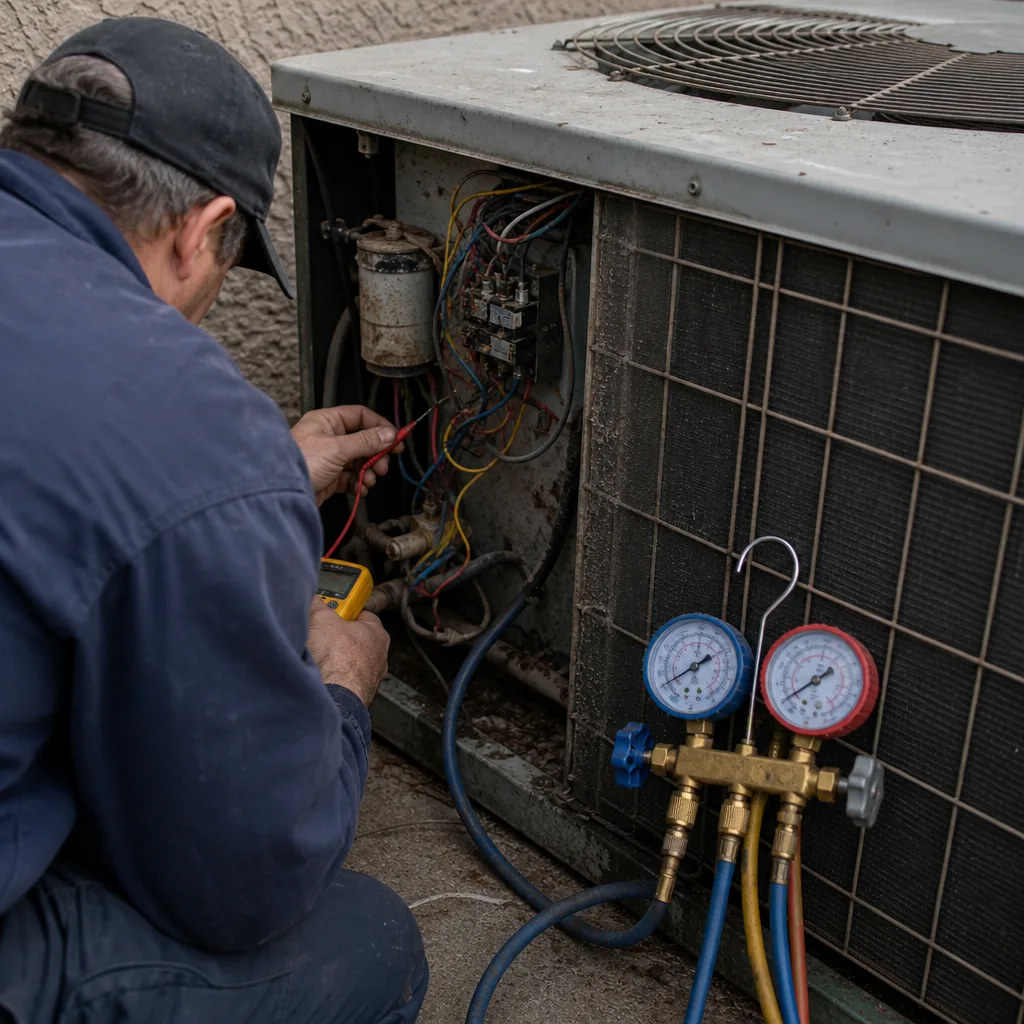
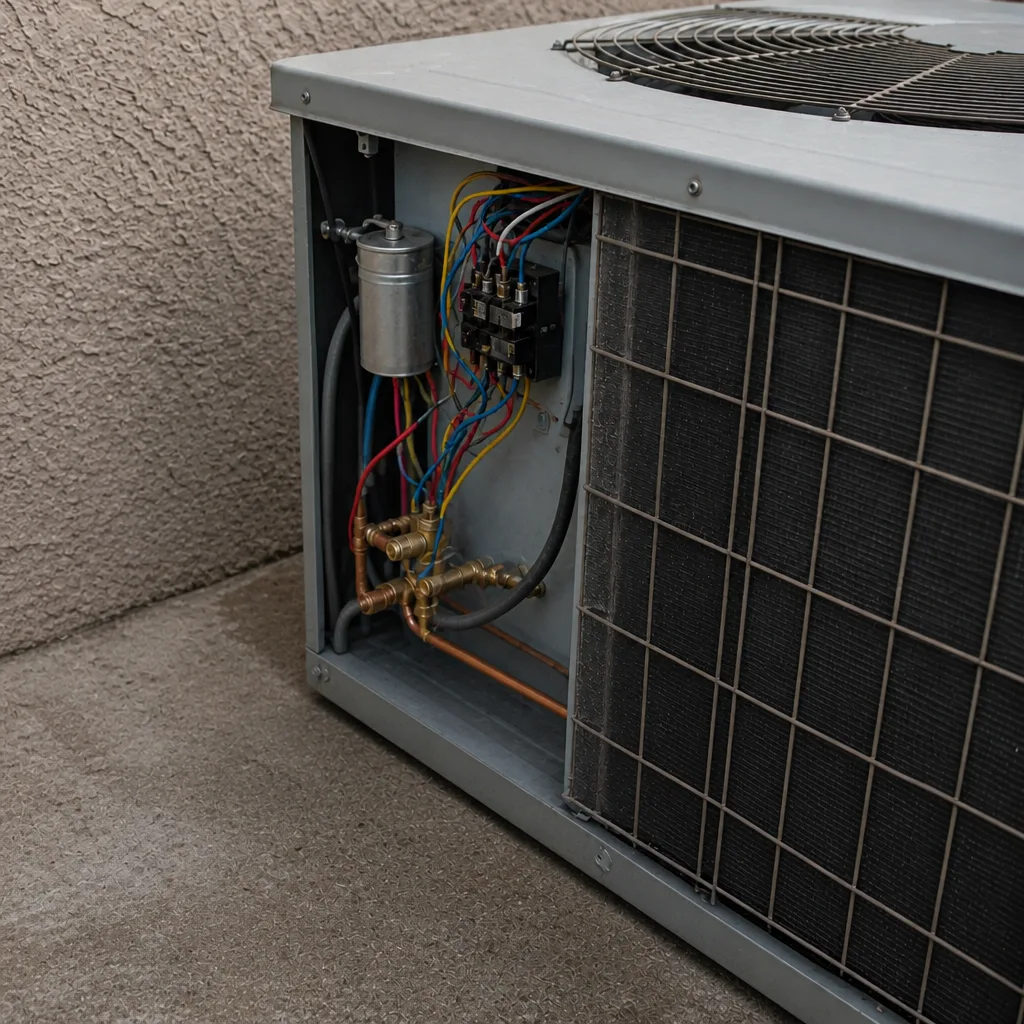
- Inspect electrical components. Capacitor, contactor, and fan motor are tested with a meter. These are the most common mechanical failure points in the outdoor unit.
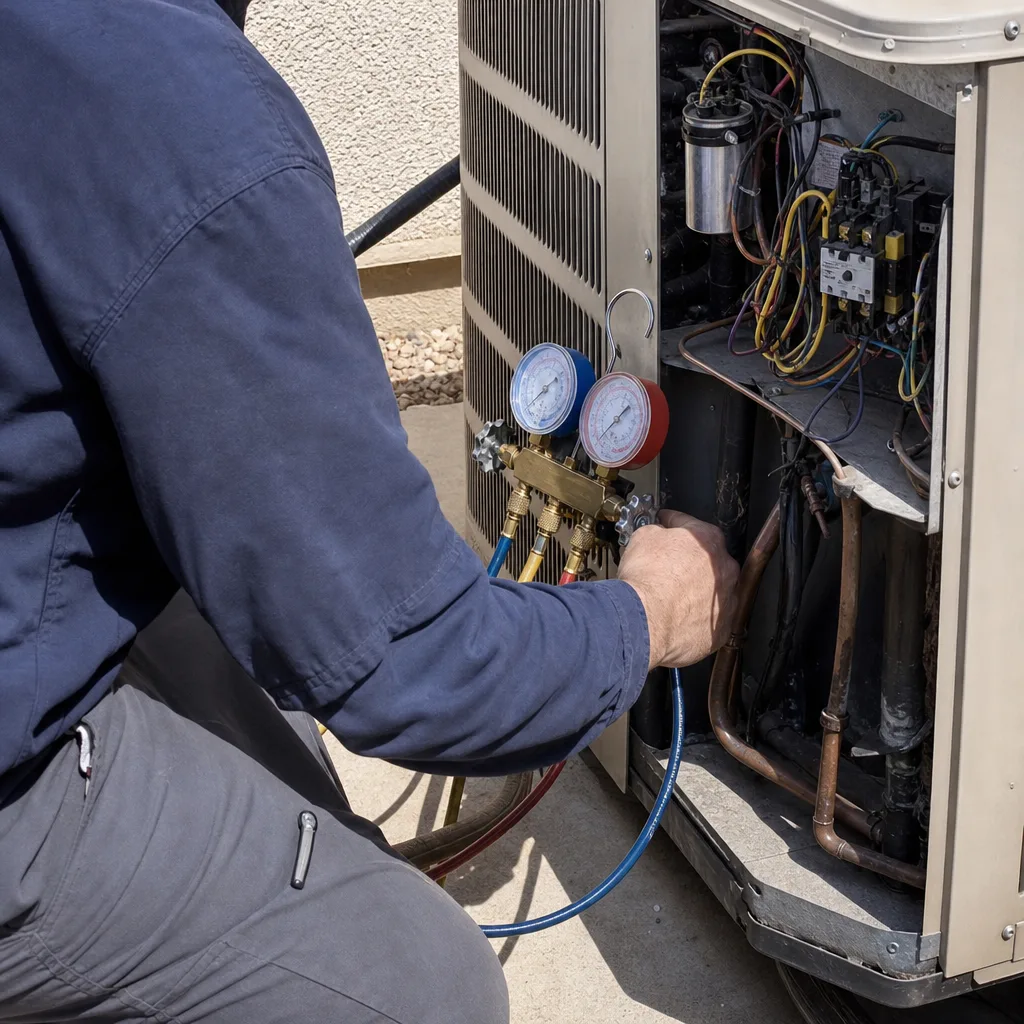
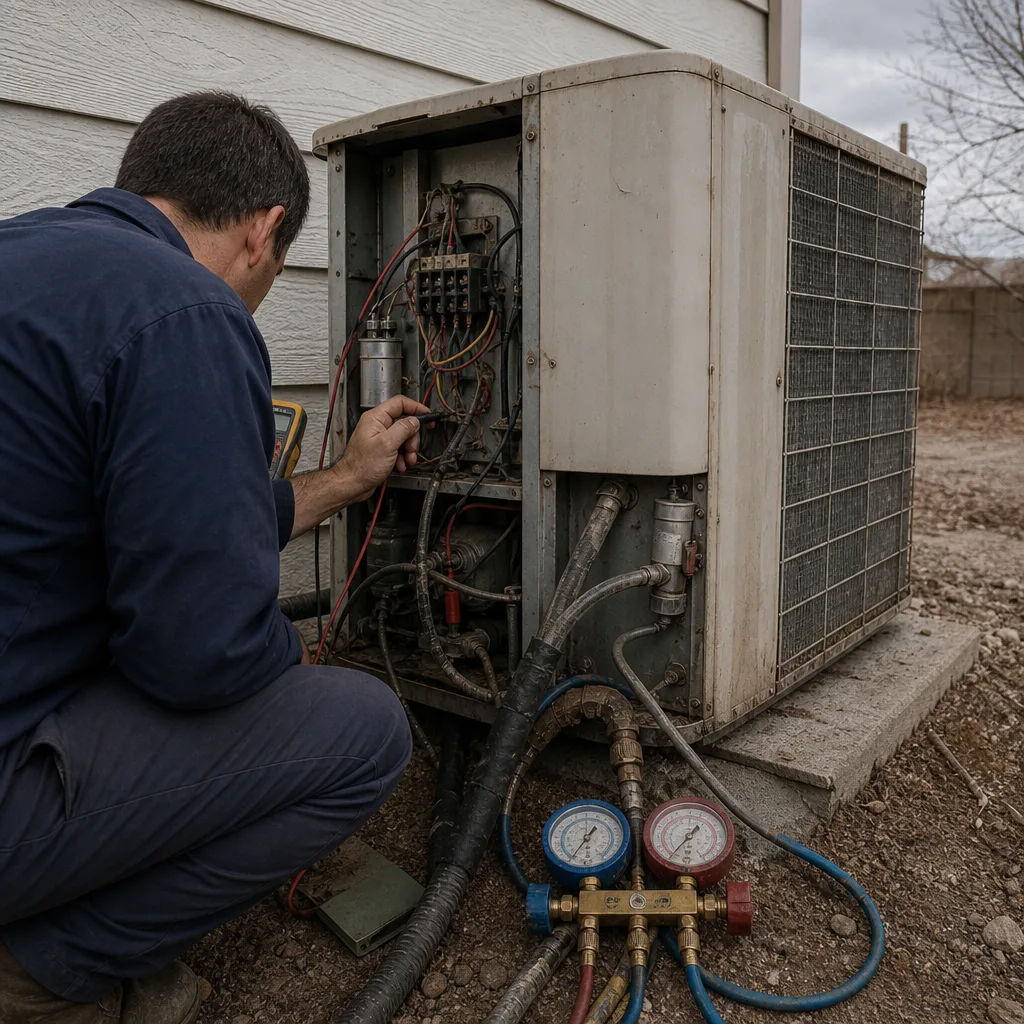
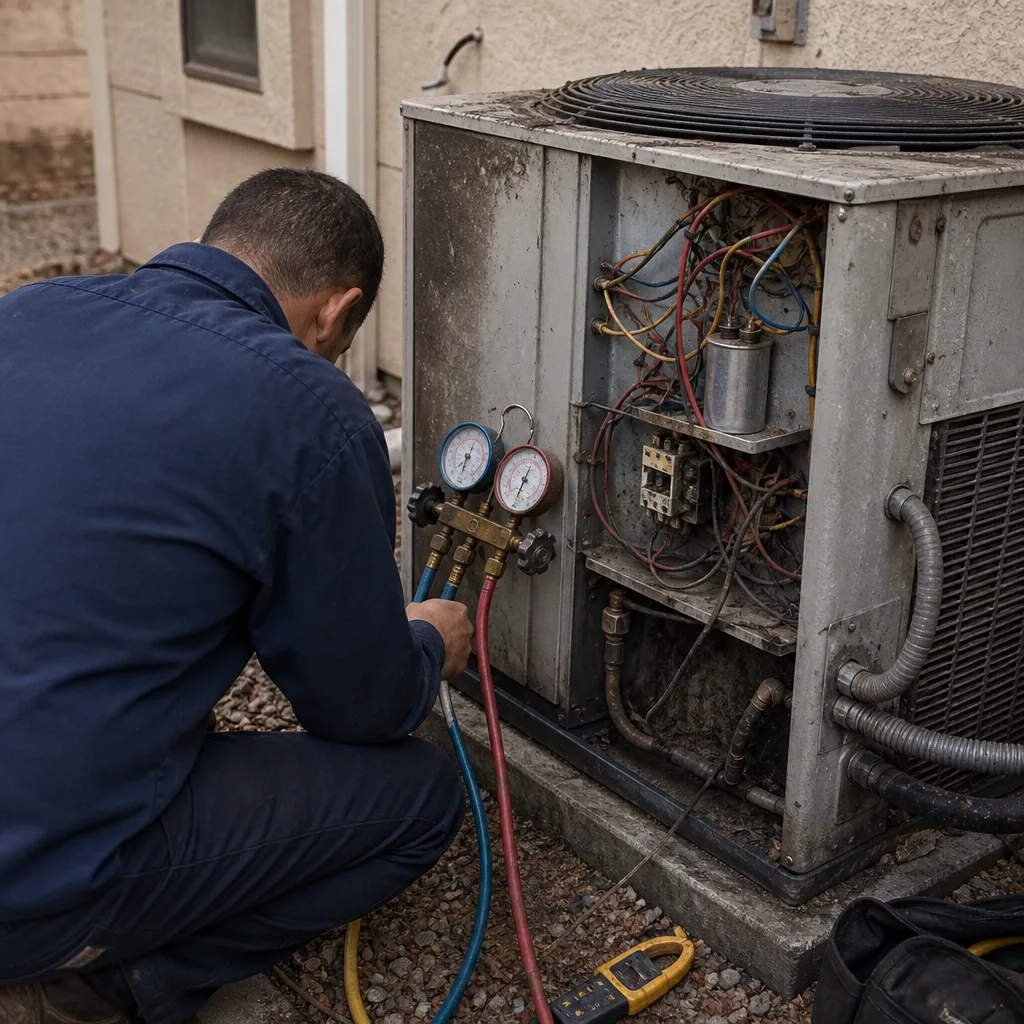
- Check the refrigerant charge and pressures. This is the step that requires EPA Section 608 certification. The technician measures the operating pressures and compares them to the manufacturer’s spec for the outdoor temperature, then interprets them.
- Trace any leak. If the system is undercharged, the technician finds the leak before adding refrigerant. Electronic leak detection, dye, or a pressure test – the method varies by location and access.
- Run the system through a full cycle. After the repair, the technician confirms the system holds the setpoint and cycles normally.
That diagnostic process is why we can cover AC repair across Carrier, Trane, Lennox, and the other brands we’re trained on without a learning curve. We see the brand you already have, not a system to pitch you out of. The written estimate sets the final price, and the estimate is free.
Why Boulder City Heat Raises the Stakes
Boulder City sits in the Mojave, and the summer there is not a polite suggestion. Days over 100 are routine from June through September, and days over 110 happen. A sleeping or functioning home depends entirely on the AC system running continuously through that heat. This is the environment where a small DIY mistake turns into an emergency in the same afternoon.
Two local conditions make homeowner repairs riskier than they would be in a more forgiving climate:
- Dust load. Desert wind fills the return with fine dust faster than in a wetter climate. A homeowner who skips filter changes because the system “seems fine” can ice a coil in weeks. That’s a full system stress event, not a filter swap.
- Continuous runtime. When the outdoor temperature is 110, the system doesn’t cycle – it runs. Any inefficiency from an overcharge, a mismatched part, or a clogged coil gets magnified because the compressor has no break. The same repair a homeowner might do in a coastal climate without incident can destroy a compressor here in one season.
We cover Boulder City across the whole summer with the repair side, the installation side, and the maintenance side. If the system is running, we can help keep it running. If it isn’t, Boulder City homeowners can call us and we’ll get someone out. Call (888) 906-2267. We answer 24/7. Fast dispatch from 7am to 7pm, Sunday through Friday.
Repair or Replace: The Calculation That Matters
Once the diagnosis is done, the homeowner faces the real decision: repair the system or replace it. The honest answer depends on four things – age, refrigerant type, cost of the current repair versus the cost of a replacement, and whether the system has been mistreated.
If a system is 15 years or older and the repair costs a meaningful fraction of replacement, replacement usually wins. If the system is running R-22 refrigerant, the refrigerant itself is no longer being manufactured in the US, and every repair requiring a charge becomes a search for remaining stock. If the system is under eight years old and the repair is under a few hundred dollars, repair is almost always the better financial move.
Where DIY enters the calculation: an older system that has had a refrigerant top-off by an uncertified party may look “repaired” but is still leaking. A proper leak test on an older system often reveals the problem is larger than the homeowner realized. That’s the honest diagnosis conversation we have with every homeowner – AC installation is on the table, but only after the repair option has been priced.
Common Mistakes to Avoid
- Adding refrigerant to a system without certification. It’s illegal, and it masks the leak that needs fixing. The first step is always finding the leak.
- “Topping off” because the system feels warm instead of diagnosing. Warm air has a dozen causes. Only one of them is low charge, and guessing is expensive.
- Replacing a capacitor without discharging it. The charge stored in a system capacitor can be fatal. A trained technician handles the discharge – a homeowner shouldn’t.
- Using a pressure washer on the condenser coil. The fin stock is thin and easily crushed. A garden hose is the right tool. A pressure washer turns a maintenance task into a coil replacement.
- Swapping a thermostat without photographing the wiring first. A single misrouted wire can trip the transformer or kill the control board. Take a photo before disconnecting anything.
- Ignoring a repeatedly tripping breaker. A breaker that trips more than once is telling you something is wrong. Resetting it a third time is how a motor fire starts.
- Assuming a manufacturer warranty survives a DIY repair. In most cases, it doesn’t. Read the warranty terms before you open a panel.
See the difference
 Before
 After
 Before
 After
 Before
 After
When to Call a Professional
Call a professional the moment the problem is anywhere near the refrigerant circuit, the compressor, or the electrical panel. That includes: a system blowing warm air, a system that won’t start, a system icing up on the indoor coil, a tripped breaker that won’t reset, water pooling near the air handler, and any system that has been “topped off” and isn’t holding the fix. If your system is under warranty and something fails, call before you open anything – protect the coverage. If the system is older than 15 years and the summer is already in full swing, a proper diagnosis is the only way to make the repair-or-replace decision without guessing.
AC Repair Boulder City offers free estimates in Boulder City. Call (888) 906-2267 for a free estimate. We work on Carrier, Trane, Lennox, American Standard, and the rest of the nine brands we’re certified on, and we handle repair, installation, and maintenance as a single point of accountability.
Frequently Asked Questions
No. Under EPA Section 608, the person purchasing or handling refrigerant must hold certification, and that applies in every state including Nevada. The certification covers the safe handling, recovery, and charging of refrigerant, not just the purchase. A homeowner without it cannot legally do the work, and cannot legally buy the refrigerant to do it with. Call (888) 906-2267 for a free estimate.
Filter changes, thermostat swaps with caution, clearing the condensate drain line, hosing off the outdoor condenser coil with the power off, and keeping the outdoor unit’s clearance open. None of those involve the sealed refrigerant circuit or the compressor. Anything that touches the refrigerant side of the system is out of the homeowner lane. Call (888) 906-2267 for an exact quote – estimates are free.
In most cases, yes. Manufacturer warranties from Carrier, Trane, Lennox, and others are typically written to require licensed professional service, and a homeowner repair gives the manufacturer a reason to deny a claim on that part. The cost of the denied part can far exceed what the DIY repair saved. Call (888) 906-2267 for a free estimate before a small repair becomes a large one.
It depends on what broke, but the three costs are the part that failed, the emergency repair, and any damage done getting to the repair. A misdiagnosed overcharge can destroy a compressor, which is the single most expensive component in the system, and pushes a homeowner from a repair quote to a replacement decision mid-summer. Call (888) 906-2267 for a free estimate.
Repair usually wins when the system is under eight years old and the repair is a few hundred dollars. Replace usually wins when the system is 15 or older and the repair is a meaningful fraction of replacement cost, or when the system runs R-22 refrigerant that’s no longer being manufactured. A proper diagnosis is the only way to make the call without guessing. Call (888) 906-2267 for a free estimate.
Usually the same day. Call (888) 906-2267 and we’ll dispatch a technician with fast dispatch from 7am to 7pm, Sunday through Friday. We answer 24/7, and a call outside dispatch hours is booked into the next opening.
Yes, especially for households with older adults, infants, or anyone with a medical condition. A Boulder City home without AC in late July is a health risk within hours. Call (888) 906-2267 and we’ll get a technician dispatched as fast as we can.
The Bottom Line
The DIY line for AC isn’t about how confident you feel. It’s drawn by federal law, manufacturer warranty terms, and the physical limits of what a homeowner can safely handle. Filters, thermostats, drains, and outdoor coil cleaning are yours. The refrigerant circuit, the compressor, and the electrical components are not – and the summer heat in Boulder City is exactly the environment where a small DIY mistake multiplies. Repair what’s safely yours to repair, call a specialist for everything else, and get a free estimate before a repair becomes a replacement.
Call (888) 906-2267 for a free estimate. We answer 24/7. Fast dispatch from 7am to 7pm, Sunday through Friday.
Written by the team at AC Repair Boulder City.