
Last updated November 18, 2026
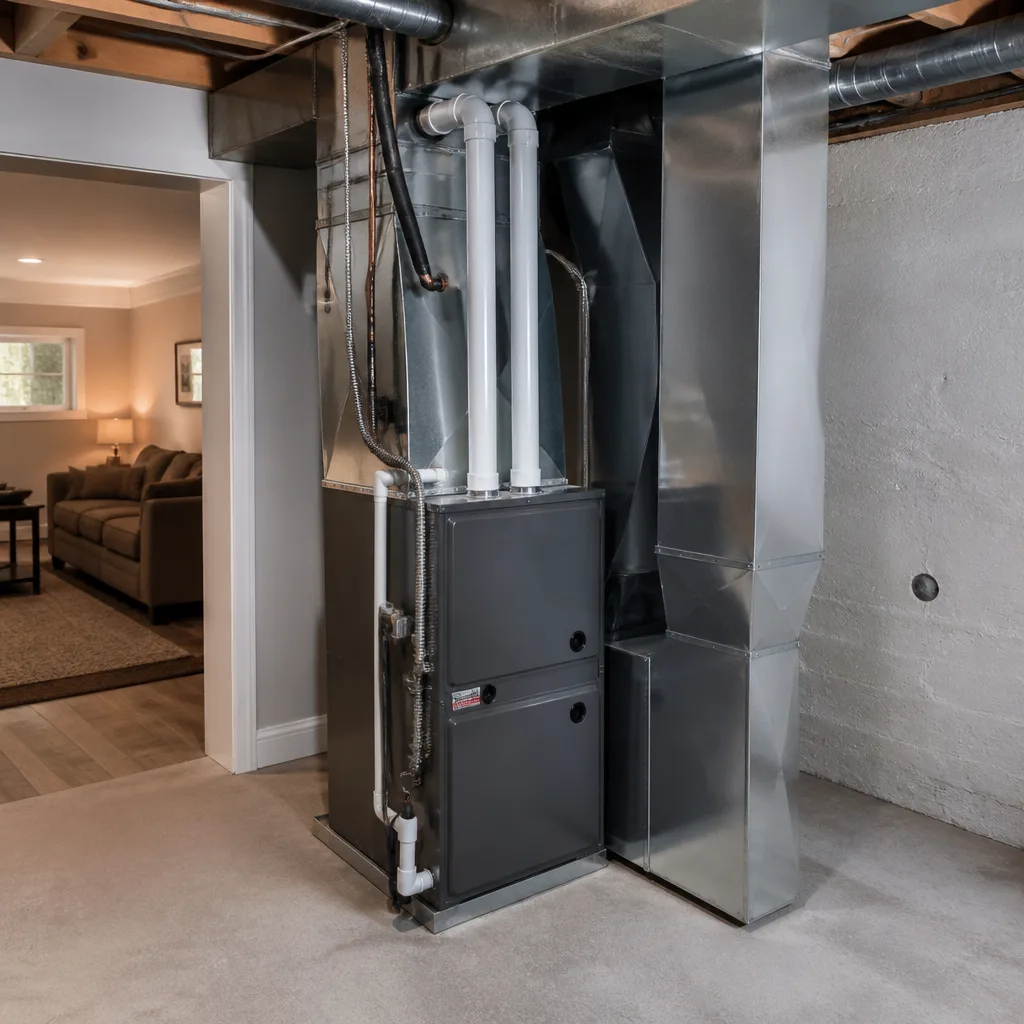 Furnace & heating
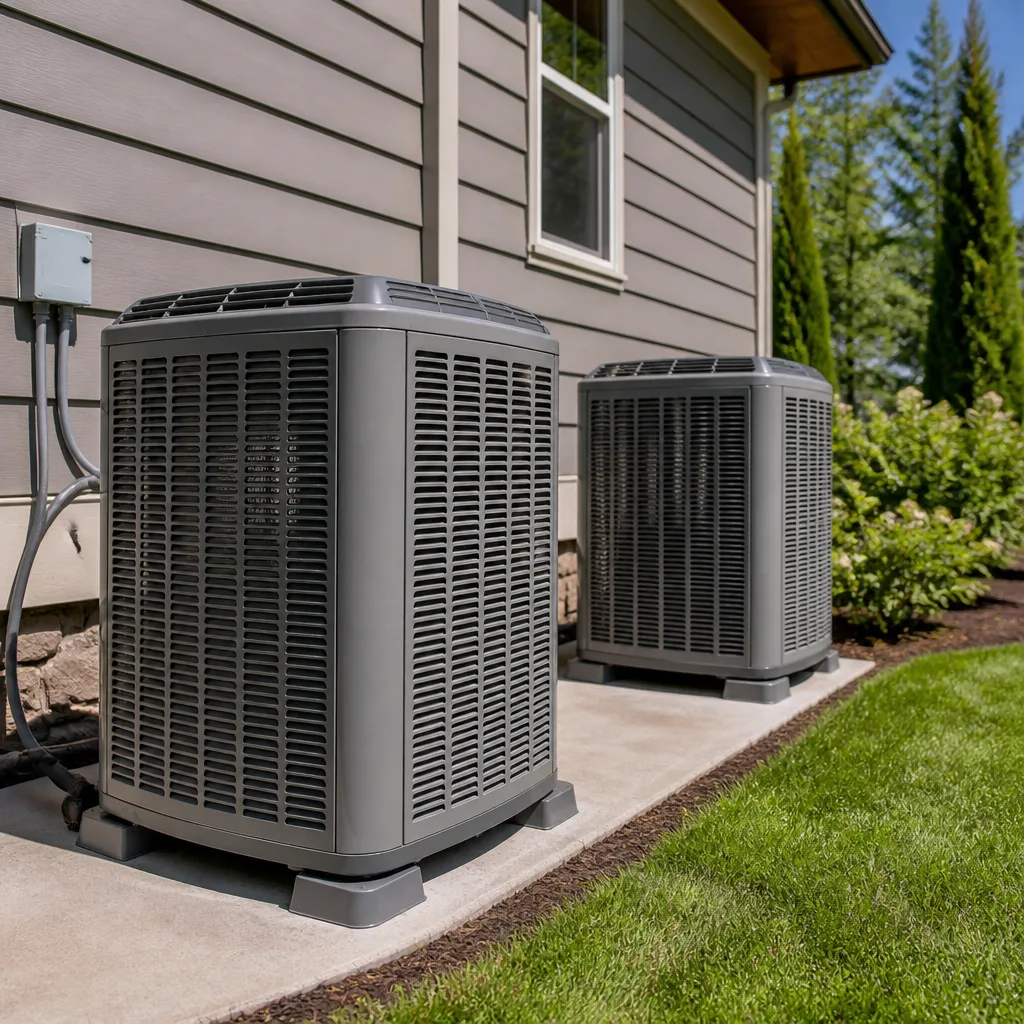 Heat pumps
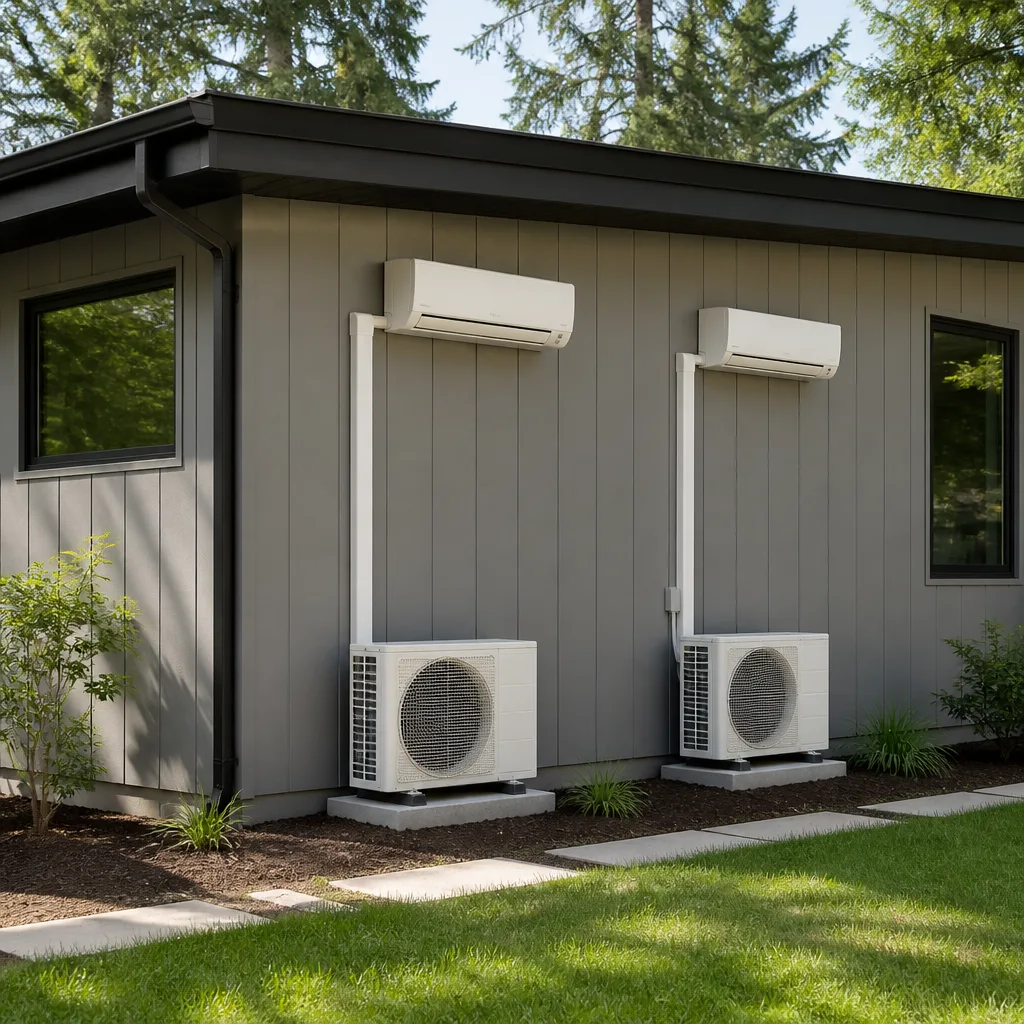 Ductless mini splits
 Carrier
 Trane
 Goodman
Seasonal tune-up and full diagnostic on your Carrier, Trane, or Goodman system - readings shown to you before any repair is proposed
Diagnosis first, numbers second - you approve the repair price before a single part goes in.
Get your free estimateHVAC Emergency Preparedness Guide for Boulder City Homes
Most homeowners treat an AC failure like a flat tire: annoying, inconvenient, fixable. In Boulder City, it’s closer to a medical event. During the hottest weeks of summer, 36 to 48 hour waits for emergency HVAC service are normal, and an indoor temperature that climbs above 95°F for that long is genuinely dangerous for elderly residents and young children. The mistake isn’t waiting to call. It’s having no plan for the hours between the breakdown and the fix. This guide covers what to check before you dial, how to hold indoor temperatures down while you wait, what to have ready so dispatch can triage your call accurately, and the prep work that shortens your wait when demand spikes. If you need a crew now, AC repair in Boulder City is where to start.
Quick Answer
AC emergency preparedness in Boulder City comes down to three things: knowing when a failure is a real failure and not a tripped breaker, having a room-level cooling plan for the 24 to 72 hour gap between breakdown and repair, and keeping your maintenance current so you’re near the front of the line when peak summer demand hits. The dry, triple-digit heat here makes an overnight indoor climb far more serious than in milder climates, so planning ahead matters more.
Styles & brands we work with
- AC installation
- Furnace & heating
- Heat pumps
- Ductless mini splits
- Carrier
- Trane
- Goodman
Key Takeaways
- A tripped breaker you can reset is not a system failure. Know the difference before you call.
- Plan for a 24 to 72 hour gap during peak summer. That’s the realistic window when demand surges across Boulder City.
- Seal off one room, block the afternoon sun, and slow heat gain rather than trying to cool the whole house.
- Have the right information ready: equipment brand, symptoms, timing, and whether anyone in the home is medically vulnerable.
- Stored portable units are only useful if the capacity matches dry desert heat, not the humid-climate sizing most buying guides assume.
- A maintenance agreement is an emergency preparedness tool, not a routine expense. Read the priority scheduling terms before you need them.
Table of Contents
- How to Tell a Tripped Breaker From a Real AC Failure
- What to Do During the 24 to 72 Hour Gap
- What to Have Ready When You Call
- Boulder City Cooling Resources for Vulnerable Residents
- Portable Cooling: Storage and Capacity for Dry Heat
- Maintenance as Emergency Preparedness
- Why Boulder City Heat Is Different
- Common Mistakes to Avoid
How to Tell a Tripped Breaker From a Real AC Failure
A tripped breaker is the single most common false alarm we hear about, and it’s also the easiest thing to rule out before you pick up the phone. But a breaker that trips is telling you something, and resetting it without thinking is where people get into trouble.
Here’s how to sort it out safely. Do this from the panel, never from inside the equipment cabinet:
- Go to your electrical panel and look for a breaker in the middle position or fully off, not the fully “on” position. That’s the trip.
- Check the thermostat and air handler. If the thermostat is dark and the indoor fan doesn’t run at all, a power interruption is likely.
- If a breaker is tripped, reset it once. Just once. Then go back inside and listen.
- If the outdoor unit hums and the fan spins, and the thermostat holds its settings, power was the problem. Watch it through the next cooling cycle.
- If the breaker trips again on that first reset, stop. Don’t reset it a second time.
A breaker that trips again, or a breaker that trips while the system has been running hard, points to something deeper: a failing compressor, a short, a wiring fault, or a capacitor on its way out. That’s not a reset problem, and a system struggling against a tripped breaker can cause real damage if it keeps being forced back on.
Safety note: Electrical panels and the wiring inside your AC equipment carry dangerous voltage. If a breaker won’t hold, if you smell burning, or if you see scorched wiring, treat it as a hazard and don’t keep resetting. That’s a call for a trained technician.
The other scenario is no trip at all. If the breaker holds, the thermostat is on, and the outdoor unit is silent, you have a genuine failure. If the fan runs but the air is warm, you have a genuine failure. Those are the calls that need AC repair, not a reset.
What to Do During the 24 to 72 Hour Gap
Once you’ve confirmed a real failure, the clock starts. In Boulder City’s dry heat, indoor temperatures can climb fast during the afternoon, so the goal shifts from “cool the whole house” to “protect the people in it.” A single sealed, cooled room beats a whole house you can’t keep up with.
Here’s the plan, in order:
- Pick one room. The smallest bedroom facing away from the afternoon sun, or an interior room with the fewest windows. Move the household into it during the hottest hours.
- Seal it off. Close the door. Roll a towel at the base. If the room has a window, keep window coverings shut tight during the day.
- Block the heat gain. In Boulder City, the sun beats on west and south-facing glass through the afternoon. Heavy curtains, blankets over windows, or cardboard in the glass all help. Anything opaque and light-colored works.
- Run the fan, not the system. The indoor fan can still circulate air if it’s working. A box fan in the sealed room pushes air across skin, which makes the air feel cooler even when it isn’t.
- Open windows at night only if it’s genuinely cooler out. In Boulder City, overnight lows drop significantly compared to the daytime peak, so a cross-breeze after dark can reset the house. Close everything again by mid-morning.
- Stop heat sources inside. Skip the oven. Run the dishwasher and laundry at night or postpone both. Incandescent bulbs and unused electronics add heat you don’t need.
- Hydrate on a schedule, not on thirst. In dry heat, you lose water before you feel thirsty. Set a timer and drink. Watch the elderly and young children in the home especially closely.
The mental model is the important part: during a gap, you’re not trying to maintain comfort across the house. You’re building a safe zone and holding it until the technician arrives.
What to Have Ready When You Call
A dispatcher triages severity from what you tell them. The more specific you are in the first thirty seconds, the more accurately your call gets routed and the less back-and-forth before a crew is assigned. In peak summer in Boulder City, triage accuracy matters. It’s the difference between a call that’s slotted correctly and one that has to be clarified and requeued.
Before you dial, have these six things in hand:
- Equipment brand and approximate age. If you own a Goodman, Rheem, York, or Daikin, say it. Technicians trained on the equipment you actually have can get to it faster.
- The symptom, in plain terms. “Blowing warm air,” “outdoor unit silent,” “breaker keeps tripping,” “loud noise then it stopped” are all clear. “It just isn’t working right” isn’t.
- When it started. Same-day symptoms point in a different direction than a problem that’s been building for two weeks.
- What you’ve already tried. Say whether you reset a breaker, changed a filter, or did anything else. Don’t leave a technician guessing.
- Household vulnerability. Say it plainly if there’s an elderly resident, an infant, a medical condition, or anyone who can’t tolerate prolonged heat. This affects how the call is triaged.
- Access details. Whether the outdoor unit is fenced, on a roof, or behind a gate. Gateway, the back steps, the side yard. Whatever a technician needs to know to find the equipment.
Those details let dispatch understand severity before anyone rolls. When you’re ready, call us: our phone line is answered always, and if we can’t dispatch a crew tomorrow, we’ll book you into the next opening, Sunday through Friday, 7am to 7pm, so you’re in the queue rather than on a callback list.
Boulder City Cooling Resources for Vulnerable Residents
A cooling plan works for most healthy adults. For elderly residents, young children, and anyone with a medical condition, a residential plan may not be enough during a heat event. If you’re in that situation, get to a place with reliable cooling rather than trying to tough it out at home.
Public indoor spaces are the most reliable option. A library, a grocery store, a community center, a mall. Even two hours in strong air conditioning during the hottest part of the afternoon lowers core temperature and takes pressure off the household.
For Boulder City residents who need more than that, Nevada has statewide heat resources. The state’s extreme heat program provides information on cooling options for residents who qualify, and dialing 2-1-1 connects you to a live operator who can point you toward cooling centers, transportation, and heat-related resources in your area. If you have an elderly neighbor or a family member on a fixed income without working AC, 2-1-1 is where to start making the call for them.
A few things worth doing before peak summer, specifically for vulnerable residents:
- Write the 2-1-1 number down and keep it somewhere in the house, not just in a phone.
- Identify the nearest public air-conditioned space and confirm its schedule ahead of time.
- Have a plan for getting an elderly resident out of the house if the indoor temperature crosses a dangerous threshold. Heat stroke risk climbs as indoor temps rise, and Boulder City summers can push a building past that threshold.
None of this replaces a working AC system, but during the 24 to 72 hour gap between failure and repair, knowing your alternatives matters. For those who rely on us to keep the system running, we’re a specialist on the residential side, not a source for social services. We’ll tell you what we’ve seen work for families in the gap, and the rest stays with the agencies that own it.
Portable Cooling: Storage and Capacity for Dry Heat
The portable AC unit you bought five years ago and shoved in the garage may or may not be useful. The bigger issue is that most sizing guides you’ll find online were written for humid climates, where evaporative cooling fails and a portable unit has to carry the whole load. Boulder City’s dry heat is a different calculation.
Capacity, in British thermal units, needs to match the room and the local conditions. In dry desert heat:
- Small sealed room, one person: A modest portable unit can hold a bedroom if the room is sealed and the window coverings work.
- Larger room or multiple people: You’ll need more capacity, and you’ll need to close off part of the room or accept that a fraction of it stays warm.
- Open floor plan: A portable unit running in an open floor plan rarely holds. Seal the room or don’t count on it.
Evaporative coolers are a different category. They work on dry desert air, and they can be genuinely effective in Boulder City when the humidity is low. But they also need ventilation to work: a window cracked in the room is not a leak, it’s part of the operation. If you’re relying on an evaporative cooler as backup, test it before the summer heat hits. A sleeping unit you’ve never run is not preparedness, it’s a decoration.
Storage rules that matter
- Store it dry and upright. Portable units that sit on their side or with water left in the pan corrode and mold.
- Drain and dry the water tank before storage. A closed tank with residual water is a breeding ground.
- Keep the filter clean. A stored unit with a clogged filter will run hot and weak on the day you need it.
- Test it once before summer. If it won’t start, better to know in spring than at 2pm in July.
- Store with the hoses and window kit together. The unit is useless without the kit.
We’ve seen a lot of portable units over the years, and the ones that hold up are stored carefully and tested early. If you’re not sure whether your backup unit has the capacity for the room you’re planning to seal, the honest answer is to bring it out, run it in that room, and see what it does. That’s the only test that matters.
Maintenance as Emergency Preparedness
Most homeowners treat a maintenance agreement as a routine expense: a technician comes out, changes the filter, cleans the coils, and leaves. That’s the visible part. The part that matters in an emergency is in the scheduling terms you didn’t read closely.
What to look for in the priority scheduling terms
- Position in the queue. A plan that puts you at the front of the queue during peak demand is an emergency tool. One that just gives you a cheaper tune-up isn’t.
- Frequency of service. Once a year, twice a year. Boulder City summers put serious hours on a system, so a spring check matters more here than in a milder climate.
- What’s actually inspected. Filters and coils are the minimum. Coil cleaning, refrigerant pressure, capacitance, and thermostat function are the real signal that someone is looking at your system rather than dusting it.
- Transferability. If you sell the house, does the plan transfer?
- Parts and labor limits. What’s included, what isn’t. Read this before you sign, not after a failure.
The strongest argument for keeping up with maintenance in Boulder City isn’t convenience. It’s that a system that’s been checked going into June is less likely to fail in July, and if it does fail, the homeowner with current service is the one ahead of the queue. That’s not an upsell talking. It’s the plain math of the emergency window.
Maintenance is also where brand-agnostic diagnostics matter. A technician who only works on one brand comes into a Goodman or a Rheem or a Daikin cold, and spends the first visit getting oriented. A technician trained across the major manufacturers walks up to a unit they already know. That’s the difference between a quick diagnosis and an unhurried one.
If you’re thinking about AC installation in the future, the maintenance conversation should start on day one of the new system. A unit that’s installed well and serviced on schedule is the single best piece of emergency preparedness a homeowner can own.
Why Boulder City Heat Is Different
Boulder City’s climate is dry, desert, and unforgiving from late June through August. The afternoon highs are the headline, but the overnight lows are the real story. Because they drop significantly after dark, a home that lets cool air inside overnight and shuts it out by mid-morning starts each day well ahead of one that doesn’t.
The dry heat changes the physics of a failing system too. A house with no cooling in a humid climate feels worse than the number on the thermostat suggests. A house with no cooling in Boulder City during a peak summer afternoon climbs fast, and indoor temperatures can pass the threshold where elderly residents are at real risk. That’s why an AC failure here is a plan-for-it-later problem, not a just-deal-with-it-when-it-happens problem.
The other local factor: demand. When a Boulder City heat wave hits, every homeowner in the valley is calling at once. The systems are working harder, the failures are clustered, and the wait times stretch. That’s why we say plan for the 24 to 72 hour window rather than hoping for a same-day fix.
What that means in practice:
- Spring is the time to check the system, not July. A unit that hasn’t been touched since last summer is the most likely to fail during the first heat wave of the season.
- Keep the filter change routine. Dust is a real factor in desert heat, and a clogged filter can push a system harder than it should be pushed.
- Know the overnight strategy for your specific house. Which windows open, which direction they face, when to close them.
- Have your plan in place before Memorial Day. Not after.
If you own a Trane, Lennox, or Carrier, or any of the other major brands, a technician who works on that equipment as a specialty is going to spot a wear issue during a spring check that a generalist might miss during an emergency call.
Common Mistakes to Avoid
- Resetting the breaker repeatedly. One reset is a diagnostic. Two or more is pushing a failing system to keep running and risking further damage. If it trips twice, stop and call.
- Waiting until it’s already hot to call. A system that’s “a little weak” in May is a failure waiting for July. In Boulder City, that’s the difference between a routine repair and an emergency gap.
- Assuming a portable unit is ready. A unit that hasn’t been pulled out since last summer may not start, may not have the capacity you need, or may be missing the window kit. Test it in spring.
- Not telling dispatch about a vulnerable resident. If there’s an elderly resident or infant in the home, say it in the first sentence. It’s how the call gets triaged correctly.
- Trying to cool the whole house with one open window. Sealed rooms work. Open-door plans don’t. Pick one room and commit.
- Running the oven and laundry through the afternoon. Every heat source inside the house extends the time it takes to climb back down.
- Signing a maintenance plan without reading the priority terms. The valuable part of a plan is where it puts you in the queue during peak demand, and that’s usually in the fine print.
See the difference
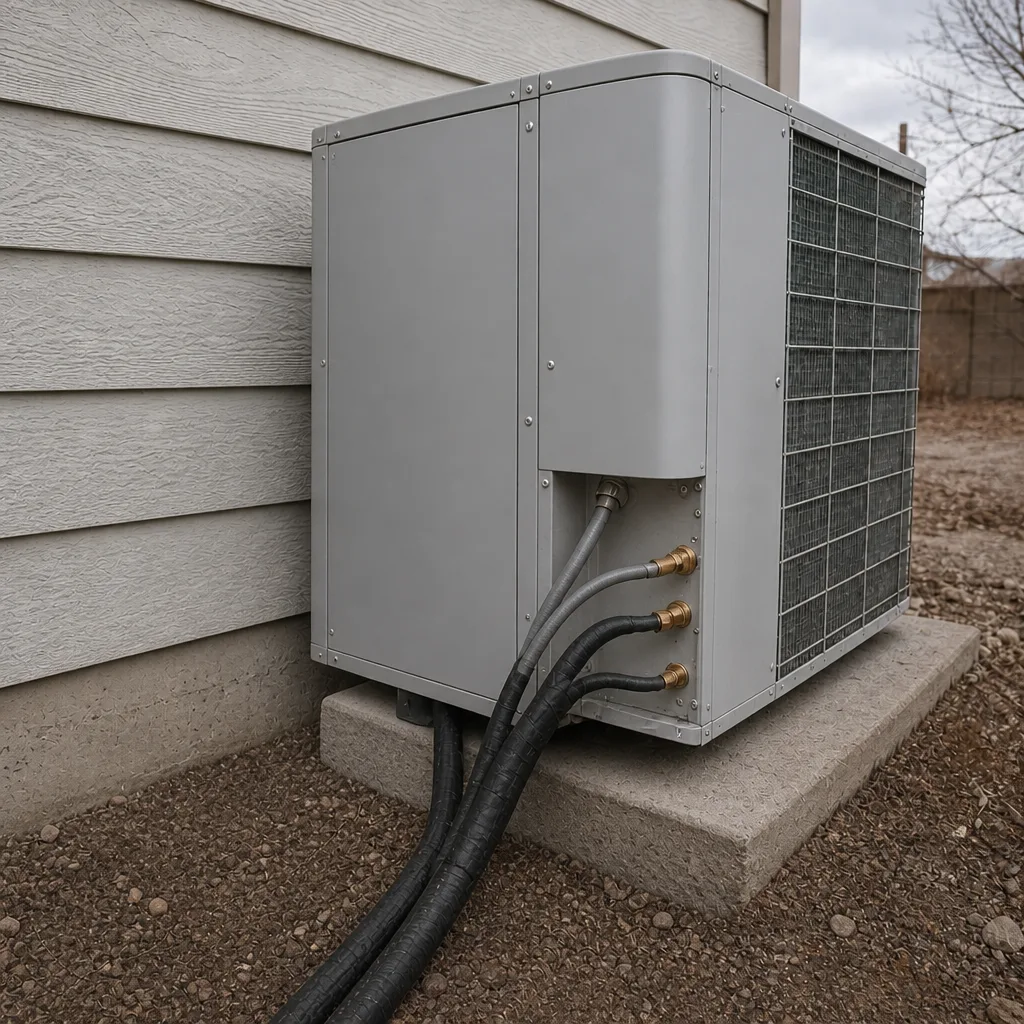
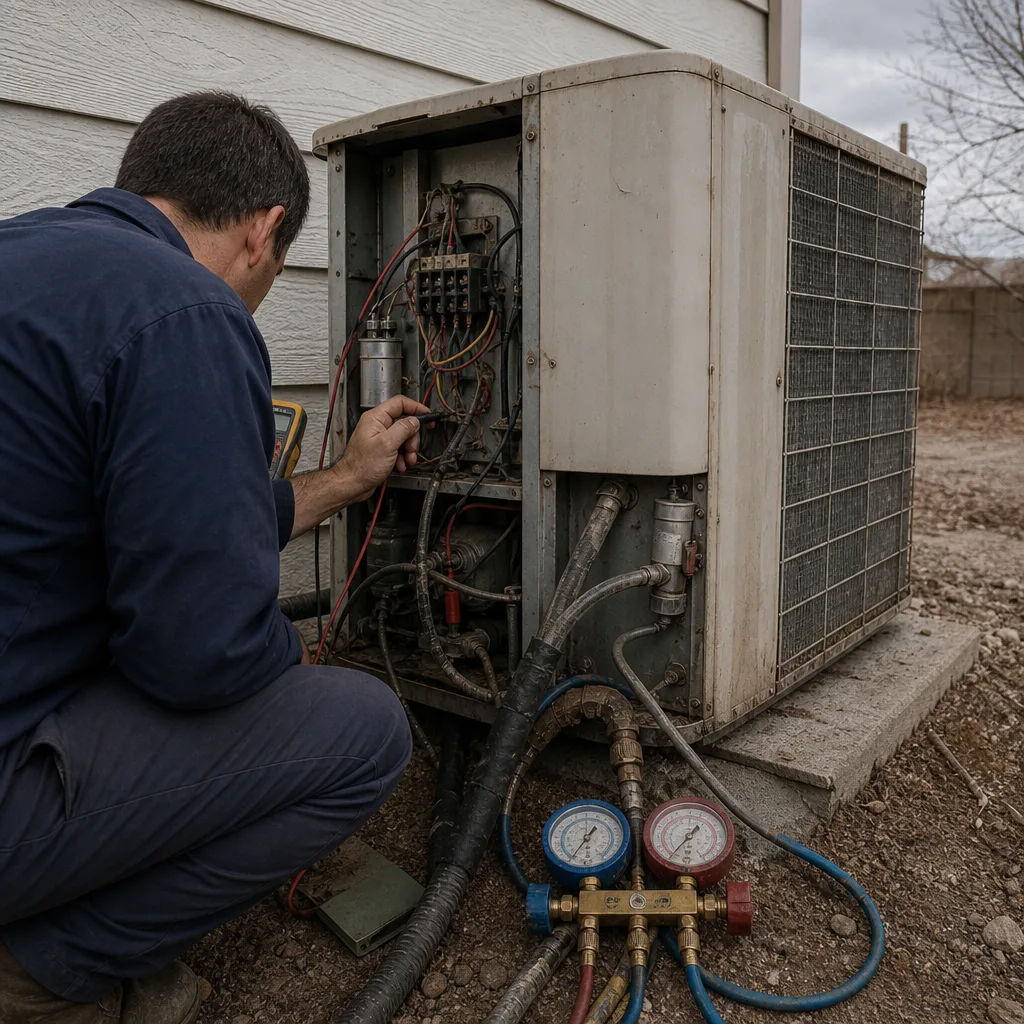 Before
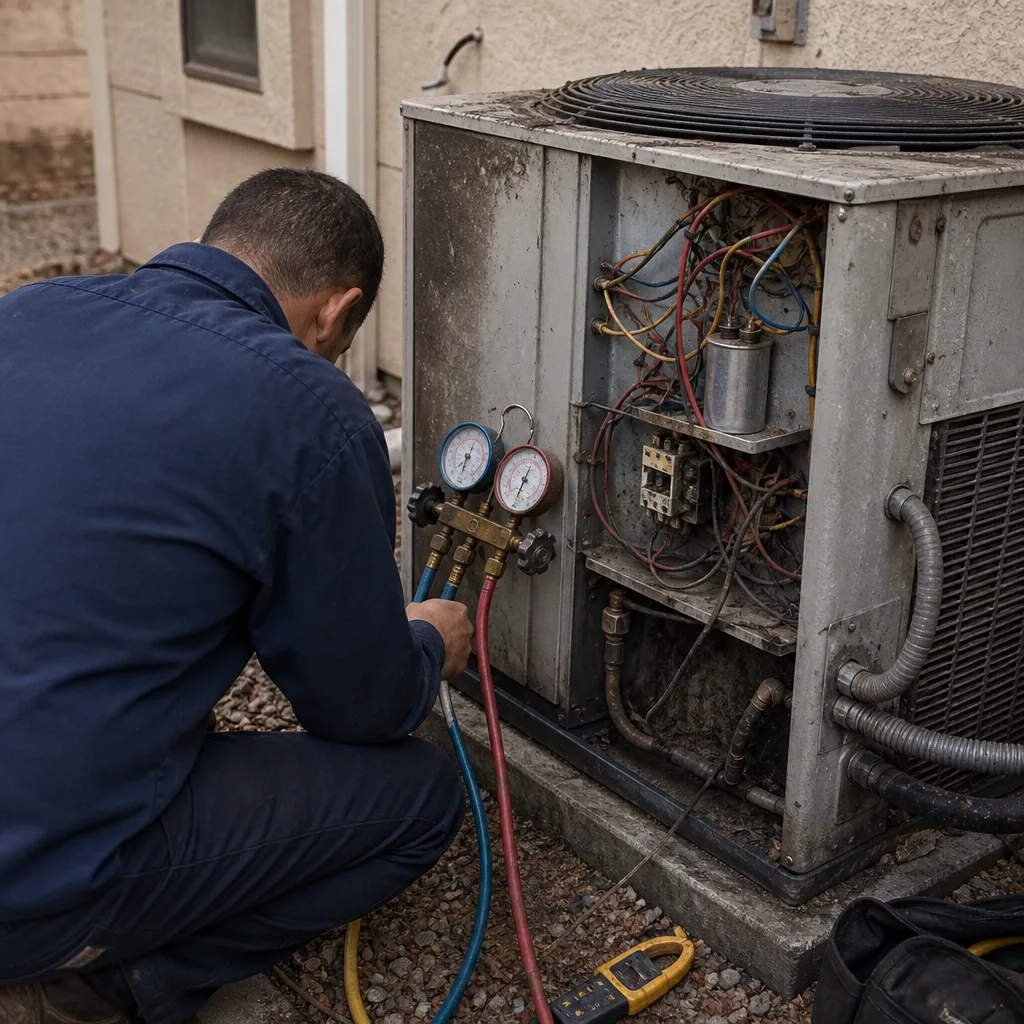
 After
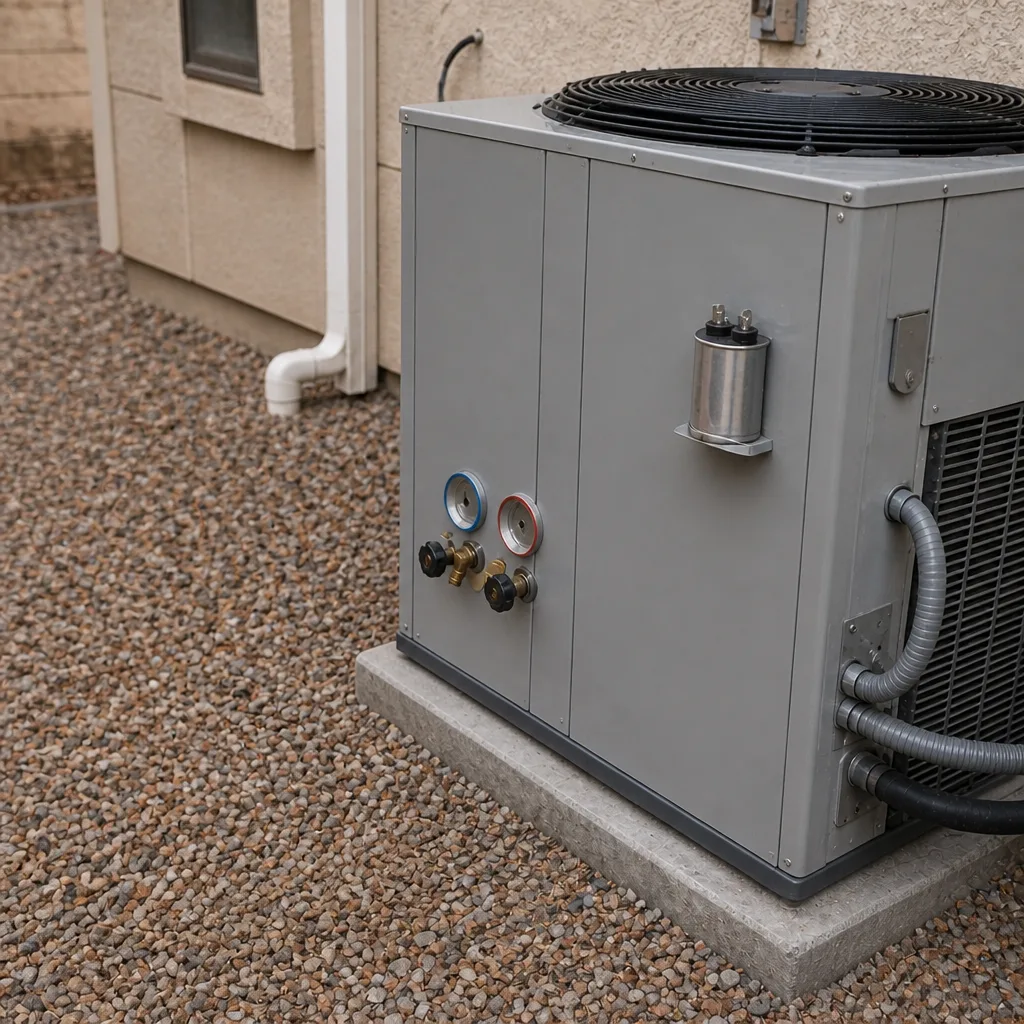
 Before
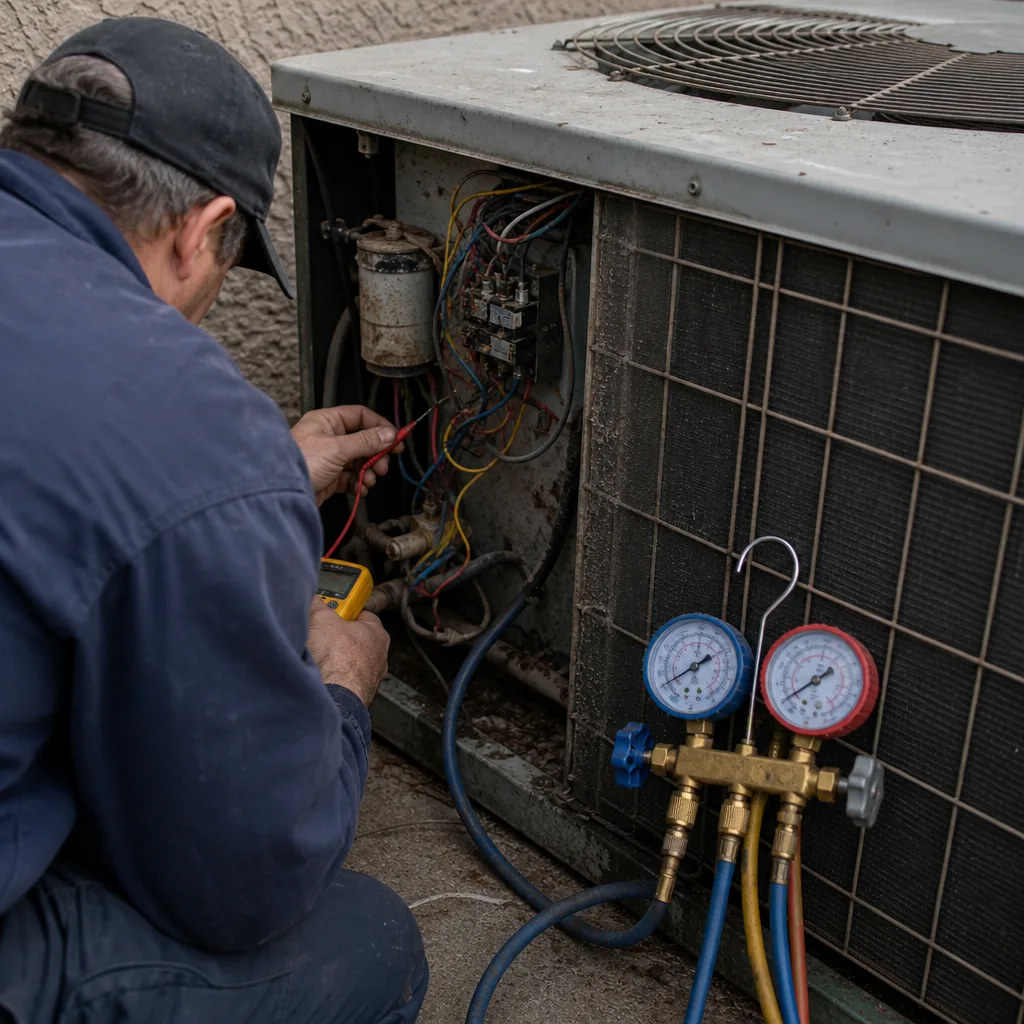
 After
 Before
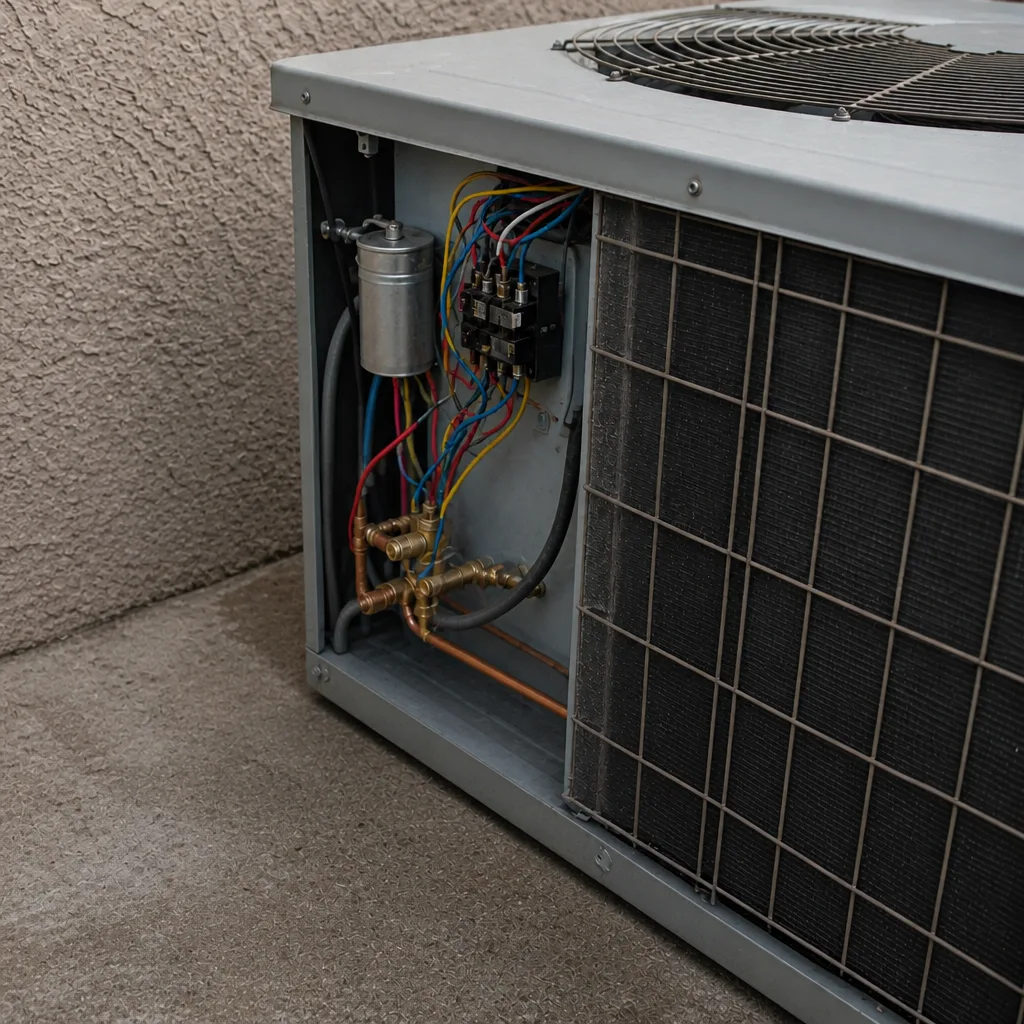 After
When to Call a Professional
Some things are worth a phone call and some are worth a plan. For the plan, this guide is what you need. For the call, here are the specific situations where you should stop reading and pick up the phone:
- The breaker trips twice after a single reset.
- The system runs but the air coming out is warm.
- You hear a grinding, screeching, or loud thump from the outdoor unit and it stops running.
- The system short-cycles: it starts, runs briefly, and shuts off over and over.
- You smell burning or see scorch marks on wiring or at the panel.
- There’s water pooling around the air handler or outdoor unit.
- An elderly resident, an infant, or anyone medically vulnerable is in a home without cooling during a heat event.
AC Repair Boulder City offers free estimates in Boulder City. Call (888) 906-2267. We answer always, fast dispatch from 7am to 7pm, Sunday through Friday, closed Saturday.
Frequently Asked Questions
Plan for 24 to 72 hours during peak summer demand. Boulder City’s heat waves cluster failures, and every homeowner calling at once pushes lead times out. Having a cooling plan for that gap is the reason this guide exists. If you’re already in a failure, calling early and giving dispatch good information gets you into the queue faster.
No. You can reset it once as a diagnostic. If it trips again on that first reset, stop. A breaker that holds the first time is telling you power was the issue. A breaker that trips twice is telling you there’s a fault inside the system, and resetting it repeatedly can cause more damage. That’s a call for a trained technician.
Yes, if the capacity matches the room and the room is sealed. Dry desert air is actually where evaporative coolers work best, and portable AC units can hold a small sealed room. But sizing guides written for humid climates will point you toward a unit that’s too large for a sealed room in Boulder City. Test the unit you own before summer, not during a failure.
Your equipment brand and rough age, the symptom in plain terms, when it started, what you’ve already tried, whether anyone in the home is medically vulnerable, and how to find the outdoor unit. Dispatch triages from those details. If there’s an elderly resident or infant in the home, say it first.
Yes, if the priority scheduling terms put you at the front of the queue during peak demand. Most plans offer a spring tune-up, but the part that matters in July is where the plan positions you in the queue. Read the fine print before you sign. The maintenance itself also lowers the odds of a peak-summer failure in the first place.
If the system is toward the end of its expected service life and has needed more than one repair this year, replacement before summer is usually the safer call. A failing system in July puts you in the emergency queue. A planned replacement in spring puts you ahead of it. We’ll look at what the system actually needs and give you a written price, not a sales pitch.
The Bottom Line
AC preparedness in Boulder City is a plan, not a purchase. Know the difference between a tripped breaker and a real failure. Build a one-room cooling strategy you can execute in five minutes. Test the portable unit before summer, not during a failure. Have your equipment details ready so dispatch can triage accurately. Read your maintenance agreement’s priority terms before you need them. Do everything on this list before Memorial Day and the 24 to 72 hour gap during a heat event is a manageable problem instead of an emergency. If you’re already in the gap, call (888) 906-2267. Free estimates, and we’ll tell you exactly what the system needs.
Written by the team at AC Repair Boulder City.