
Last updated November 18, 2026
 Furnace & heating
 Heat pumps
 Ductless mini splits
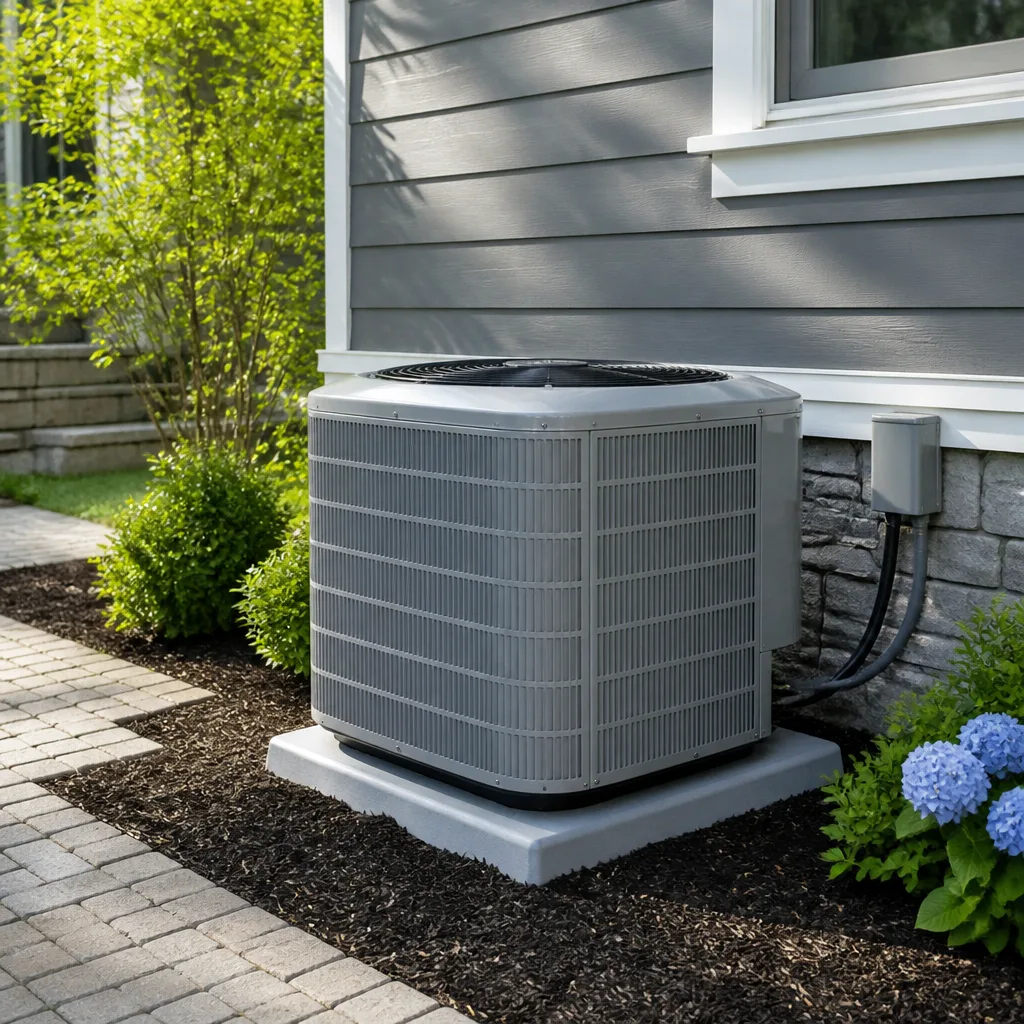 Carrier
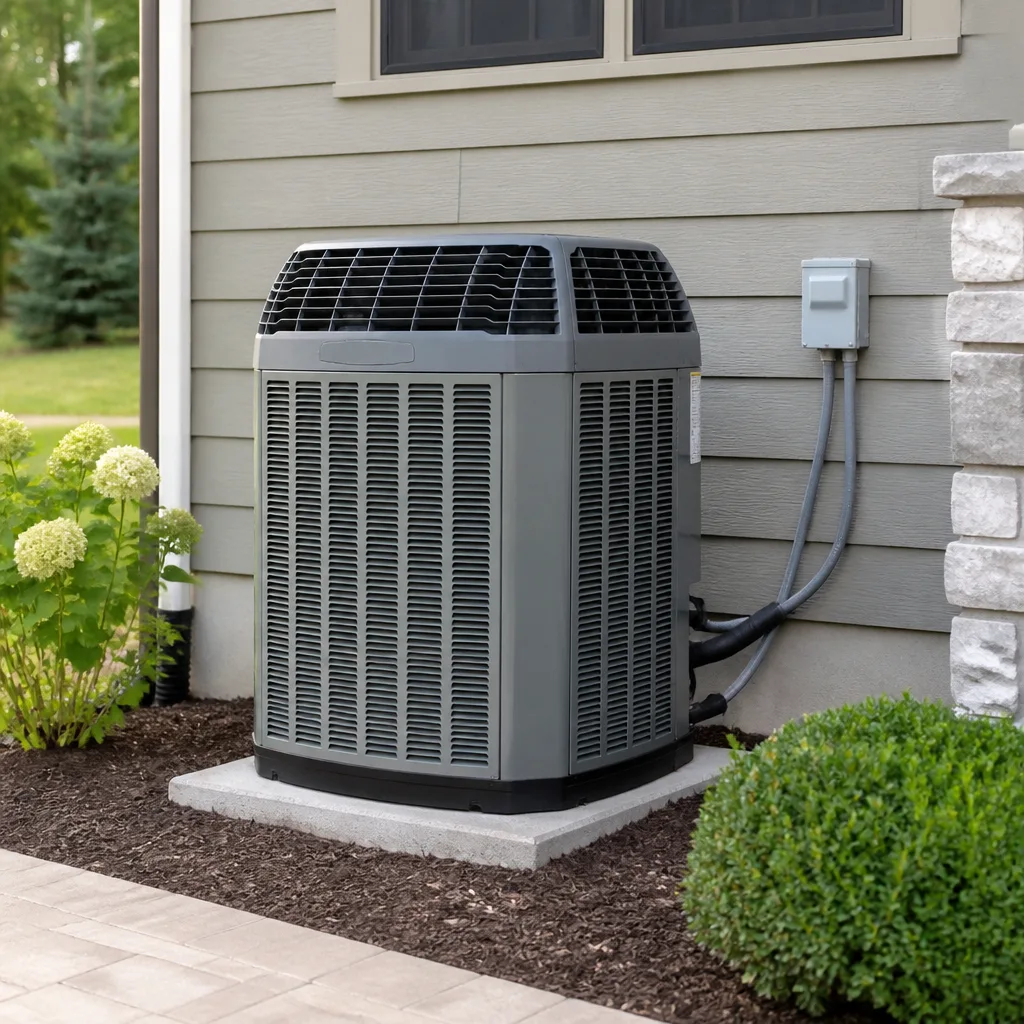 Trane
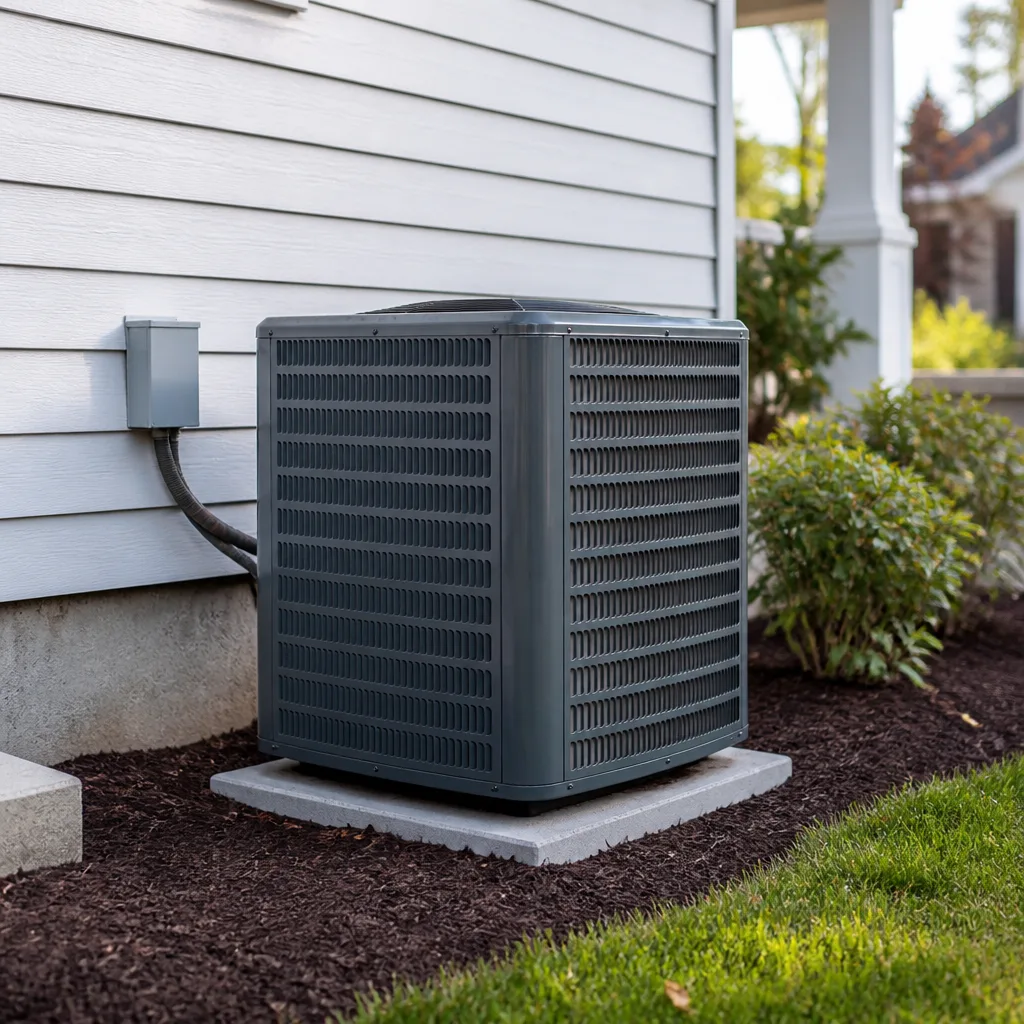 Goodman
Seasonal tune-up and full diagnostic on your Carrier, Trane, or Goodman system - readings shown to you before any repair is proposed
Diagnosis first, numbers second - you approve the repair price before a single part goes in.
Get your free estimateSeasonal HVAC Care for Boulder City: Year-Round Homeowner’s Guide
Most seasonal HVAC guides are written for places with four seasons, and that’s the problem. Boulder City doesn’t run on a four-season calendar. It runs on two intense ones and two short transitions. The window between cold nights and the first stretch of runs-all-day heat is roughly six weeks, which means the spring tune-up most guides tell you to do in April needed to happen in February here. Miss that window and you’re asking for service in June along with everyone else. This guide lays out a calendar built for Boulder City’s actual climate: what to do in February and March, what to do in October and November, and why the northern-state advice you’ll find online can cost you money.
Quick Answer
Seasonal HVAC care in Boulder City comes down to two real work windows, not four: a pre-summer window in February and March, and a pre-winter window in October and November. The February-to-March window matters most because it’s your only chance to catch a failing capacitor, dirty condenser coil or low refrigerant charge before the system is under all-day summer load. The October-to-November window is about protecting the outdoor unit and checking the heat strips you’ll need on sub-freezing desert nights. Filter changes follow Boulder City’s dust season, not a generic 90-day rule.
Styles & brands we work with
- AC installation
- Furnace & heating
- Heat pumps
- Ductless mini splits
- Carrier
- Trane
- Goodman
Table of Contents
- Why Boulder City Has Two HVAC Seasons, Not Four
- The February-March Window: Pre-Summer AC Prep
- The October-November Window: Pre-Winter Prep
- Why Heat Strips Matter in a Desert Climate
- Using Your Utility Bill as a Performance Baseline
- Outdoor Unit Winterization: What Actually Applies Here
- Filter Changes Mapped to Boulder City’s Dust Season
- When Seasonal Care Is a Job for a Technician
Why Boulder City Has Two HVAC Seasons, Not Four
Boulder City sits in a high desert that swings hard. Summer afternoons push equipment to its limit for months, and winter nights drop below freezing often enough that a heat strip failure is a real problem, not a theoretical one. Between those two extremes you get short transition periods: a few cool weeks in early spring and a few mild weeks in late fall. That’s the whole calendar.
The four-season model assumes a slow build through spring, a moderate summer, a gradual fall and a long heating season. It also assumes a furnace-and-central-AC split, where each system gets its own dedicated stretch of idle time. In Boulder City, your air conditioner is the workhorse of the household for a much longer stretch of the year, and the cooling load ramps up fast. A system that ran fine in April at 85 degrees can fail in July at 105, because it was never asked to work that hard during the mild period.
The practical implication is simple: timing matters more than frequency. Two well-timed maintenance visits beat four evenly spaced ones. A February inspection catches the problems that summer load will expose. An October inspection catches what summer left behind and prepares the equipment for the cold snaps. The mild weeks in between aren’t maintenance season; they’re the time to schedule the next real visit.
We work on the brand you already have, whether that’s a Carrier system in a Boulder City home or an American Standard unit that’s been running for a decade. The timing advice is the same regardless of nameplate, because the climate doesn’t care what badge is on the condenser.
The February-March Window: Pre-Summer AC Prep
The pre-summer window in Boulder City opens when nightly lows stop dipping to freezing and closes when the first sustained warm spell hits. In practice that’s late February through March, and it’s the single most valuable maintenance slot of the year. Here’s what a proper pre-summer visit covers and what you can check yourself beforehand.
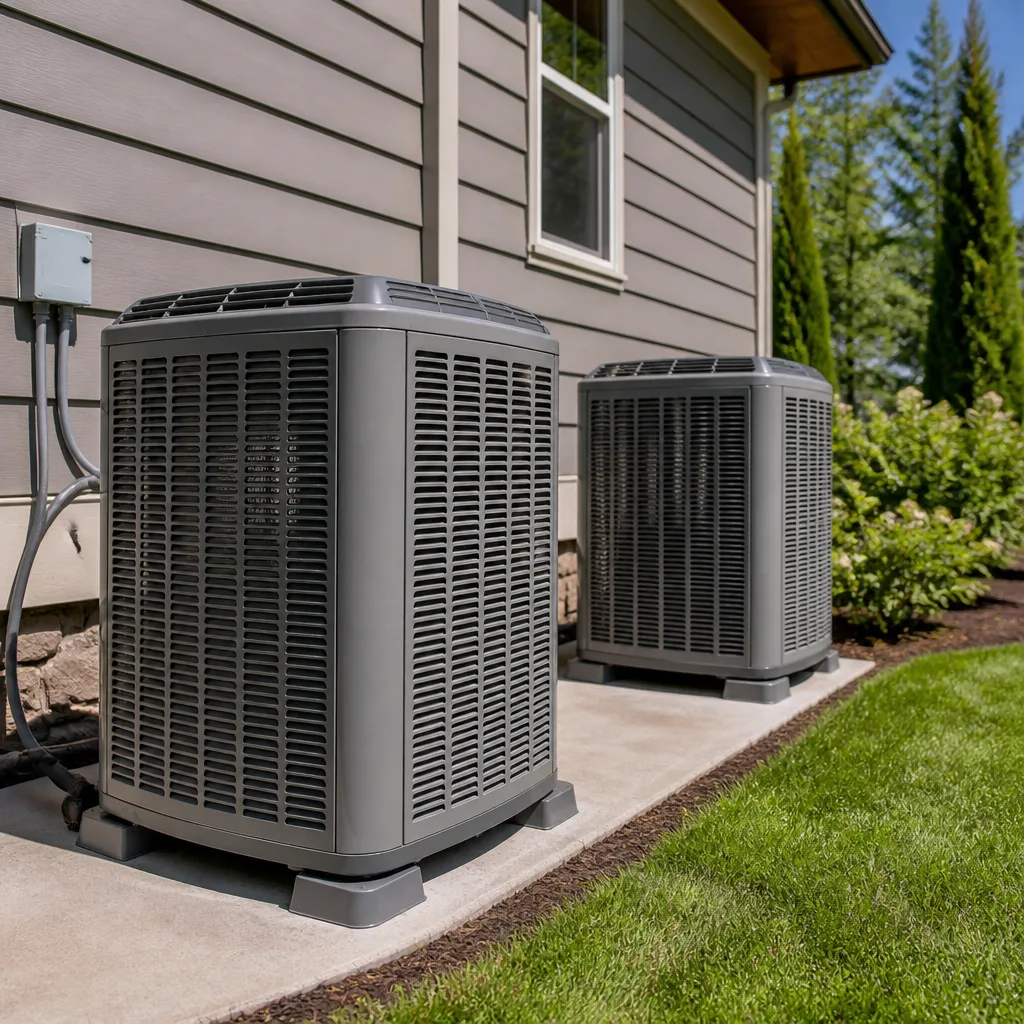
- Walk the outdoor condenser. Clear leaves, tumbleweeds, dust buildup and any stored items within a couple of feet of the unit. A condenser that can’t breathe loses efficiency fast in desert heat.
- Rinse the coil face carefully. A gentle hose rinse on the accessible coil surface helps. Avoid high-pressure spray, which bends fins.
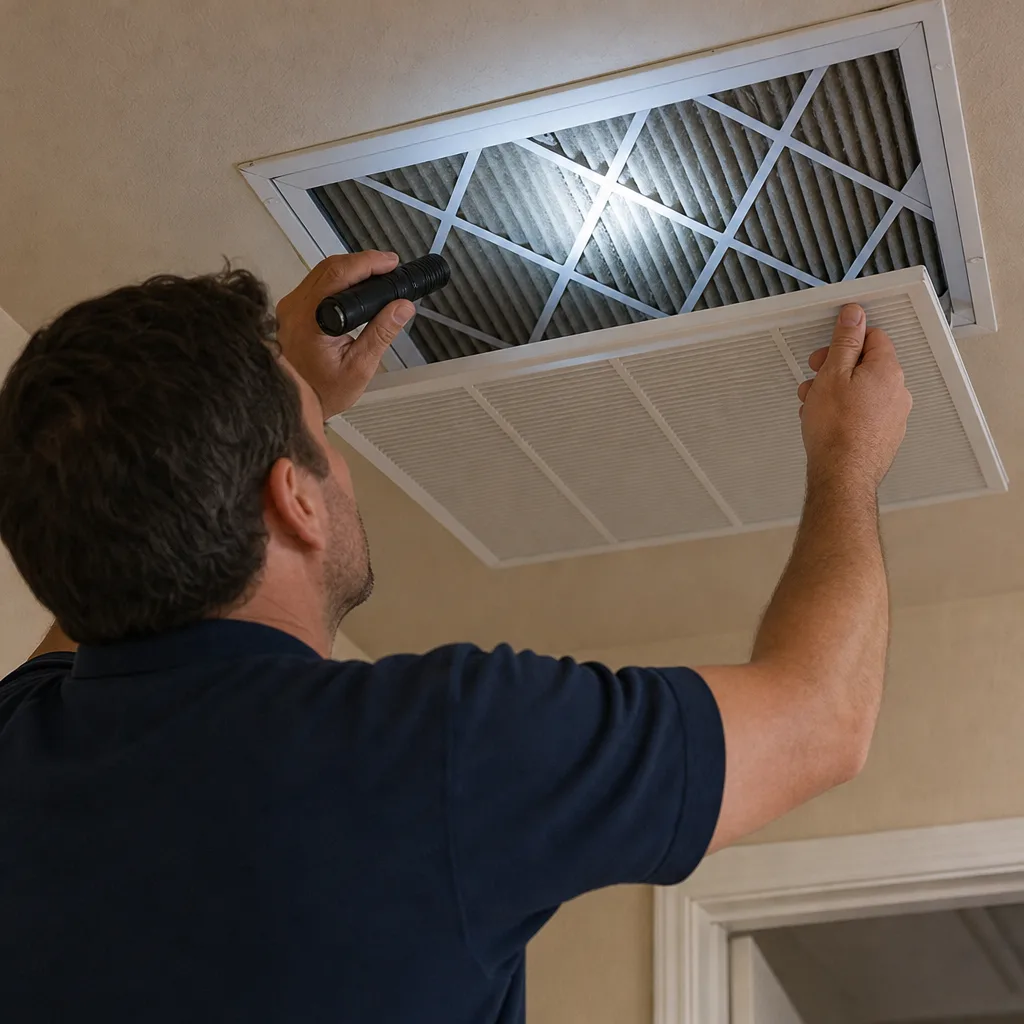
- Check the air filter. If it’s matted with dust from winter, replace it before the first long cooling run. Filter condition is a huge factor in summer performance.
- Test the thermostat in cooling mode. Run the system briefly on a mild day and confirm it starts, cools and shuts down cleanly. Loud clunks or short cycling are worth investigating before summer.
- Check the condensate drain. In low-humidity climates the drain line can still clog with dust and debris. If it backs up, you’ll get water damage or a shutdown.
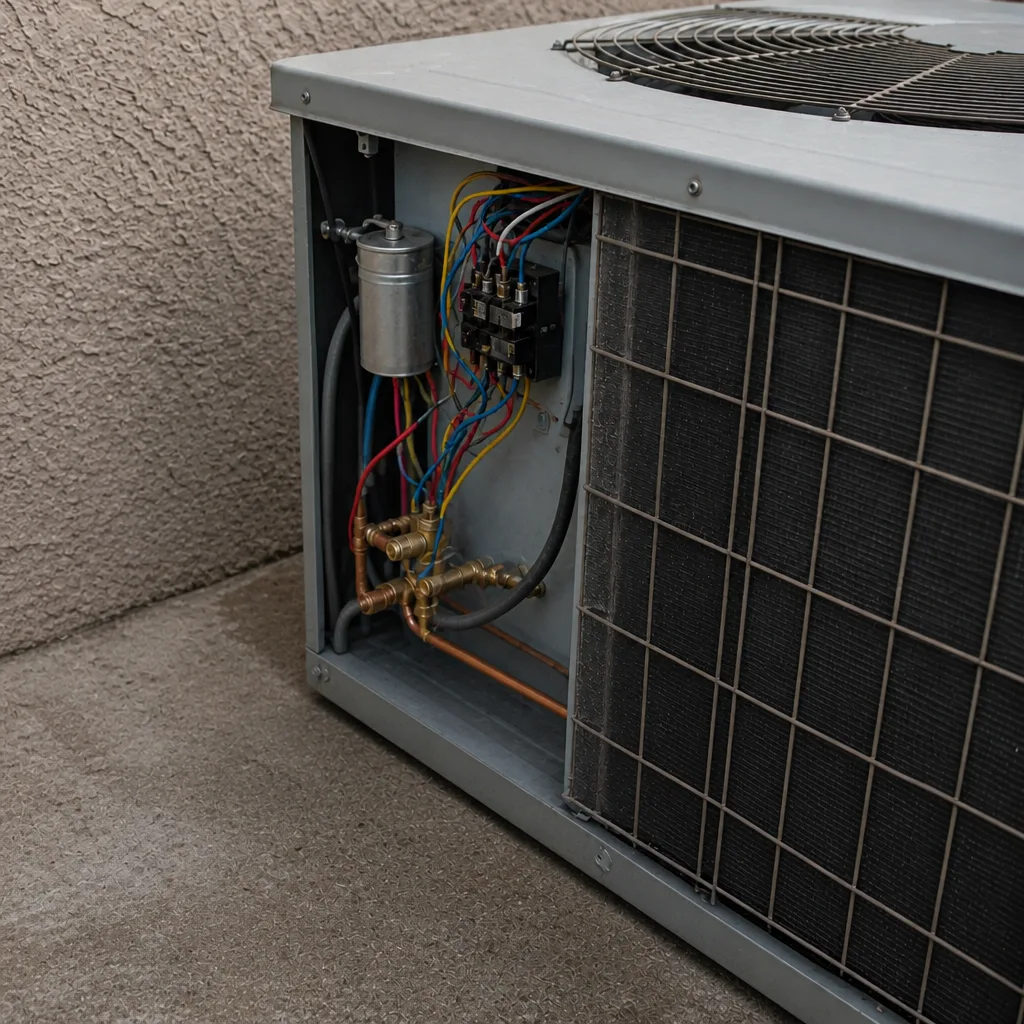
- Schedule the technician visit for refrigerant and electrical checks. Capacitors, contactors, refrigerant charge and compressor draw need a trained eye and gauges. This is exactly what a pre-summer tune-up covers.
Do this in February and March and you’ll have a system that’s already proven under load before the hard months. Skip it and the first sign of trouble usually shows up in early June, when everyone else in Boulder City is calling too. If you’d rather have a specialist look it over, scheduled AC repair in the pre-summer window is far cheaper in results than waiting for a failure.
The October-November Window: Pre-Winter Prep
The pre-winter visit is about protecting what summer worked hard on and preparing for cold. Boulder City nights drop below freezing with regularity in winter, which means even a desert home depends on some form of heat. A system that spent all summer cooling your home has been stressed for months; October and November are when you find out what that stress did.
- Inspect the condenser for summer wear. Coil fins take a beating, and dust from the dry months packs into the housing. Fall is when you clear it out.
- Check the capacitor and contactor again. These are the most common wear items on any system, and they’re cheap to replace before they fail than to replace after they’ve caused a summer startup problem.
- Test the heating function. If your system includes heat strips or a heat pump mode, run it briefly on a cool October morning. A silent heat strip is easy to miss until you need it.
- Seal and insulate where practical. Line sets and outdoor penetrations deserve a look before cold air moves in. Small gaps matter more than they seem.
- Set the thermostat schedule for the season. A programmable or smart thermostat is only as good as its schedule. Adjust the heating and cooling setpoints now so you’re not fighting it later.
We’ve seen plenty of homes where the heating system was never checked at all, because “it’s the desert.” That’s a misconception worth dropping. The same October visit that prepares your AC for winter also verifies your heat. One visit, both systems confirmed. That’s the value of not treating the calendar like a four-season checklist.
Why Heat Strips Matter in a Desert Climate
Boulder City gets sub-freezing nights every winter. Not a lot of them, but enough that a failed heat strip is a cold house, not a minor inconvenience. Homeowners who’ve never run the heat in years can discover a dead strip on the first cold night, usually at the least convenient moment.
Heat strips are electric resistance elements, and they fail quietly. There’s no compressor hum to signal they’re alive, no fan noise that changes when they die. A system can run its blower for heat and push unheated air for hours without anyone noticing, especially in a milder climate where heating needs are intermittent. That’s why a heating check belongs in your fall maintenance, even if you’ve lived in Boulder City for years and never thought of your home as “heated.”
If your home runs a heat pump rather than straight electric strips, the same principle applies: the cooling side gets all the attention, and the heating side gets verified once a year if you’re lucky. We focus on air conditioning, but we check the heating function as part of any comprehensive seasonal inspection, because it’s part of the same equipment. If your system includes a heat pump, that includes the reversing valve, defrost cycle and backup heat. These are not things to discover on a cold night.
The honest framing: a sub-freezing night in Boulder City isn’t exotic weather, it’s a regular occurrence in winter. Treat your heating function as part of your AC system’s job, and you’ll be covered for both seasons without adding a second company to your contacts.
Using Your Utility Bill as a Performance Baseline
You don’t need a gauge set to know something’s off. Your utility bill is a free diagnostic tool if you read it as a trend, not a single number. Here’s how to use it before you pick up the phone.
- Pull the same month from last year and the year before. Compare like months, not adjacent ones. July to July tells you something. July to October tells you nothing.
- Adjust mentally for weather. A hot summer costs more to cool. The question isn’t whether that number is higher; it’s whether the increase is bigger than the weather can explain.
- Look for step changes, not gradual drift. A steady 3% yearly creep is normal aging. A sudden 20% jump in a comparable month is a signal that something changed: a failing capacitor, a dirty coil, a refrigerant leak, or a filter left in too long.
- Cross-check against runtime. If your thermostat logs runtime, compare it to the same period last year. Longer runtime for the same setpoint usually points to lost capacity.
- Bring the bill to your service call. A good technician will ask what changed. Having the numbers makes that conversation specific.
In practical terms, the bill is your early warning system. It catches efficiency loss before it becomes a failure. And it gives you a fair way to evaluate a service recommendation: if a technician tells you the system has lost capacity, the bill history is the test of that claim. Real data, not a sales pitch. We ask for it every time.
Outdoor Unit Winterization: What Actually Applies Here
The winterization advice you’ll find online is mostly written for northern states, and a lot of it doesn’t apply in Boulder City. Some of it is worse than useless. Here’s the honest split.
What applies: clearing debris from the condenser housing, checking that the unit isn’t sitting in standing water after winter storms, and confirming that line set insulation is intact. Those are universal. So is a fall inspection of the electrical connections, because loose lugs and corroded contacts cause failures in every climate.
What doesn’t apply, or gets overdone: covering the outdoor unit for the whole winter. The advice to wrap a condenser in plastic or a tarp is a cold-climate habit designed to keep snow and ice out of the fan. In Boulder City, a covered unit can trap moisture and dust, and it makes the occasional mild winter day harder on the system. A breathable top cover during long idle stretches is fine; a sealed wrap is not.
What to skip entirely: draining and blowing out lines, antifreeze additives, and the elaborate freeze-protection rituals from cold climates. Your equipment was installed for this climate. Those procedures are for other places.
What to add here: a dust check after the windy season, a look at the disconnect box, and a note of any odd sounds during the first cool-weather startup. The desert’s spring and fall wind events move a lot of material, and the outdoor unit is usually the first place it collects. If you want a trained eye on the outdoor unit before winter, we offer AC Repair Boulder City for exactly this kind of pre-season visit.
Filter Changes Mapped to Boulder City’s Dust Season
The generic “change your filter every 90 days” advice is a floor, not a plan, and it doesn’t account for local conditions. Boulder City’s dust season is the variable that should drive your filter interval, and it doesn’t line up neatly with the calendar quarters most guides assume.
Here’s how to think about it:
- Dust-storm weeks: check the filter after any significant wind event. If it’s visibly coated, replace it. Don’t wait for the next scheduled change.
- Peak summer: the system runs constantly, so it moves more air through the filter. A monthly glance is reasonable even if you’re on a longer replacement cycle.
- Transition months: the system idles more, so filters last longer. This is a reasonable time to push the interval slightly.
- Winter: low runtime and less dust make this the easiest stretch on your filter, though heating season still moves air.
- Filter type matters more than most people think. A high-MERV filter captures more dust but restricts airflow, which matters during long summer runs. Match the filter to what your system was designed to handle.
A clutter-free, dust-aware filter routine prevents more service calls than most tune-ups. It’s also the single cheapest thing you can do to extend the life of a system in this climate. If you’re unsure whether your filter is the right spec for your equipment, ask during the next scheduled visit; a specialist who works on your brand will know what it was designed for.
Common Mistakes to Avoid
- Following the northern four-season calendar. The April “spring tune-up” lands after the Boulder City pre-summer window has already closed. Move it to February and March.
- Ignoring the heating function because it’s the desert. Sub-freezing nights happen, and heat strips fail silently. A fall check verifies both sides of the system at once.
- Wrapping the outdoor condenser for winter. A sealed tarp traps dust and moisture. The internet guide was written for snow country, not the Mojave high desert.
- Sticking to a 90-day filter rule during dust-storm weeks. Check the filter after any significant wind event. The calendar is a starting point, not a mandate.
- Waiting for the system to fail before calling. A February inspection costs less than a July emergency. Pre-season service is not the same job as mid-summer repair, and the difference is expensive.
- Reading one utility bill and calling it a trend. Compare the same month year over year, and look for step changes, not a single high number.
- Assuming any HVAC company is the right fit. A generalist divided across heating, plumbing and electrical work is not the same as a specialist whose entire focus is air conditioning. That difference matters when diagnosis gets tricky.
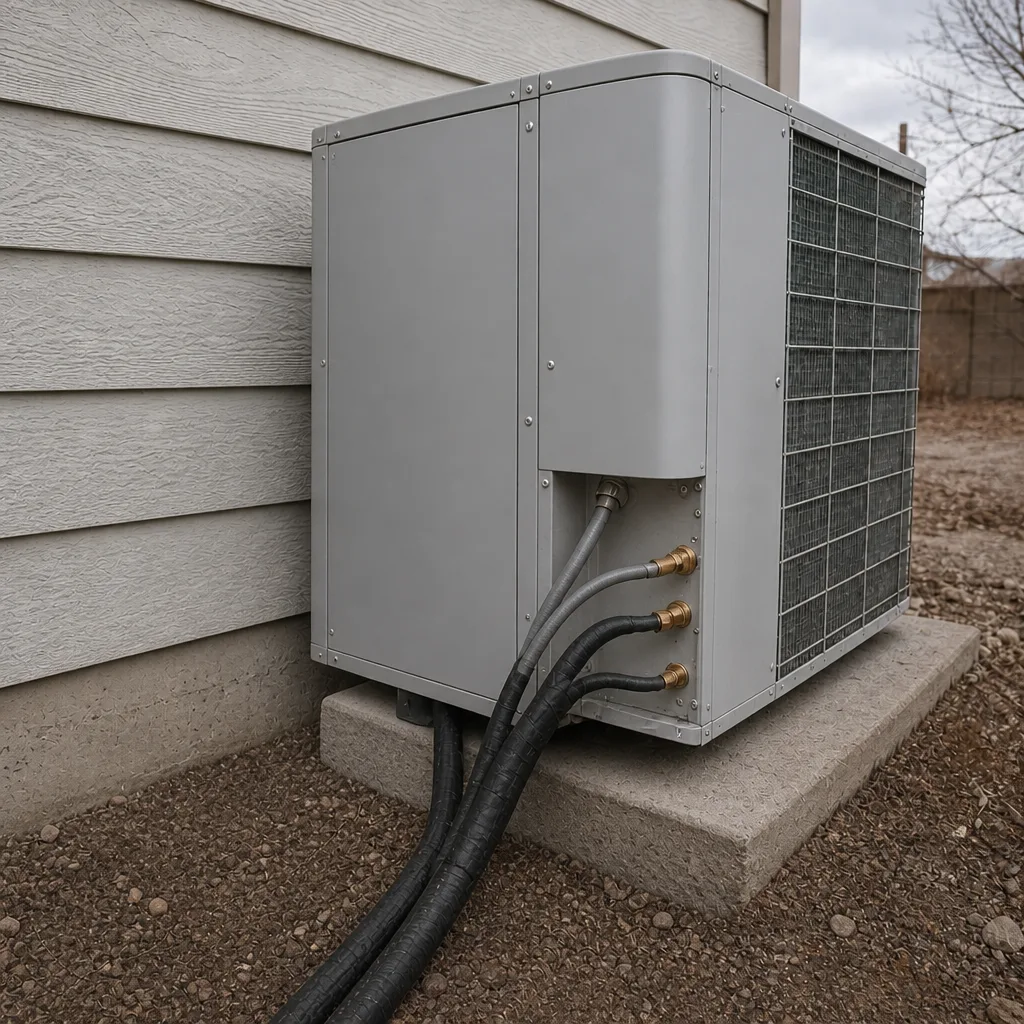
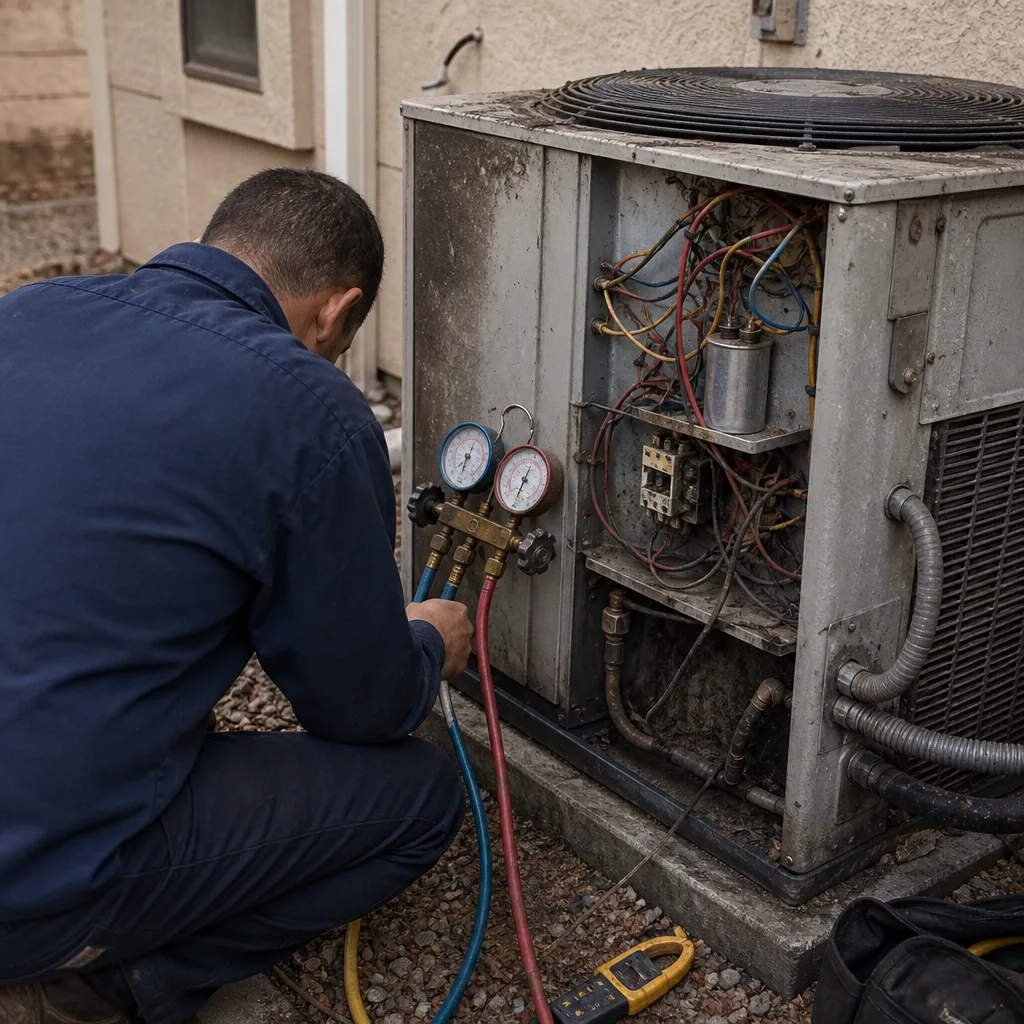
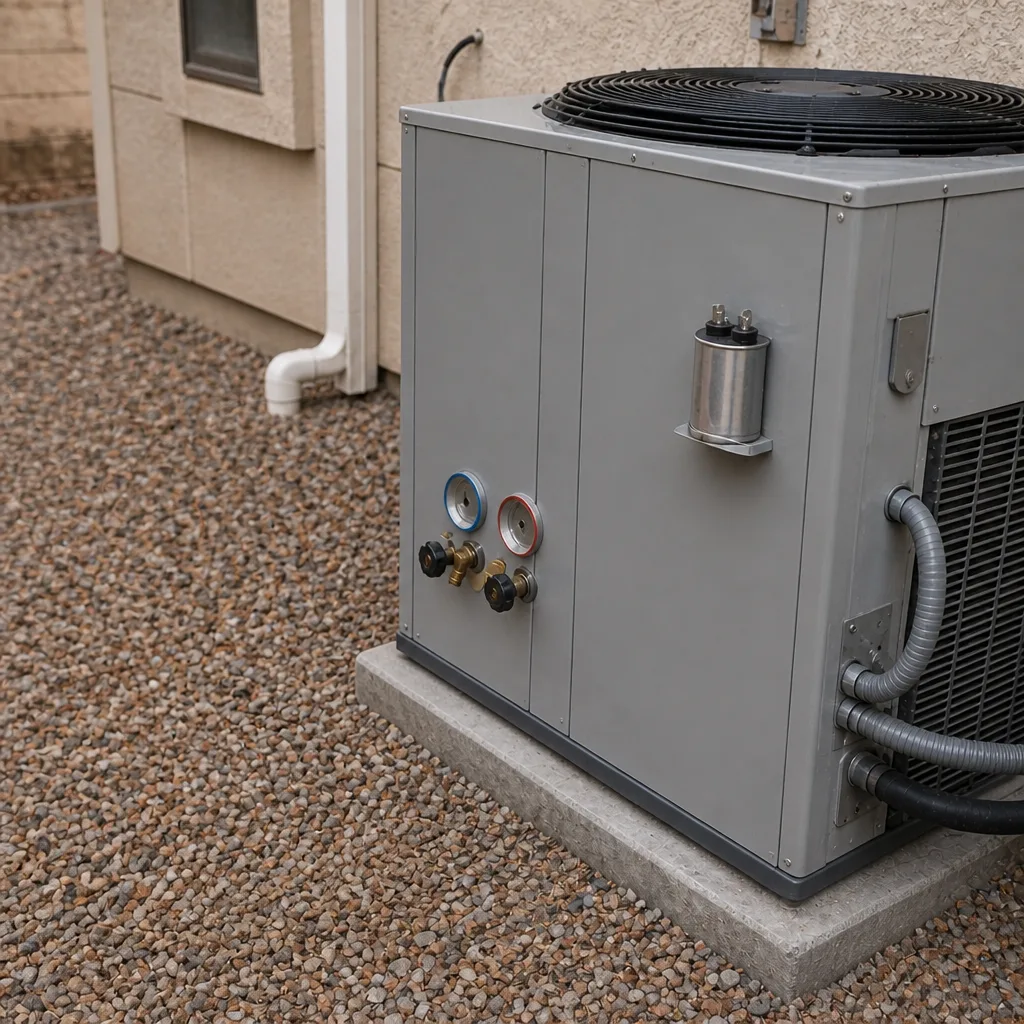
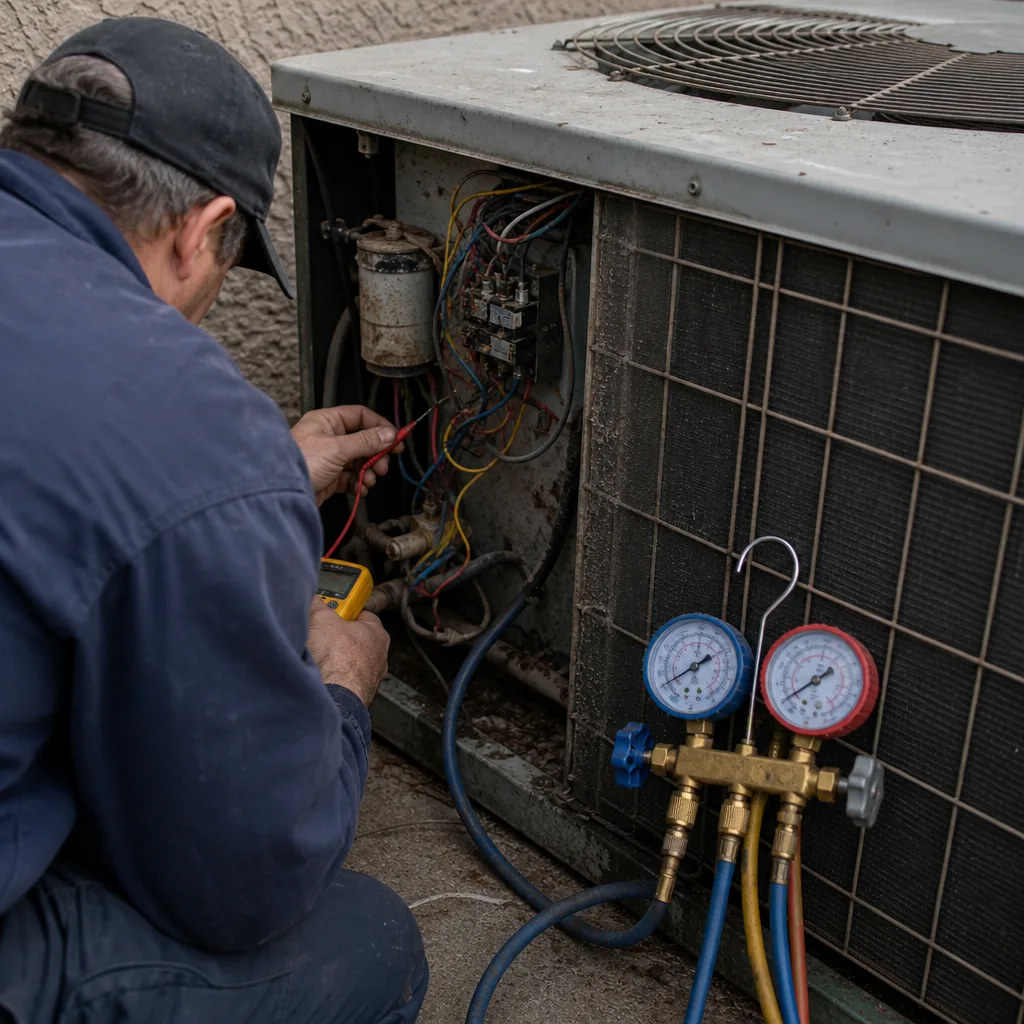
See the difference
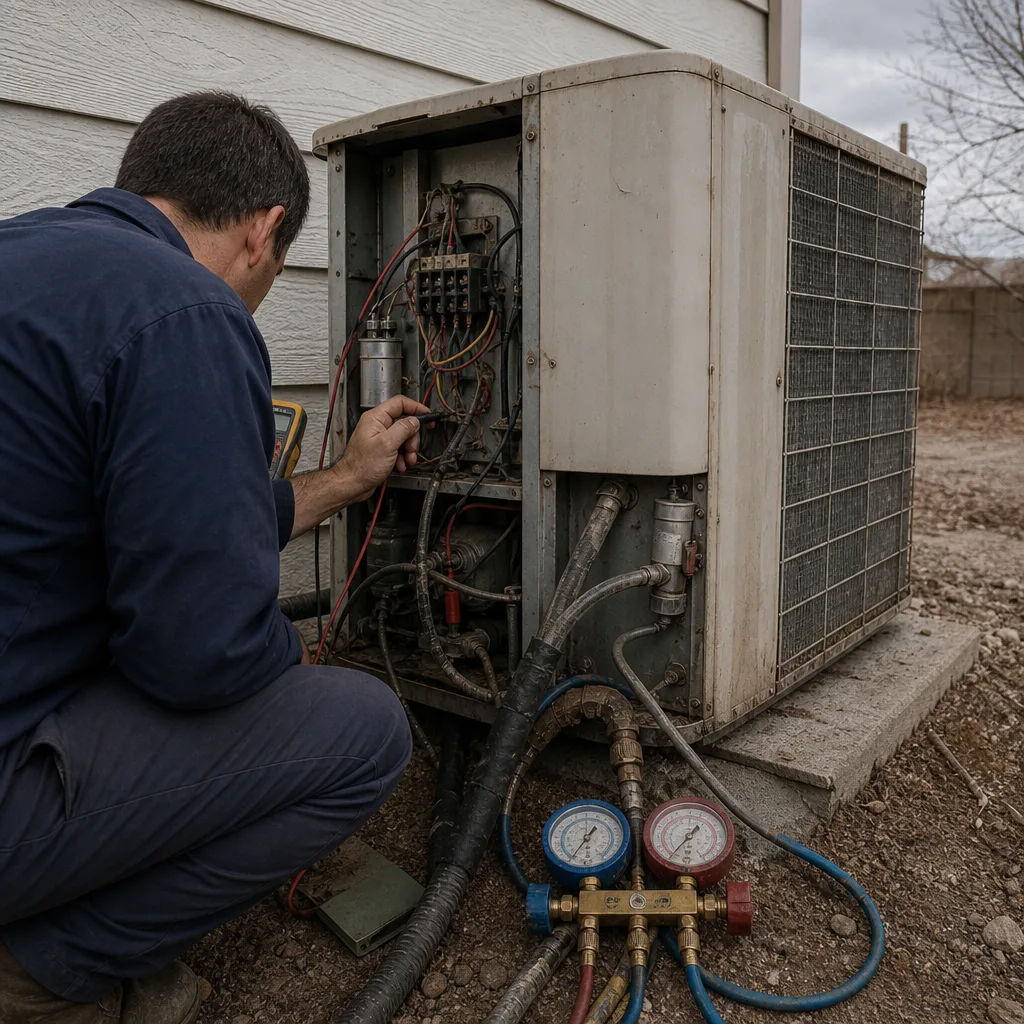 Before
 After
 Before
 After
 Before
 After
When to Call a Professional
Some seasonal care is DIY: filters, debris clearing, thermostat schedules. Some of it is not. Call a professional if your system short cycles, blows warm air in cooling mode, makes grinding or clunking sounds at startup, trips the breaker, shows ice on the indoor coil, or fails to heat on a cold night. Call if your utility bill jumped sharply in a comparable month. Call if the outdoor unit hasn’t had a technician’s eye on it in over a year. And call if the system is more than a decade old and you’re weighing repair against replacement; that’s a conversation worth having with someone who services the brand you already own, not someone pushing a specific model.
AC Repair Boulder City offers free estimates in Boulder City. Call (888) 906-2267. We answer 24/7. Fast dispatch from 7am to 7pm, Sunday through Friday.
Frequently Asked Questions
Schedule pre-summer AC maintenance in February or March, before the first sustained heat, and pre-winter service in October or November. Boulder City’s two-season climate means those windows matter more than any four-season calendar. A February tune-up catches failing components before summer load exposes them, and an October visit verifies the heating side before cold nights arrive.
Yes. Boulder City sees sub-freezing nights in winter, and heat strips fail silently. A heating check is part of the same seasonal visit that covers your AC, so it costs nothing extra in planning. Skipping it means discovering a dead strip on a cold night. Call (888) 906-2267 for a scheduled preview of both systems.
No, not with a sealed wrap. The plastic-tarp advice you’ll find online comes from cold climates where snow and ice are the concern. In Boulder City, a sealed cover traps dust and moisture, which is worse for the equipment. A breathable top cover during long idle stretches is fine, but leave the sides open.
Check the filter after every significant dust-storm week, and at least monthly during peak summer. The generic 90-day rule is a floor, not a plan, because Boulder City’s dust events push more material into the filter than a typical climate would. Replace it whenever it’s visibly coated.
Yes, if you compare the same month year over year. A gradual yearly creep of a few percent is normal. A sudden step change in a comparable month usually means the system lost capacity somewhere: a failing capacitor, dirty coil or low refrigerant charge. Bring the bill to a service call and a technician can cross-check it against system runtime.
Most likely, yes. We’re equipped to service systems from Carrier, Trane, Lennox, Goodman, Rheem, York, Daikin, Bryant and American Standard. The recommendation you get is based on the system’s condition and your budget, not on any brand preference. Call (888) 906-2267 to confirm your model and get an estimate.
The Bottom Line
Boulder City doesn’t reward a four-season maintenance calendar. It rewards two well-timed visits: February and March for pre-summer AC service, and October and November for pre-winter. Filter changes follow dust season, not the calendar quarter. Utility bills are your early warning system, and heat strips deserve the same attention as your cooling system even though the desert makes them easy to forget. None of that requires a complicated schedule, a service plan or an annual contract; it just requires calling the right specialist at the right time of year. Every item on this guide’s calendar is a scheduled visit, not an emergency, which is exactly why the timing matters.
If your system is due for its next seasonal check, or you want a specialist who works on the brand you already own, get in touch. AC Repair Boulder City covers the full AC lifecycle, from repair and installation to maintenance, so one call handles what needs doing. Visit our Boulder City page to see what we cover locally, or read up on AC installation if replacement is on the table and you want a straight conversation about it. Call (888) 906-2267 for a free estimate. We answer 24/7. Fast dispatch from 7am to 7pm, Sunday through Friday.
Written by the team at AC Repair Boulder City.