
Last updated November 18, 2026
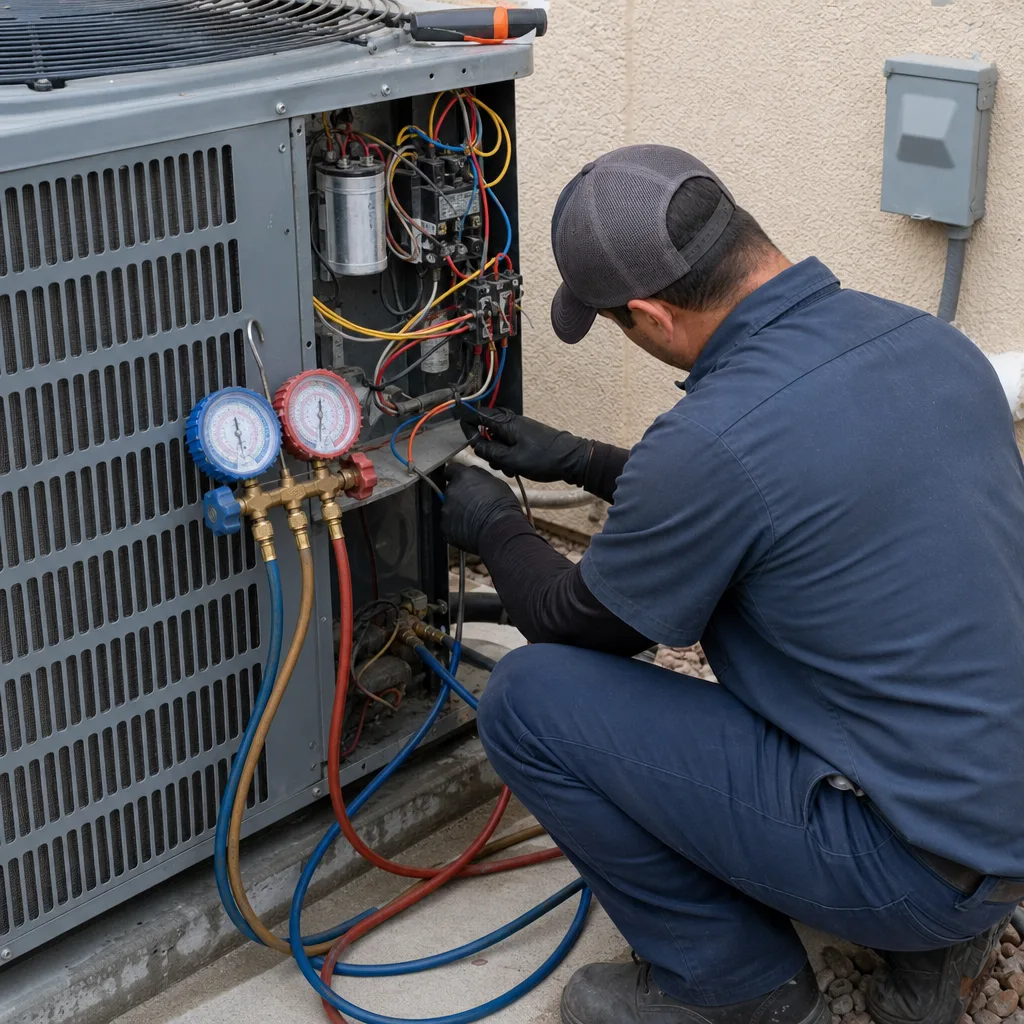
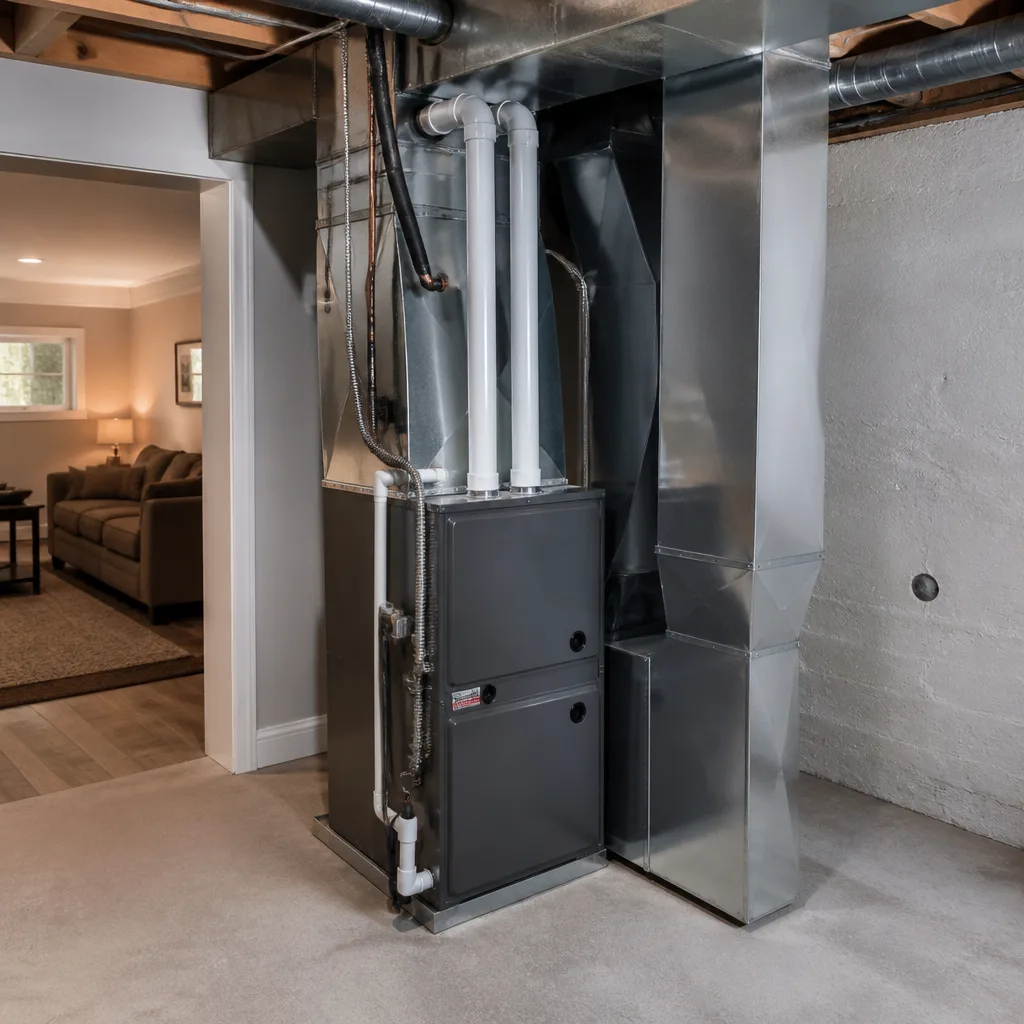 Furnace & heating
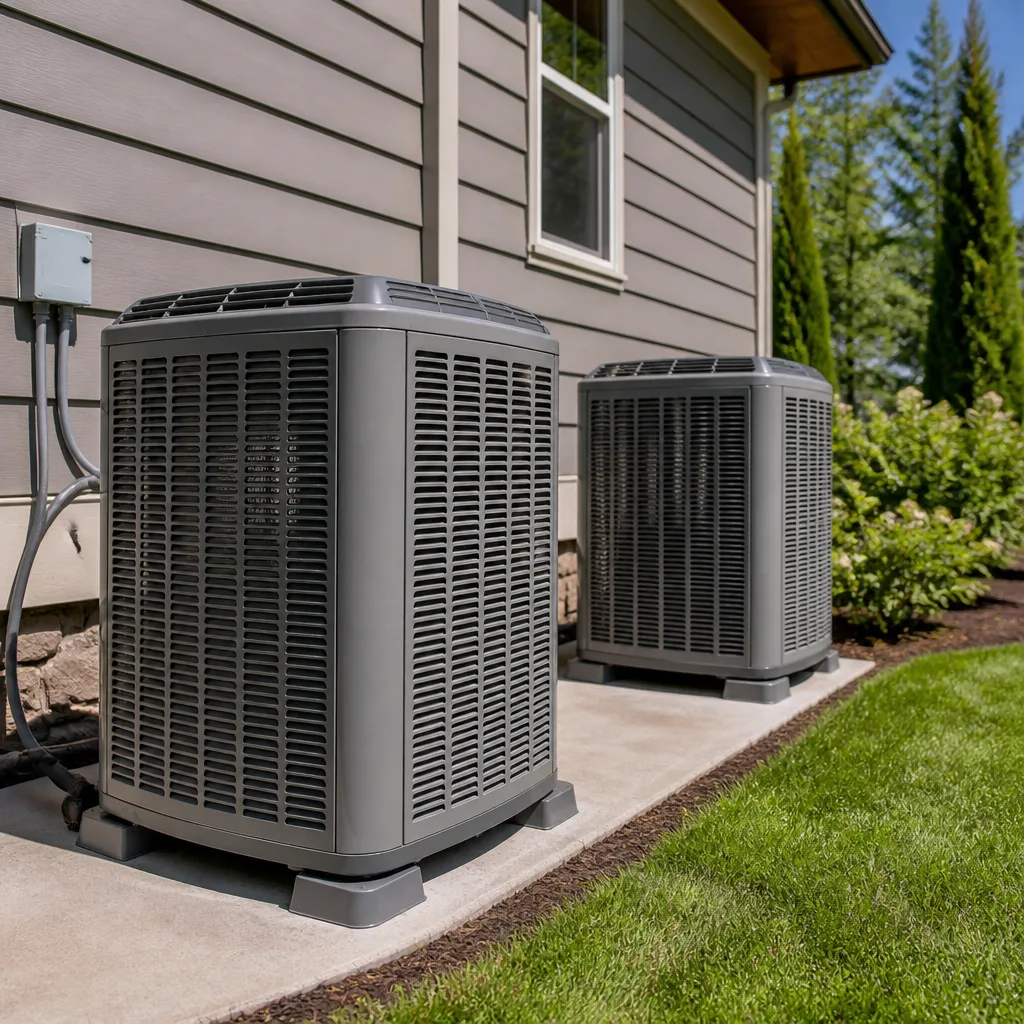 Heat pumps
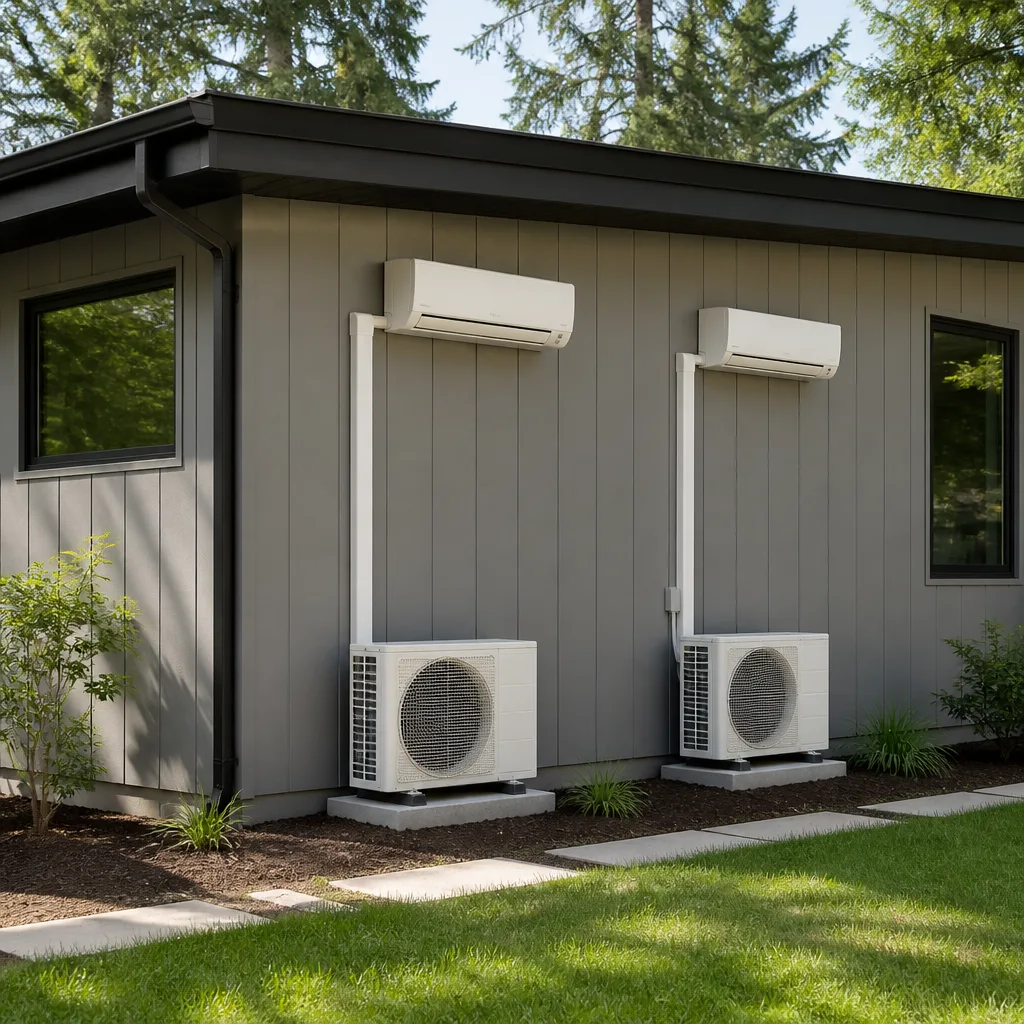 Ductless mini splits
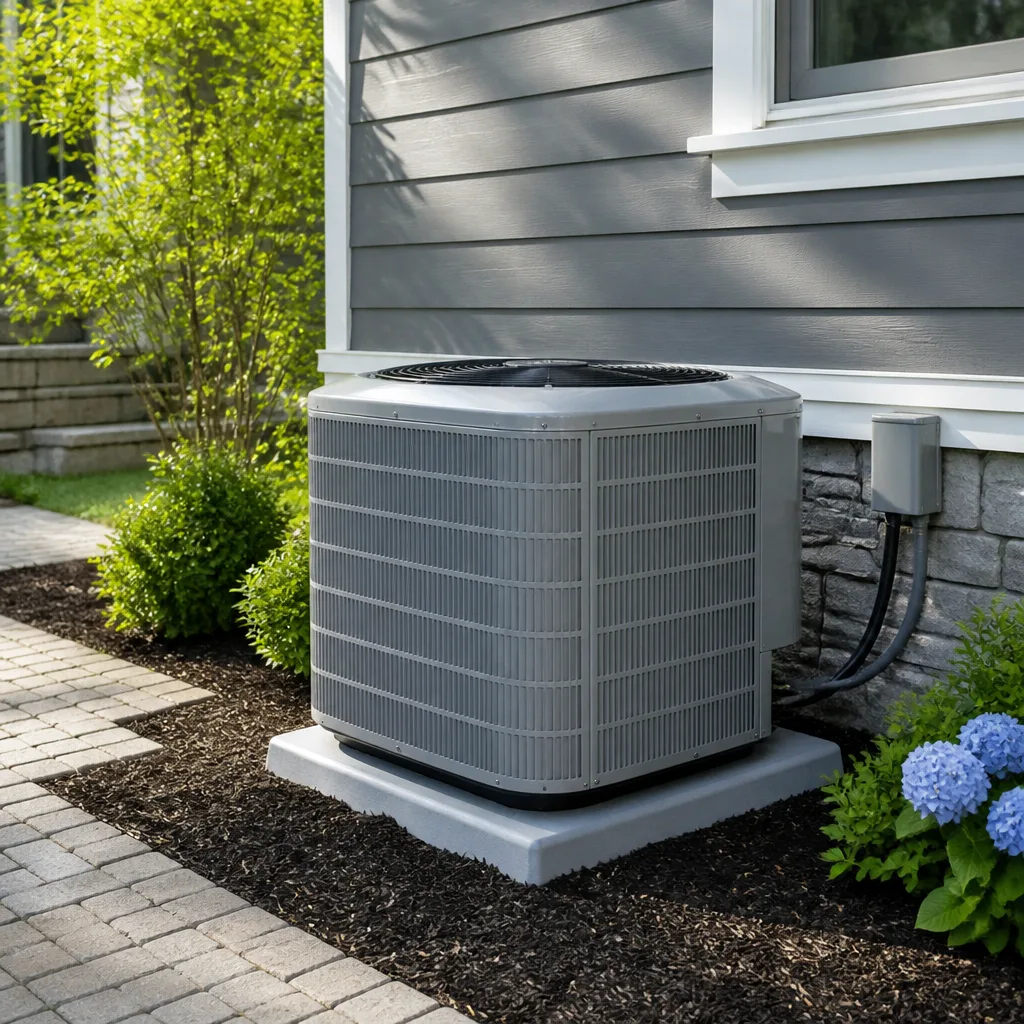 Carrier
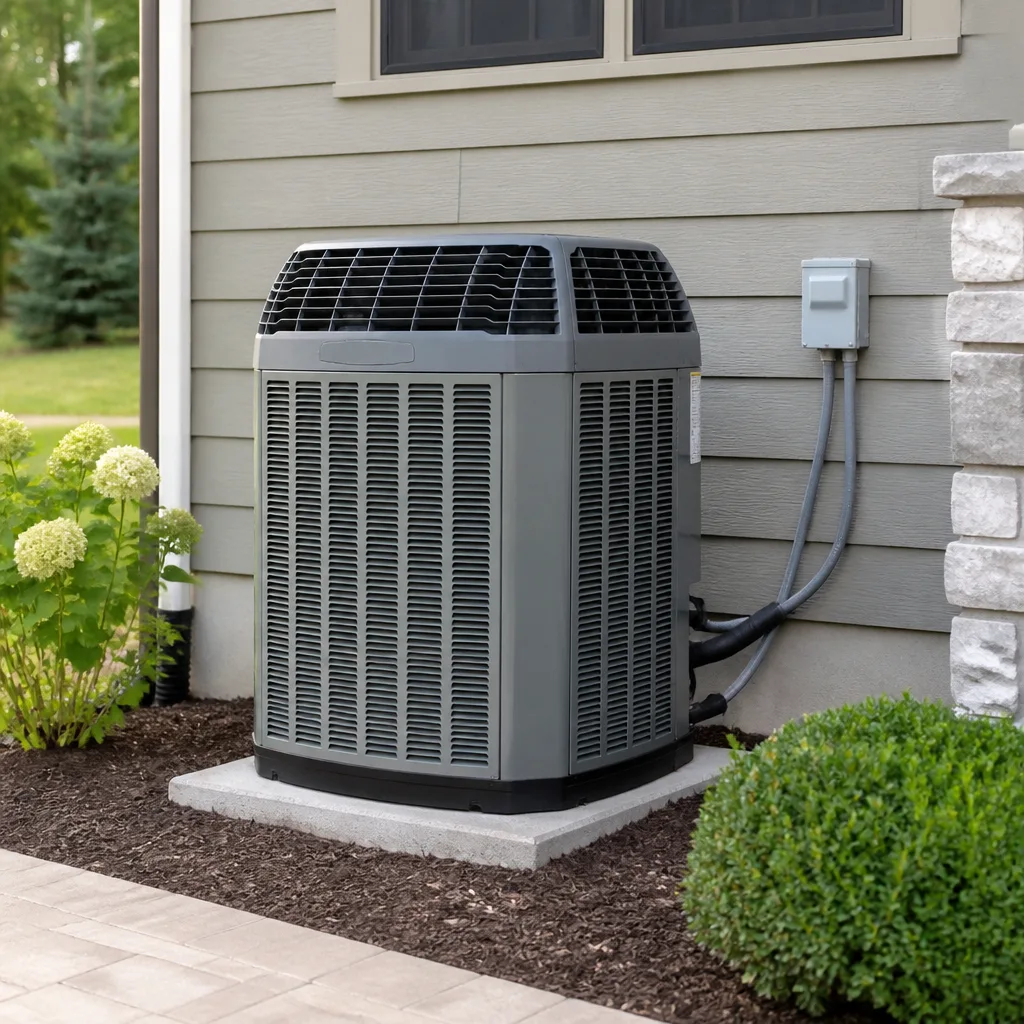 Trane
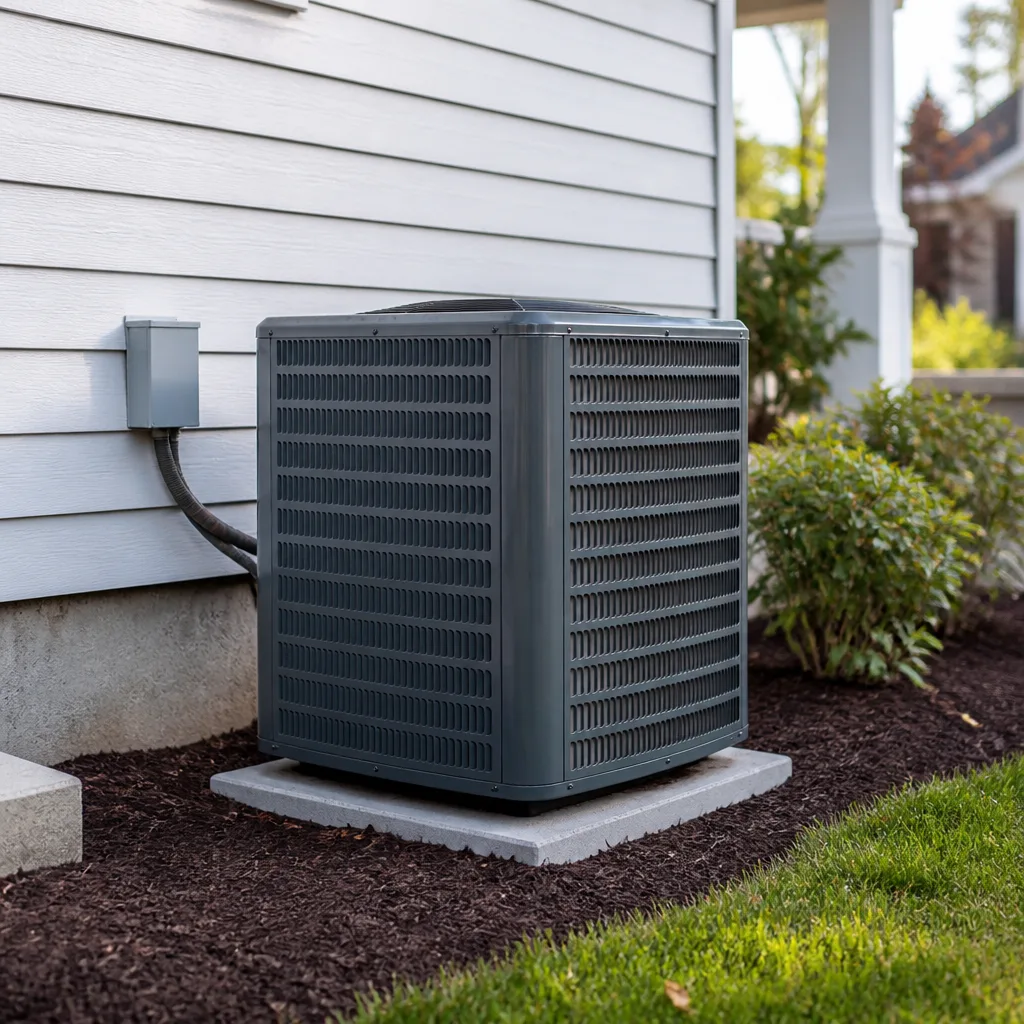 Goodman
Seasonal tune-up and full diagnostic on your Carrier, Trane, or Goodman system - readings shown to you before any repair is proposed
Diagnosis first, numbers second - you approve the repair price before a single part goes in.
Get your free estimateThe Complete AC Repair Guide for Boulder City Homeowners
Most AC repair guides are written for places where summer gives a system a break. Boulder City doesn’t. This town runs hotter for longer than the valley below it, and the equipment here lives a different life than the same unit installed in a milder climate. That changes what breaks first, how long a repair holds, and when the smart money stops going into an aging machine. This guide maps the whole repair cycle to the conditions your system actually faces, from the first odd noise in June to the honest conversation about replacement. You’ll learn the failure patterns that repeat here, how hard water quietly shortens coil life, and how to decide before the heat arrives.
Quick Answer
AC repair in Boulder City usually means addressing heat-stressed parts before they fail completely: capacitors, contactors, refrigerant charge, and coils scaled by hard water. The right call depends on the unit’s age, how many hours a day it runs in peak summer, and whether a repair just resets the clock on the next failure. A specialist who works only on air conditioning will tell you which of those you’re facing, and whether the money is better spent on a fix or a new system.
Styles & brands we work with
- AC installation
- Furnace & heating
- Heat pumps
- Ductless mini splits
- Carrier
- Trane
- Goodman
Table of Contents
- Why Boulder City Heat Wears Equipment Differently
- Hard Water and Coil Corrosion
- The Summer Failure Sequence
- Planning Around a Small Contractor Pool
- Repair or Replace: The 5000 Rule in the Desert
- What “Fully Repaired” Really Means
- Maintenance That Actually Extends Life
- What You Can Check and What You Shouldn’t Touch
Why Boulder City Heat Wears Equipment Differently
Boulder City sits higher than the Las Vegas valley, and that elevation doesn’t buy relief from the heat. It runs through a long stretch of triple-digit days, and the sustained nature of it is what matters for your AC. A system rated for a design temperature is expected to work hard on the worst days and rest otherwise. Here, the hard days stack up back to back for weeks. Compressors, fan motors, and capacitors accumulate operating hours at a rate that shortens their service life compared to the same parts in a cooler market.
That has concrete consequences:
- Capacitors and contactors are the first to go. They’re inexpensive parts, but they fail in the middle of the heat because they’ve been cycling constantly.
- Compressors run hotter and lose efficiency over time. A unit that’s technically still cooling may be running far longer than it should to hold the setpoint.
- Refrigerant systems show small leaks more aggressively when the system is under constant high-side pressure.
- Condenser coils clog faster with dust and cottonwood, and a dirty coil in extreme heat pushes head pressure higher.
None of this is random. It follows a pattern, and understanding that pattern is what lets you act before a breakdown strands you in a 108-degree afternoon. If you’re already hearing a fan that sounds wrong or noticing the house not keeping up, AC repair sooner is almost always cheaper than repair after a full failure. You can also read more about our AC Repair Boulder City service and what a visit covers.
Hard Water and Coil Corrosion
Boulder City’s water is hard, and hard water does quiet, persistent damage to the parts of your system that touch moisture. The evaporator coil and the condensate drain are where it shows up first. Mineral scale builds on the coil surface and inside the drain pan, and scale is an insulator. A coil coated in scale transfers less heat, so the system runs longer to do the same job. That extra run time, during peak summer, compounds with the heat stress above.
The erosion is slow but predictable:
- Scale first. Minerals deposit on the coil and in the drain line. Drainage slows, and you may see water near the indoor unit.
- Corrosion follows. As scale traps moisture against the coil fins, the metal beneath begins to pit and corrode.
- Leaks appear. A corroded evaporator coil develops pinhole refrigerant leaks. Once a coil is leaking from corrosion, repair options narrow sharply.
- Efficiency falls. By the time a leak shows up, the coil has been running inefficiently for a season or more.
What this means for your repair timeline is simple: a scaled coil is a warning, and a leaking coil is often a replacement decision, not a repair one. Cleaning and treating the coil before corrosion sets in costs far less than replacing it after. This is also why an AC-only specialist is worth having on your side here. The focus is on the coil, the drain, and the refrigerant circuit, not a rotating list of home systems. A AC installation that accounts for local water chemistry and the right coil protection can head off years of this problem.
The Summer Failure Sequence
In Boulder City, a unit running ten or more hours a day doesn’t fail at random. The breakdowns follow a sequence, and each stage is a chance to intervene before the next one.
- The long run cycle. The house struggles to reach the setpoint in the afternoon. The system runs continuously. This is the earliest sign something’s off, often a dirty coil or a low refrigerant charge.
- Electrical strain. Constant cycling wears the capacitor and contactor. A failing capacitor is cheap to replace. Ignored, it can strain the compressor on startup.
- The compressor overheat. A compressor running at high head pressure for weeks gets hot. It may trip its internal overload and shut down mid-afternoon, then restart once it cools. That cycle repeats and shortens the compressor’s life each time.
- The failure. A hard shutdown. The system won’t start, or it starts and blows warm air.
By the time you reach stage four, the problem is no longer a cheap part. The honest conversation at that point is whether the compressor is worth replacing on a unit already past its efficient life. Catching the sequence at stage one or two is how you keep a repair small. That’s the case for calling when the house stops keeping up, not after it stops cooling. Our field experience is that the homeowners who act on the first warning spend the least over a summer.
Planning Around a Small Contractor Pool
Boulder City is a smaller town with a limited pool of contractors who serve it. In peak summer, when everyone’s AC is failing at once, that pool gets stretched. The practical consequence is that a same-day emergency repair isn’t something you can assume here the way you might in a bigger city. The way to protect yourself is to plan before the heat, not during it.
A few things help:
- Get a maintenance visit in spring. A system that’s been cleaned, charged, and checked in April is far less likely to fail in July. Booking early also means you’re not competing for a slot.
- Know your system’s age and history. If it’s been repaired twice in recent summers, plan for its replacement now rather than waiting for a failure to force the decision.
- Have a number ready. When a system fails in extreme heat, waiting days for a call-back is the real risk. Call (888) 906-2267. We answer 24/7. Fast dispatch from 7am to 7pm, Sunday through Friday.
- Understand the heat risk. A failed system in sustained triple-digit heat isn’t just uncomfortable. It’s a genuine health risk, especially for older residents and anyone with a medical condition.
The small-pool problem cuts both ways: the good contractors are the ones who plan their summer, which is exactly the reason to build a relationship with one before the season starts. Read more about how we handle Boulder City and the surrounding area.
Repair or Replace: The 5000 Rule in the Desert
The common repair-versus-replace rule says that when a repair costs more than half the price of a new unit, and the system is older than ten years, replacement usually makes more sense. The numbers add up when the repair price is multiplied by the unit’s age. But that rule was built for average climates. In Boulder City, it understates how soon a replacement is the right call.
Here’s why. The rule assumes the repaired unit will go on running at a normal duty cycle for several more years. In extreme sustained heat, it won’t. A unit that just failed under heat stress will face the same conditions next summer, and the components around the repaired part have already absorbed the same wear. The math that says “get five more years” quietly becomes “get two, maybe three.” In desert conditions, the real number is lower, and the rule needs adjusting downward.
We work on the major brands homeowners actually own. Carrier, Bryant, American Standard, Daikin, and the rest of the nine we service all behave differently in heat, and knowing those differences is part of the assessment. The right fix, not the easiest upsell, is the standard. For a system that’s older than ten years, has had repeated repairs, or is leaking refrigerant, a replacement conversation is often the honest one. AC installation is load-calculated and scheduled, so a written fixed price and a set install date are what you should expect, not a same-day replacement promise. To weigh your own situation, call for a free estimate.
What “Fully Repaired” Really Means
A completed repair doesn’t mean the system is new again. It means the failed part has been replaced and the system is running. But after a major fix, especially on a unit that’s been under summer stress, the components around the repaired part are statistically more likely to fail within the same season. That’s the part most repair conversations skip.
After a significant repair here, the parts to watch are:
- The capacitor and contactor next to the one you just replaced. They’re all the same age and have seen the same cycling.
- The condensate drain, which may have been affected by the same moisture and scale that caused the original problem.
- The refrigerant charge, which should be verified after any coil work.
- The compressor, which bears the cumulative strain of the failure that just occurred.
A thorough repair includes checking these, not just swapping the failed part and leaving. It also includes confirming the system holds its setpoint at a realistic load once it’s running. When we close out a repair, the report of what was found and what was checked matters as much as the fix itself. If a secondary part is already showing wear, knowing that now gives you the option to plan ahead instead of discovering it on a 110-degree afternoon.
Maintenance That Actually Extends Life
Maintenance isn’t a tune-up for its own sake. In Boulder City’s conditions, the maintenance that matters is specific: cleaning the coils before scale sets, verifying charge before the season, and checking the electrical parts most likely to fail. A flat price and a written report of what was actually found is what you should expect, and our technicians are not paid on what they sell, so the recommendation follows the condition of your system.
What a real seasonal check covers:
- Coil cleaning. Condenser and evaporator coils cleaned before the heavy-use months, which matters here because of both dust and water scale.
- Refrigerant check. Verify charge and look for the small leaks that corrosion causes.
- Electrical inspection. Capacitors, contactors, and connections checked for wear before they fail under load.
- Drain clearing. The condensate line cleared so scale doesn’t back it up.
- Filter and airflow. A restricted filter forces longer run times and more heat stress on the whole system.
The system that gets this attention in spring is the one that doesn’t fail in July, and it’s the one that lasts longer. Maintenance also gives you the paper trail to make a smart replacement decision later. For homes considering a system upgrade, see our AC installation page to understand how load calculation and equipment choice work in a hot-dry climate.
What You Can Check and What You Shouldn’t Touch
Some things are safe for a homeowner to check. Others carry real danger, and a knowledgeable specialist will always tell you where the line is.
Safe to check:
- The thermostat setting and whether it’s calling for cool.
- The air filter, and whether it’s clogged.
- The outdoor unit, to make sure the fan is turning and the coil isn’t buried in debris.
- Whether the breaker has tripped.
- Visible water around the indoor unit, which points to a drain problem.
Not safe to touch:
- The refrigerant circuit. Handling refrigerant and the sealed system requires training and equipment. It’s a genuine hazard, and opening a sealed system incorrectly can cause injury or a serious leak.
- Electrical components inside the unit. Capacitors hold a charge even after power is cut. Working near the electrical panel or wiring carries a shock risk.
- Gas-fired equipment or any gas line. Leave gas work to a trained professional.
If you’re not sure which side of the line a problem falls on, that’s the moment to call. A brief phone conversation can spare you a dangerous mistake and point you in the right direction.
Common Mistakes to Avoid
- Waiting for a full failure. In Boulder City heat, the long run cycle that signals a problem is easy to ignore because the house still cools. Act on the warning while the repair is small.
- Skipping spring maintenance. A system that never gets a spring check goes into summer with a scaled coil and worn parts. That’s the recipe for a July failure.
- Hiring a generalist for an AC-specific job. A contractor spread across heating, plumbing, and electrical won’t know your equipment the way a specialist does. The focus matters here.
- Replacing the failed part and nothing else. After a capacitor goes, the contactor next to it is the same age. A repair that checks the surroundings prevents a repeat call in two weeks.
- Applying the 5000 rule without adjusting for desert heat. In this climate, an older unit gets fewer good years out of a major repair than the standard formula suggests.
- Ignoring hard-water scale until the coil leaks. Scale is cheap to clean and expensive to replace. The drain and coil deserve attention before corrosion starts.
- Putting off the replacement decision until an emergency. Planning a replacement before the old unit fails gives you a written price and a scheduled install date instead of a forced choice in the heat.
See the difference
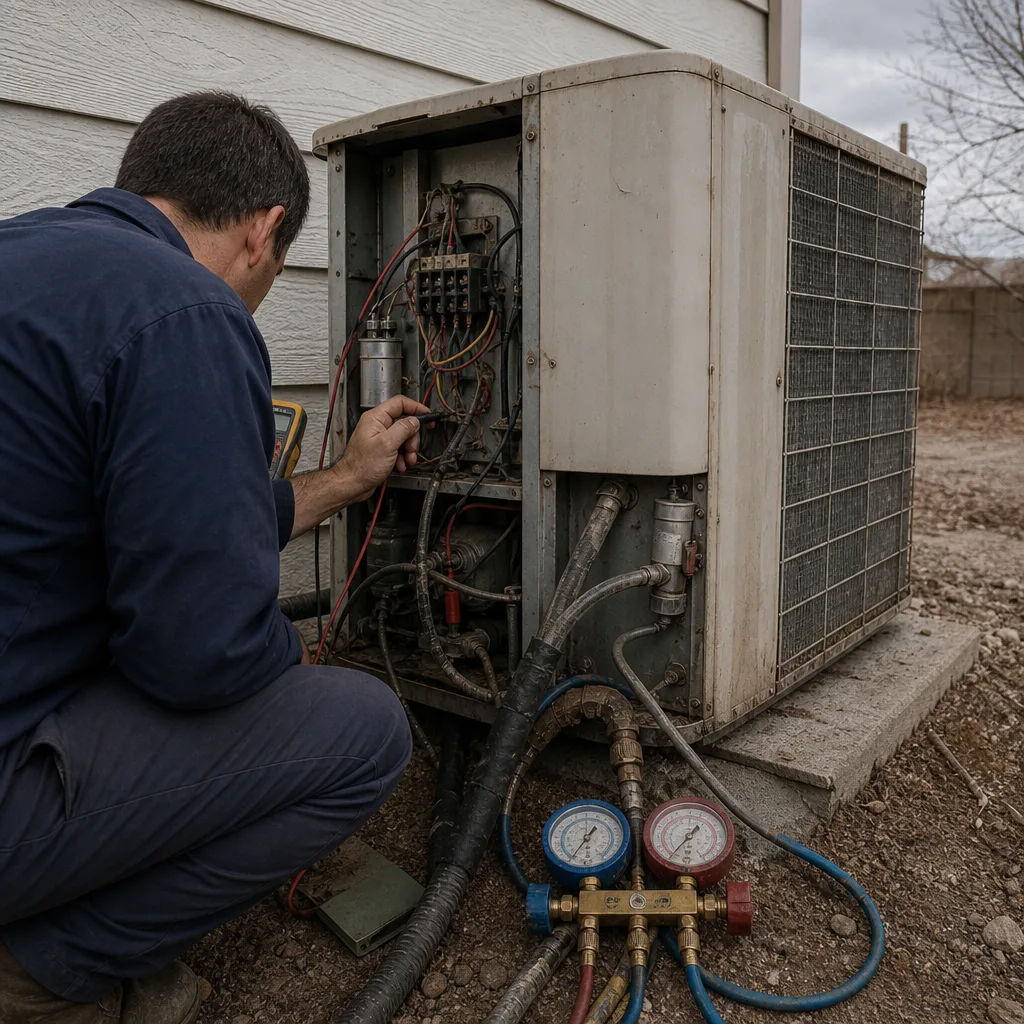 Before
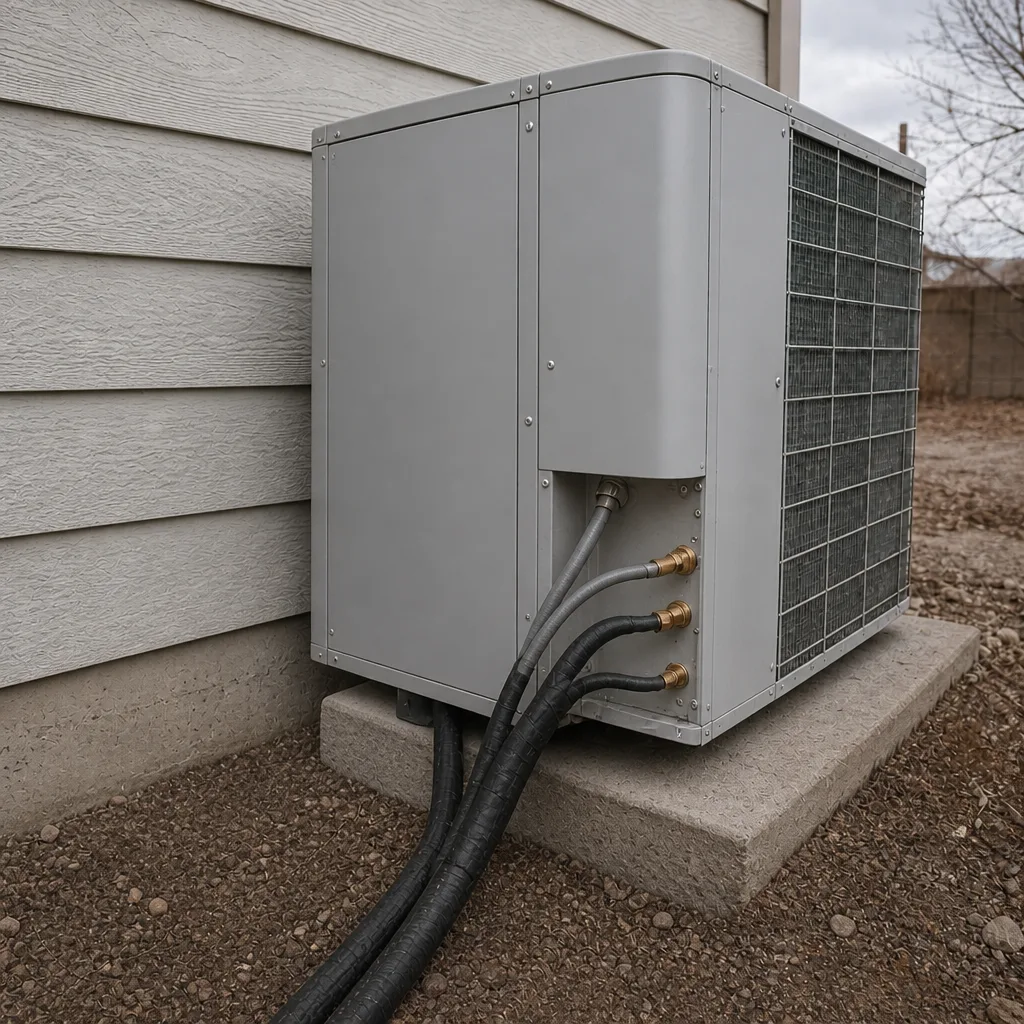 After
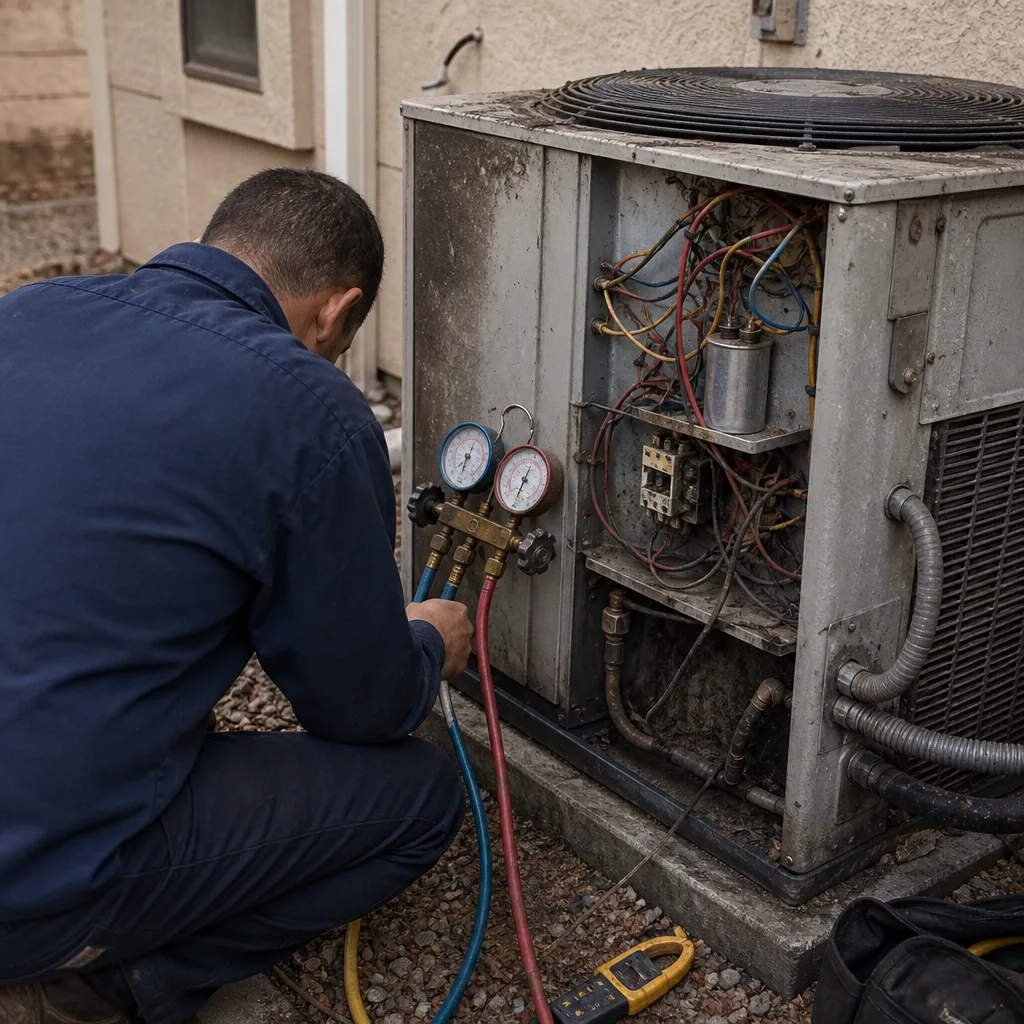 Before
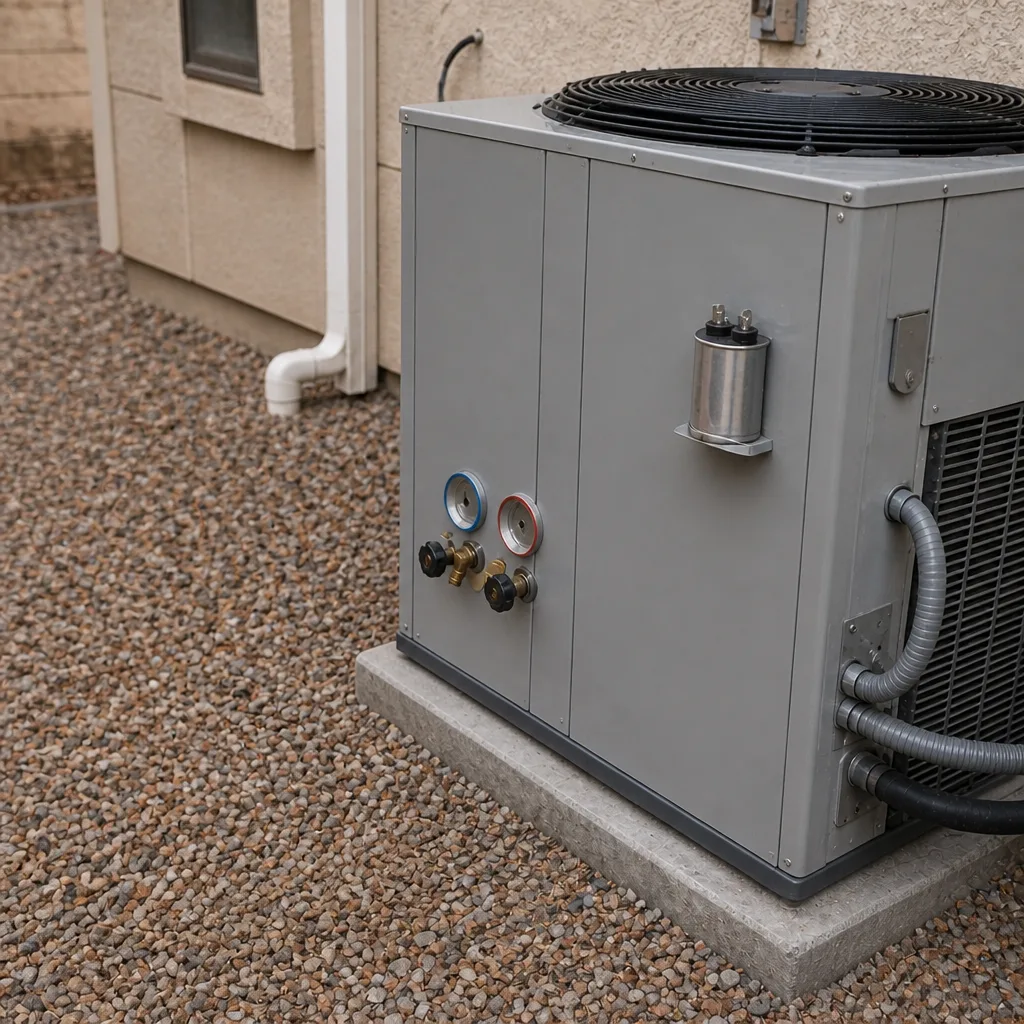 After
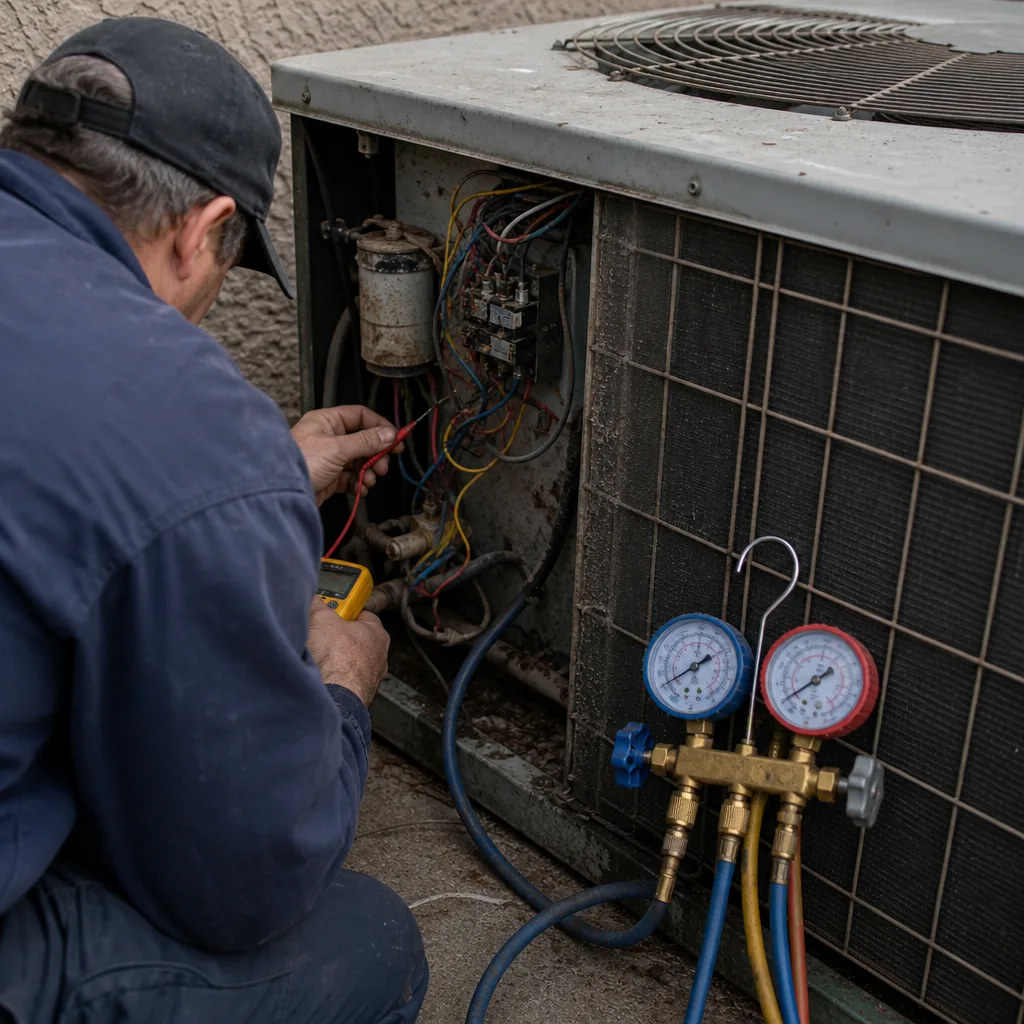 Before
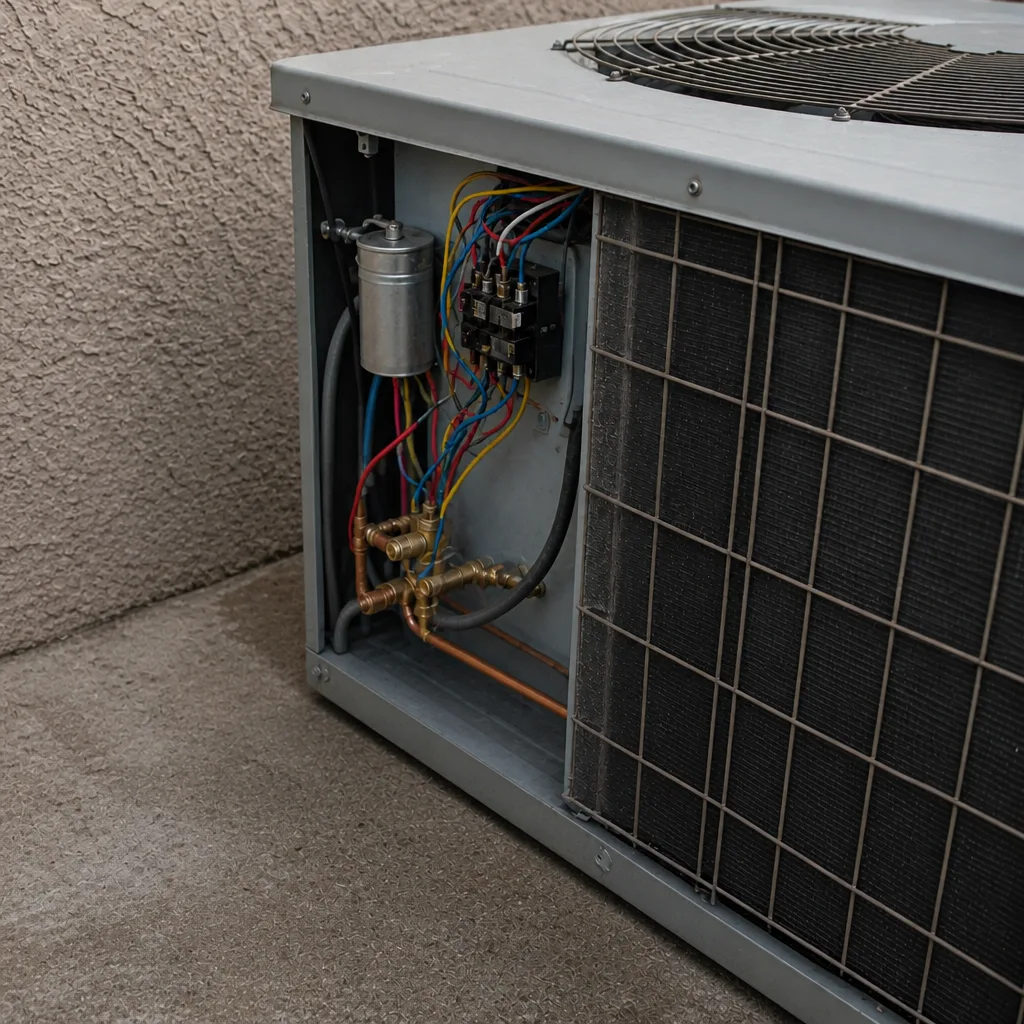 After
When to Call a Professional
Call for anything involving the refrigerant circuit, the electrical parts inside the unit, or gas equipment. Call when the house stops keeping up during the hottest part of the day, even if the system is still running. Call when you see water near the indoor unit, when the outdoor fan stops, or when the system short-cycles or trips the breaker. Call when an aging unit has had repeated repairs and you need an honest read on repair versus replacement. And call when you’re simply not sure, because a quick conversation costs nothing and a dangerous DIY attempt does not.
AC Repair Boulder City offers free estimates in Boulder City. Call (888) 906-2267. We answer 24/7. Fast dispatch from 7am to 7pm, Sunday through Friday.
Frequently Asked Questions
Once a year, ideally in spring before the heavy-use months. In this climate, that spring visit is what catches the scaled coil, worn capacitor, and low charge before the summer heat turns them into a breakdown. Book it early so you’re ahead of the peak-season demand. Call (888) 906-2267 for a free estimate.
Continuous running without reaching the setpoint usually points to a dirty coil, a low refrigerant charge, or a failing electrical part. In Boulder City heat it can also mean the system is undersized for the load it’s facing. A diagnostic visit tells you which one it is. Call (888) 906-2267 for an exact quote.
Yes, through the evaporator coil and condensate drain. Minerals in the water form scale on the coil, which cuts efficiency and traps moisture against the metal until corrosion begins and leaks follow. Cleaning before corrosion sets in is what protects the coil. Call (888) 906-2267 to schedule a check.
Start with age, repair history, and whether it’s leaking refrigerant. If the unit is older than ten years, has had repeated repairs, or has a corroded leaking coil, replacement is often the honest call. In desert heat, the standard repair-versus-replace math understates the urgency. Call (888) 906-2267 for a free estimate and a clear recommendation.
Same-day service is often possible, but in peak summer the local contractor pool is stretched, so it isn’t guaranteed. Call (888) 906-2267. We answer 24/7. Fast dispatch from 7am to 7pm, Sunday through Friday. A call outside dispatch hours is booked into the next opening, Sunday through Friday, 7am to 7pm.
The price depends on the load calculation, the equipment, and the condition of your ductwork, so there’s no single number. What you should expect is a written fixed price and a set install date, not a ballpark over the phone. Call (888) 906-2267 for a free estimate.
The Bottom Line
AC failure in Boulder City isn’t random. It follows a sequence that starts with a long run cycle, wears the cheap electrical parts first, and culminates in a compressor failure you could have seen coming. Hard water and constant heat accelerate that sequence, and the standard repair-versus-replace rule doesn’t fully account for how few good years a repaired unit has left in desert conditions. The homeowners who come out ahead are the ones who act on the early warnings, get a spring check, and have a specialist on standby before the heat arrives. If your system is showing any of it, call. We work on the brand you already have, and we’ll give you the honest answer on repair versus replace.
Written by the team at AC Repair Boulder City.